The American Revolution is often remembered as a struggle between British imperial forces and white colonists seeking self-governance. However, the fight for liberty across the original 13 colonies was a deeply complex, multi-racial conflict. Thousands of African Americans, both free and enslaved, took up arms and risked their lives. Unlike their white counterparts, their primary struggle was not just against unjust taxation or imperial overreach; it was an existential bid for personal freedom from the horrific institution of chattel slavery. These brave individuals faced an agonizing choice: support the Patriots, whose soaring rhetoric about human equality often clashed with their practice of slaveholding, or align with the British, who offered freedom in exchange for military service. Their actions changed the course of the war and laid the groundwork for America’s long, ongoing journey toward true equality.
Historical Background and the Struggle for Freedom
To fully comprehend the role of African Americans in the Revolutionary War, one must examine the socio-economic reality of the late 18th century. In 1775, when the first shots were fired, nearly half a million Black people lived in bondage across the colonies, their forced labor driving the agrarian economies of the South and supporting northern commerce. When the conflict erupted, it created an unexpected leverage point for the enslaved. The British, recognizing a massive source of potential manpower, issued Lord Dunmore’s Proclamation in November 1775. This historic decree promised freedom to any enslaved person owned by a rebel master who was willing to bear arms for His Majesty’s forces. This act forced George Washington, who originally banned Black enlistment in the Continental Army, to reconsider. By 1778, facing a critical shortage of troops, the Patriots reversed their policy, offering freedom to enslaved men who enlisted in the fight for American independence.
Key Events Timeline (1770–1783)
- March 5, 1770: The Boston Massacre occurs, resulting in the death of Crispus Attucks, widely recognized as the first martyr of the American Revolution.
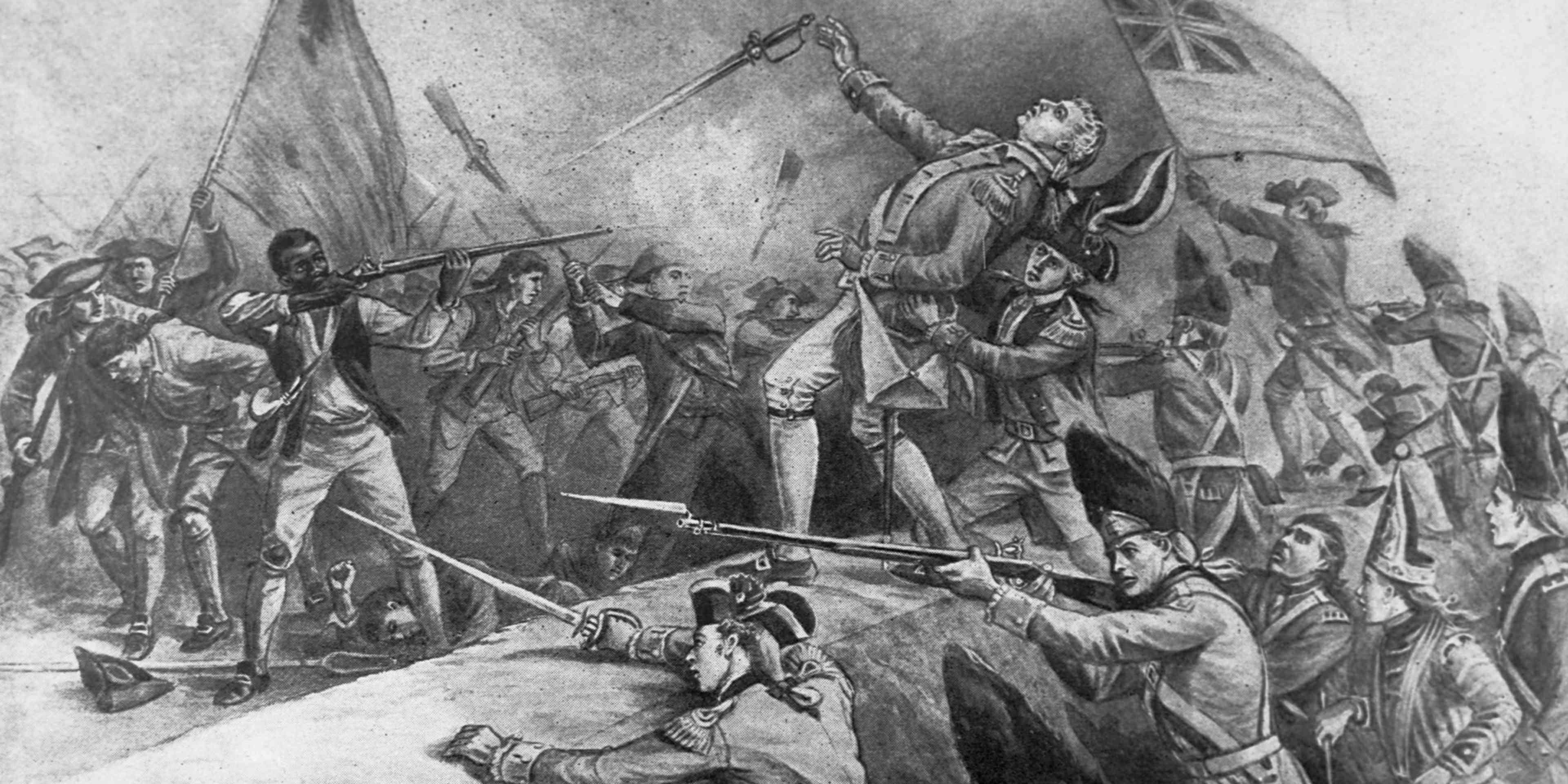
- June 17, 1775: The Battle of Bunker Hill. Salem Poor and Peter Salem exhibit extraordinary valor, dealing heavy blows to British leadership.
- November 1775: Lord Dunmore, the Royal Governor of Virginia, issues his proclamation offering freedom to enslaved loyalists, sparking a mass migration of thousands of Black people to British lines.
- February 1778: The Rhode Island Assembly votes to allow free and enslaved Black men to enlist, leading to the formation of the legendary First Rhode Island Regiment.
- September–October 1781: The Siege of Yorktown. James Armistead’s crucial espionage intelligence allows Allied French and American forces to trap Lord Cornwallis, effectively ending the war.
- September 3, 1783: The signing of the Treaty of Paris formally ends the war, leaving the promises of freedom for many Black veterans unfulfilled, yet cementing their legendary roles in history.
Seven Remarkable Black Heroes of the Revolution
1. Crispus Attucks: The First Martyr
Crispus Attucks was a middle-aged runaway of African and Wampanoag descent who worked as a sailor and rope-maker in Boston. Living as a free man on the docks, Attucks felt the mounting tension between British occupational troops and local workers. On March 5, 1770, those tensions boiled over. Attucks led a group of sailors confronting British soldiers in what became the infamous Boston Massacre. He was the first of five men to fall, taking two musket balls to the chest. Attucks immediately became a powerful symbol of early American patriotism, a hero whose blood was the first shed in defense of liberty.
2. Salem Poor: The Gallant Soldier of Bunker Hill
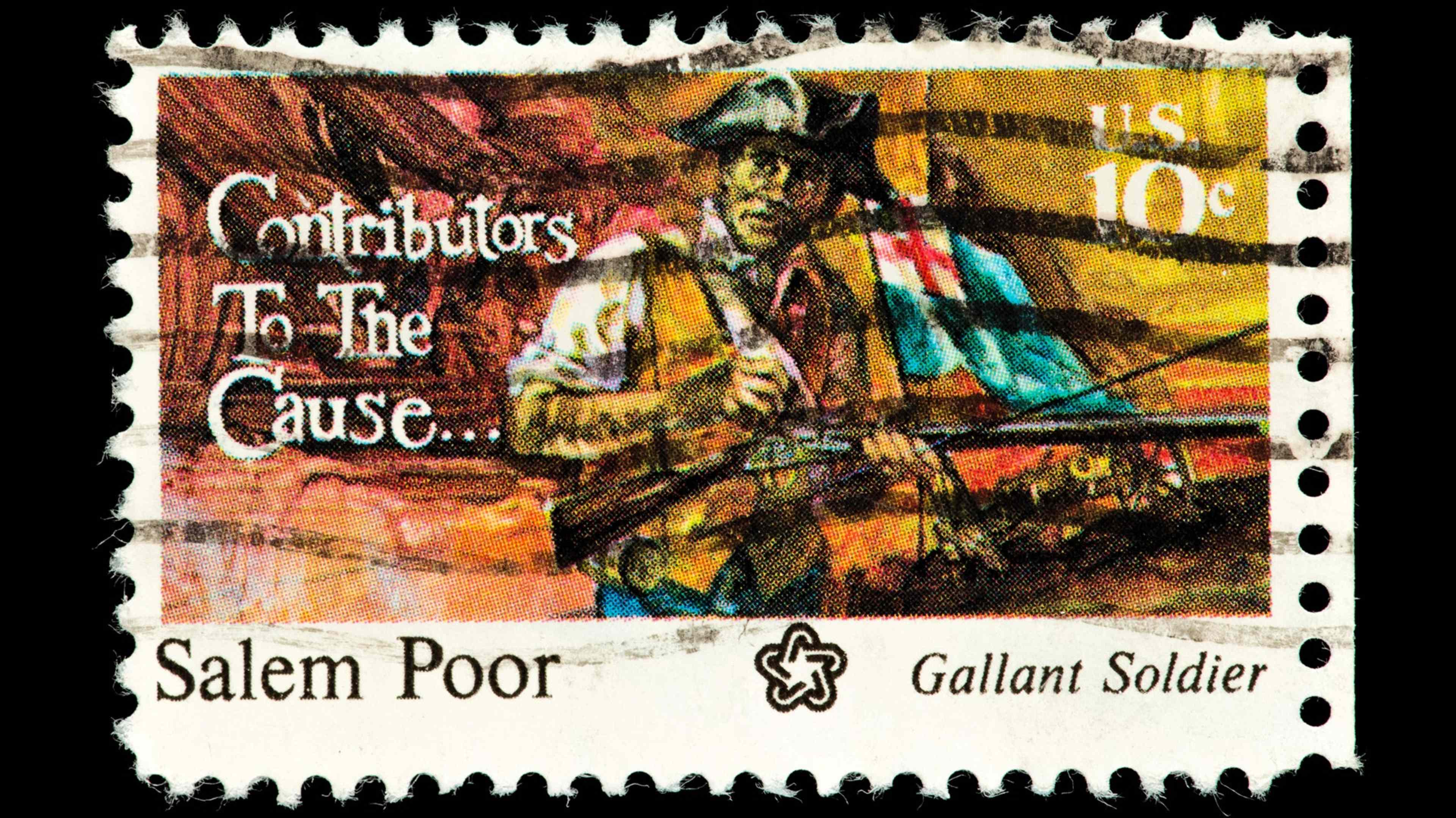
Born into slavery in Massachusetts, Salem Poor achieved the remarkable feat of purchasing his own freedom in 1769 for 27 pounds. Determined to fight for the promise of a free nation, he enlisted in the militia. At the Battle of Bunker Hill in 1775, Poor demonstrated such outstanding combat skill that fourteen of his fellow soldiers and officers formally petitioned the Massachusetts General Court to recognize his bravery. He was credited with killing British Lieutenant Colonel James Abercrombie and showing the poise and expertise of a seasoned military officer.
3. Colonel Tye: The Fearless Loyalist Guerrilla
While many Black soldiers fought for the Patriots, thousands recognized that the British offered a more direct path to freedom. Among them was Titus, an escaped slave from New Jersey who became known as Colonel Tye. Joining the British forces, Tye utilized his intimate knowledge of the treacherous New Jersey swamps and terrain to lead the ‘Black Brigade,’ an elite guerrilla unit. They conducted daring raids, captured vital military supplies, liberated enslaved people, and neutralized cruel Patriot slaveholders. Though never officially commissioned due to British racial hierarchies, he was widely honored with the title of ‘Colonel’ out of profound respect for his tactical genius.
4. The First Rhode Island Regiment: Undaunted Valor
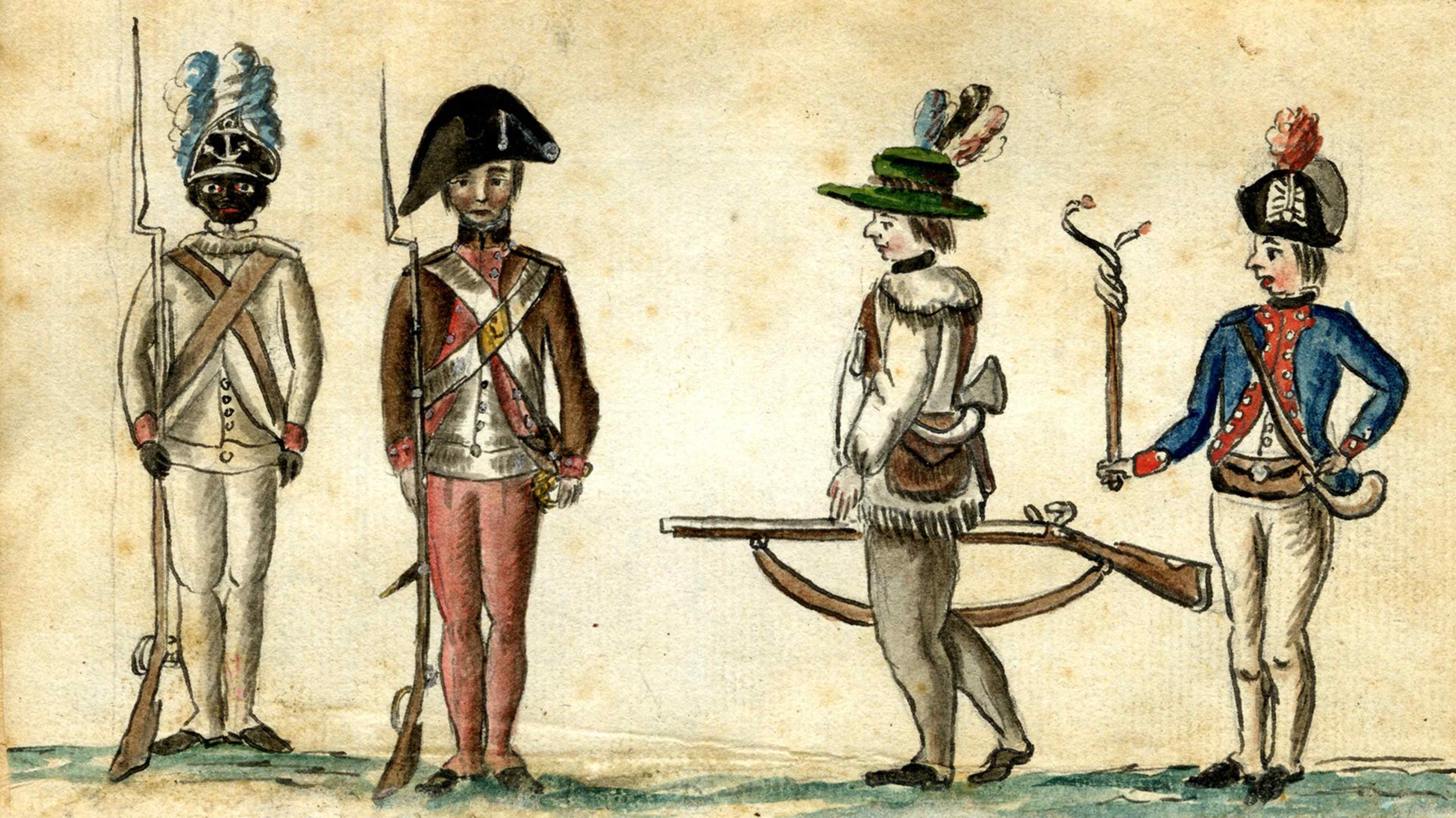
In 1778, as the Continental Army struggled with desertion and disease, the assembly of the colony of Rhode Island authorized the enlistment of enslaved and free Black men. The resulting First Rhode Island Regiment became a formidable force of over 130 men. Under the command of Colonel Christopher Greene, they famously repelled three fierce charges by veteran Hessian infantry at the Battle of Newport. Their discipline, neat appearance, and unflinching loyalty—such as defending their fallen commander to the death at Croton River—won them the respect of foreign allies and hostile foes alike.
5. Phillis Wheatley: The Revolutionary Intellectual
Captured in West Africa as a child, Phillis Wheatley was enslaved by a Boston family who, recognizing her brilliant intellect, taught her to read and write. In 1773, she published her collection of poetry, making her the first African American and third American woman to do so. Wheatley utilized her highly acclaimed literary talent to craft powerful anti-slavery arguments and support the Patriot cause. Her poems reached the highest echelons of society, earning praise from George Washington himself, whom she met in 1776, proving that intellectual warfare was just as critical as physical combat.
6. Peter Salem: The Marksman of Charlestown
Peter Salem was born enslaved in Framingham, Massachusetts, but was freed by his owners so he could enlist as a minuteman. He fought in the opening battles at Lexington and Concord. However, his most famous moment came at Bunker Hill on June 17, 1775. As the British forces breached the American redoubt, British Major John Pitcairn climbed the wall, shouting to the Patriots to surrender. Salem stepped forward and shot Pitcairn, halting the British momentum and allowing the retreating American forces to escape. This historic moment was immortalized in various period paintings, securing Salem’s place in early American military lore.
7. James Armistead Lafayette: The Master Double Agent
James Armistead’s contribution to the American victory is arguably one of the most significant intelligence feats in military history. Enslaved in Virginia, Armistead received permission to join the Marquis de Lafayette’s allied forces. He successfully infiltrated the British camp by posing as a runaway slave seeking work. His sharp mind quickly gained the trust of British generals, including Benedict Arnold and Lord Cornwallis, who employed him as a spy. Armistead fed the British carefully crafted misinformation while delivering highly accurate intelligence about British troop movements to Lafayette. This espionage was instrumental in guiding the combined American and French forces to corner Cornwallis at Yorktown, securing the decisive victory that ended the war.
Sociopolitical Context: The Paradox of Liberty
The deep irony of the American Revolution is that the battle cry of ‘Give me liberty, or give me death!’ was championed by men who held hundreds of thousands of human beings in perpetual bondage. This profound paradox defined the African American experience during the war. To understand how the institution of slavery became so deeply rooted in the American fabric prior to the revolution, exploring the history of the 13 colonies is essential. For Black soldiers, the conflict was not an abstract debate over constitutional representation, but a tangible battle for basic human dignity. Whether wearing the blue of the Continentals or the red of the King’s forces, their primary allegiance was to the cause of freedom itself.
Major Turning Points and Long-Term Impact
The contributions of these Black heroes directly shaped the outcome of major military campaigns. Armistead’s intelligence reports were the catalyst for the siege at Yorktown, while the defensive holding actions of the First Rhode Island Regiment prevented devastating losses in the northern theater. In the long term, their sacrifice forced a slow but steady shift in the American consciousness. Following the war, northern states began a gradual phase-out of slavery, starting with Pennsylvania in 1780 and ending with New Jersey in 1804. However, the southern states tragically doubled down on slavery, creating a deeply divided nation. Despite this, the legacy of Black revolutionary veterans served as a powerful weapon for 19th-century abolitionists, who continuously cited their patriotism and sacrifice to demand immediate emancipation and civil rights.
Lesser-Known Historical Anecdotes
- The Name Change of a Hero: After the war, James Armistead was initially returned to slavery because the law only freed enslaved soldiers, not spies. It took a personal, glowing written testimonial from the Marquis de Lafayette to convince the Virginia General Assembly to grant his freedom in 1787. In honor of his commander and friend, James adopted the surname ‘Lafayette’.
- Intersectional Identity: Crispus Attucks possessed a rich heritage, descending from both African slaves and the Native American Wampanoag tribe, illustrating the interconnected struggles of marginalized peoples in early America.
- An Unofficial Title of Respect: Although the British military command did not formally commission Black officers, Titus was so feared and respected by both sides that he was universally addressed by the honorific title ‘Colonel’ Tye until his death from a battle wound in 1780.
Why Their Legacy Matters Today
The stories of these seven individuals challenge the traditional, monolithic narrative of the founding of the United States. They remind us that the struggle for American democracy has always been a diverse, multi-ethnic endeavor. Honoring Black revolutionary heroes is not merely about correcting the historical record; it is about recognizing that marginalized communities have constantly fought to hold America accountable to its founding promise that ‘all men are created equal’. Their legacy continues to inspire modern discussions on civil rights, patriotism, and the ongoing struggle for true systemic equality in the United States.
People Also Ask (FAQ)
How many Black soldiers fought in the American Revolutionary War?
Historians estimate that between 5,000 and 8,000 African-descended people fought on the Patriot side, while upward of 20,000 served with the British, who offered more direct promises of emancipation.
Did any Black soldiers receive pensions or land after the war?
While some free Black veterans successfully applied for pensions under later federal acts, many enslaved soldiers were tragically returned to their masters, and others had to fight lengthy legal battles to secure the freedom they were promised.
Why did so many Black Americans fight for the British?
The British actively issued proclamations, such as Lord Dunmore’s Proclamation of 1775, which promised immediate freedom to any enslaved person who escaped their rebel masters and joined the Loyalist forces, making the British army the most direct path to liberty for many.
Conclusion
The American Revolution was a crucible of conflicting ideals, where the dream of national sovereignty existed alongside the brutal reality of slavery. The seven Black heroes highlighted here—Crispus Attucks, Salem Poor, Colonel Tye, the members of the First Rhode Island Regiment, Phillis Wheatley, Peter Salem, and James Armistead Lafayette—proved that the desire for freedom knows no racial boundaries. By participating in every major phase of the war, as soldiers, spies, writers, and martyrs, they helped build a nation while simultaneously fighting to free themselves. Their courage remains a timeless testament to the true meaning of liberty.


