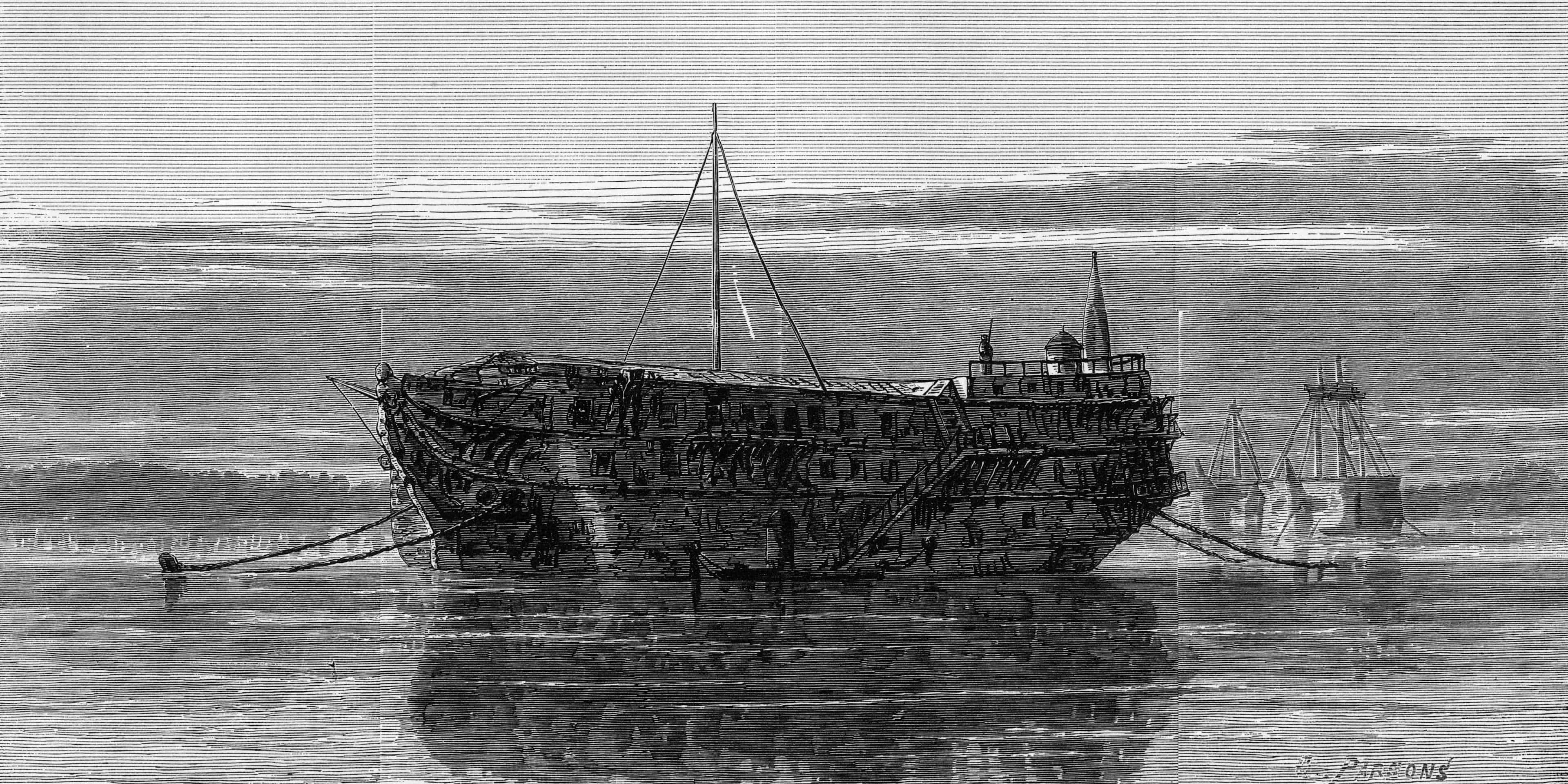
One of the most horrific yet tragically overlooked chapters in the American struggle for independence unfolded not on the smoke-filled battlefields of Lexington or Yorktown, but in the dark, stagnant waters of Wallabout Bay, New York. From 1776 to 1783, British occupying forces transformed decommissioned warships into floating prisons, packing them with captured soldiers, privateers, and civilians who refused to swear allegiance to the King. Among these floating dungeons, the HMS Jersey earned a terrifying reputation as “Hell afloat.” It is a sobering historical truth that more Americans perished aboard these disease-ridden “hell ships” than in active combat during the entire war. The sacrifices of these prisoners became a foundational pillar of the revolutionary spirit, symbolizing the ultimate price paid for the birth of a new nation.
The Historical Background: A City Under Occupation
The dark history of the British prison ships began in mid-1776, during the early phases of the Revolutionary War. British General William Howe arrived in New York Harbor with a massive force of 34,000 Redcoats and a formidable naval fleet. After negotiations for a peaceful resolution failed, Howe launched a massive invasion of Long Island, soundly defeating the Continental Army under General George Washington on August 27, 1776. Although Washington miraculously managed to evacuate his remaining troops across the East River under the cover of a thick morning fog, thousands of American fighters and sympathizers were captured in the subsequent weeks as the British seized control of Manhattan.
With New York City firmly under British control for the remainder of the war, the occupying army faced an immediate crisis: a massive influx of prisoners. Initially, captives were crammed into local churches, sugar houses, and civic buildings, but these land-based facilities were quickly overwhelmed. To solve this logistical nightmare, the British turned to “hulking”—the practice of stripping decommissioned, unseaworthy warships of their masts, sails, and rigging, and anchoring them as stationary maritime prisons in Wallabout Bay, near the current location of the Brooklyn Navy Yard.
Key Events Timeline: The Rise and Fall of the HMS Jersey
- 1736: The HMS Jersey is launched at Plymouth Dockyard as a 60-gun fourth-rate ship of the line, serving in the War of Jenkins’ Ear and the Seven Years’ War.
- 1771: Due to age and wear, the ship is decommissioned and converted into a Royal Navy hospital ship.
- August 27, 1776: The Battle of Long Island leaves thousands of American troops in British hands, initiating the prison crisis in occupied New York.
- Winter 1779–1780: The HMS Jersey is officially converted into a prison ship and anchored in the mud flats of Wallabout Bay.
- October 1781: The British surrender at Yorktown effectively ends major land combat, but American prisoners continue to be held and die aboard the HMS Jersey.
- 1783: The Treaty of Paris officially ends the war. The remaining survivors on the Jersey are freed, and the notorious hulk is abandoned, eventually being burned to the water line.
- 1908: President William Howard Taft dedicates the Prison Ship Martyrs Monument in Brooklyn’s Fort Greene Park to honor the victims.
Prominent Figures and Their Impact
The tragic story of the HMS Jersey is populated by key historical figures whose decisions or survival accounts shaped the memory of the conflict:
- General William Howe: The Commander-in-Chief of British land forces in North America whose rapid victories in New York created the massive POW population and prompted the implementation of the prison ship system.
- General George Washington: While Washington led the military campaign, his strategic decisions were deeply affected by the treatment of his captured men. At the time, discussing who commanded the Continental Army before Washington highlights the chaotic state of early military leadership before Washington centralized command and persistently lobbied for prisoner exchanges.
- David Sproat: The British Commissary General of Prisoners in New York. Sproat was widely despised by the captives for his cold indifference to the rampant disease, starvation, and extreme overcrowding aboard the ships.
- Philip Freneau: Known as the “Poet of the American Revolution,” Freneau was captured aboard an American ship in 1780 and imprisoned on the HMS Jersey. His survival inspired him to write the famous poem, The British Prison-Ship, which vividly detailed the horrors and galvanized public anger against the British.
Causes and Context: Why Were the Conditions So Brutal?
The primary cause of the horrifying conditions aboard the HMS Jersey lay in a complex web of military bureaucracy and political denial. The British government refused to recognize captured Americans as legitimate prisoners of war. To do so would mean recognizing the United States as a sovereign nation, which King George III adamantly refused to do. Instead, the captives were legally classified as “rebels” and “traitors” engaged in treason against the Crown.
This political distinction had devastating real-world consequences. Because they were not recognized as POWs, the American captives were not entitled to standard military protections or the dietary rations typically afforded to European soldiers. This lack of official status fueled the tragic events of the rebellion of the 13 colonies, where captured privateers were given a grim ultimatum: join the Royal Navy and fight against their own countrymen, or rot in the hold of a prison ship.
Furthermore, the physical setup of the HMS Jersey was designed for suffering. Originally built to house a crew of about 400 sailors, the British regularly crammed between 1,000 and 1,200 men below its decks at any given time. The portholes were nailed shut and replaced with iron grates, cutting off fresh air and turning the lower decks into a suffocating, lightless oven during the humid summer months and a freezing tomb during the winter.
Major Turning Points Aboard the HMS Jersey
The escalation of the war at sea marked a major turning point for the prison ship fleet. As the Continental Navy and American privateers successfully disrupted British trade routes, the British intensified their naval captures. The arrival of thousands of American merchant marines and privateers flooded Wallabout Bay with young, healthy men who were quickly broken by the environment. Another tragic turning point occurred after the Battle of Yorktown in late 1781. Although the war was practically over on land, bureaucratic delays in negotiating the final peace treaty meant that prisoners continued to languish and die aboard the HMS Jersey for nearly two more years, extending the tragedy unnecessarily.
The Long-Term Impact on America
The horrific legacy of the HMS Jersey left a deep, indelible scar on the American collective consciousness. The tragedy directly influenced early American foreign policy and military doctrine, highlighting the urgent need for codified rules of warfare and humane prisoner treatment. In later decades, these historical lessons directly contributed to the formulation of international treaties, such as the Lieber Code during the Civil War and, eventually, the Geneva Conventions.
Culturally, the martyrs of the prison ships became powerful symbols of Republican virtue. These men chose to suffer and die from smallpox, yellow fever, and starvation rather than betray their cause by swearing allegiance to the British Crown. To memorialize this immense sacrifice, the remains of thousands of victims recovered from the Wallabout shores were eventually interred in a crypt beneath the majestic 149-foot Prison Ship Martyrs Monument in Brooklyn’s Fort Greene Park, keeping their memory alive alongside other foundational facts about the 13 colonies and their struggle for liberty.
Lesser-Known Facts About the HMS Jersey
1. The Cursed Ship of Jenkins’ Ear
Long before it became a floating prison, the HMS Jersey had a reputation among British sailors as a “damned” ship. During the War of Jenkins’ Ear in 1739, the ship suffered catastrophic damage and heavy crew losses during a failed British assault on the Spanish port of Cartagena. Sailors believed the vessel carried a curse—a superstition that seemed tragically fulfilled decades later when it became a vessel of death for thousands of Americans.
2. “Rebels, Turn Out Your Dead!”
Every morning, British guards would open the locked hatches of the lower decks and shout the chilling phrase, “Rebels, turn out your dead!” The surviving prisoners would gather the bodies of those who had died during the night, which were then hoisted to the deck and taken ashore to be buried in shallow, unmarked graves along the sandy banks of Wallabout Bay. High tides would frequently wash the sand away, exposing the bones of the deceased to passing ships.
3. A Death Toll Greater Than Combat
Historical estimates indicate that approximately 4,500 American soldiers died in direct combat during the entire Revolutionary War. In contrast, an estimated 11,000 to 18,000 patriots died aboard the British prison ships anchored in Wallabout Bay, with the majority of those deaths occurring on the HMS Jersey alone. This makes the prison ships the single deadliest site of the entire American Revolution.
Why the Legacy of the HMS Jersey Matters Today
In the modern era, the story of the HMS Jersey serves as a profound reminder of the ethical responsibilities of nations during times of conflict. It prompts vital contemporary discussions about civil liberties, human rights, and the treatment of detainees in military custody. The Prison Ship Martyrs Monument stands today not just as a tribute to those who died, but as a warning against the dehumanization of political adversaries. Remembering the HMS Jersey ensures that the true cost of American independence is never forgotten, encouraging modern citizens to cherish and protect the democratic institutions bought with such a terrible price.
People Also Ask
How many people survived the HMS Jersey?
At the end of the Revolutionary War in 1783, when the British finally evacuated New York and abandoned the ship, only about 1,400 survivors were left alive across the entire fleet of Wallabout Bay prison ships. The vast majority of those who entered the HMS Jersey did not survive the ordeal.
Why did the British use ships instead of land prisons?
The British army quickly ran out of space in land-based jails, warehouses, and churches in occupied New York. Utilizing decommissioned, unseaworthy warships (hulks) was a cost-effective and secure way to detain thousands of prisoners without requiring the construction of new land facilities or diverting active soldiers to guard them.
What diseases were most common on the HMS Jersey?
Due to the extreme overcrowding, lack of fresh water, and abysmal sanitation, diseases ran rampant below deck. The most common killers were smallpox, yellow fever, dysentery, typhoid, and scurvy, compounded by severe malnutrition and physical abuse from the guards.
Conclusion
The HMS Jersey remains a haunting symbol of the dark side of the American Revolution. As a floating testament to human endurance and sacrifice, “Hell afloat” reminds us that the path to American liberty was paved with immense suffering. By exploring this dark chapter of history, we gain a deeper, more respectful understanding of the extraordinary lengths to which early Americans went to secure the freedom we enjoy today.


