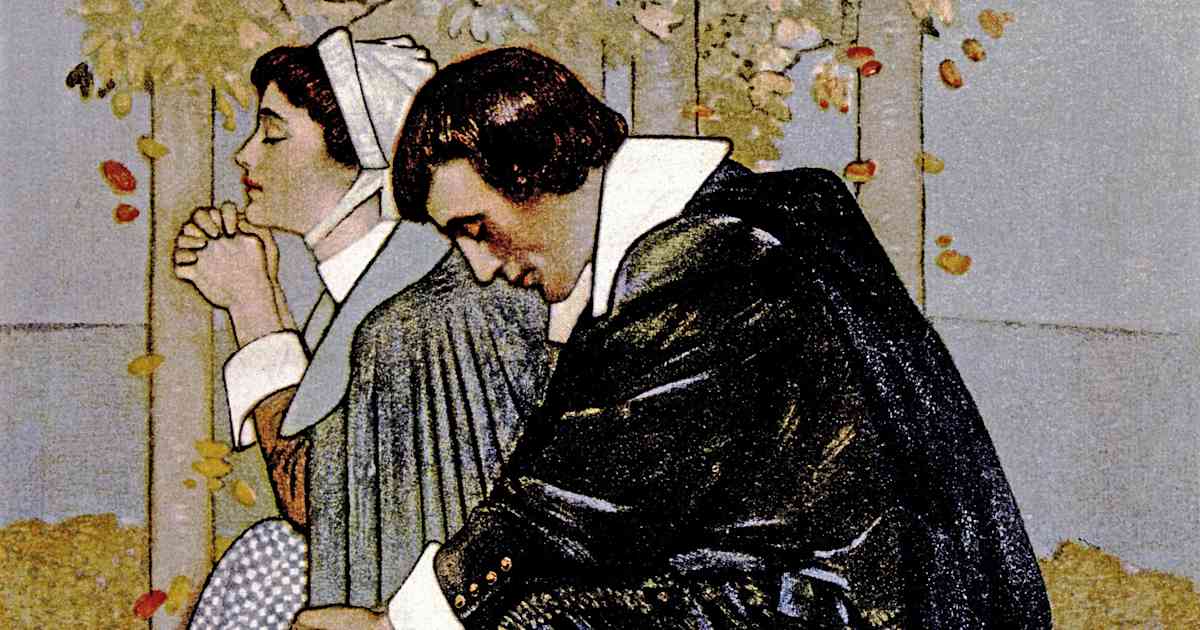
The roots of modern America are deeply tangled with a group of religious reformers who sought to build a “City upon a Hill” in the wilderness of the New World. Known as the Puritans, this group of English Protestants in the late 16th and 17th centuries sought to “purify” the Church of England of what they considered remnant Roman Catholic practices and liturgy. Their quest was not merely theological; it was a comprehensive social, political, and spiritual mission that laid the very foundations of the American character. Driven by a deep sense of covenant with God, their migration to the shores of New England in the 1620s and 1630s would establish a lasting template for the religious, intellectual, and social order of the United States.
Historical Background and the Core Beliefs of the Puritans
To understand the Puritans, one must look back to the turbulent era of the English Reformation. The movement began during the 1530s when King Henry VIII repudiated papal authority and transformed the Church of Rome into the state-controlled Church of England. However, for many reform-minded Protestants, this transition was incomplete. They believed the newly established church retained too much of the Catholic liturgy, hierarchy, and ritual. By the 1560s, these dissenters were derisively called “Puritans” or “precisionists” by their enemies, a term of contempt they eventually wore as a badge of honor.
At the heart of Puritan theology was a strict adherence to Calvinism. They believed in the absolute sovereignty of God, the inherent depravity of humanity, and the doctrine of predestination—the belief that God had already chosen who would be saved (the “elect” or “saints”) and who would be damned. Because no one could know for certain who was saved, Puritans lived in a state of constant self-examination, looking for signs of divine grace in their daily actions. They believed in a direct, personal covenant with God, bypassing the traditional church hierarchy. This theological framework dictated every aspect of their lives, from their family structures to their community governance.
It is crucial to distinguish between different factions of the reform movement. While both groups crossed the Atlantic in search of religious freedom, the underlying reasons for their migrations highlight a distinct theological divergence. Understanding why did the Pilgrims come to America helps contextualize how these separate religious groups uniquely shaped the early New England landscape. Unlike the Separatist Pilgrims of Plymouth, who viewed the Church of England as completely corrupt and broke away entirely, the mainstream Puritans of the Massachusetts Bay Colony were “nonseparating congregationalists.” They maintained that they were still part of the national church but wished to reform it by example from afar.
Causes and Context: Why the Puritans Fled England
The decision to leave England was born of both intense religious persecution and deep socioeconomic anxiety. During the reigns of James I and Charles I, the English crown and the high church leadership, particularly Archbishop William Laud, systematically suppressed Puritan voices. Puritan ministers were stripped of their offices, and dissenting writers faced public humiliation, imprisonment, and physical mutilation.
Simultaneously, England was undergoing profound economic and social upheaval. The rise of a market economy, the conversion of subsistence farmland into pasture for sheep (enclosure), and the laws of primogeniture left many younger sons landless and drove thousands of impoverished citizens into the burgeoning, chaotic cities. To many Puritans, the English countryside was falling into moral decay, plagued by vagrancy and crime. They viewed the New World not just as a religious sanctuary, but as an economic fresh start where they could build an orderly, moral society based on stable family units. Unlike other colonial ventures dominated by single male adventurers, the Puritan migration was uniquely characterized by entire families traveling together, prepared to build permanent, intergenerational communities.
A Chronological Timeline of the Puritan Movement
- 1534: King Henry VIII passes the Act of Supremacy, breaking ties with Rome and establishing the Church of England.
- 1558–1603: The reign of Queen Elizabeth I. A compromise known as the Elizabethan Settlement establishes an uneasy peace, but dissatisfaction grows among reform-minded Protestants.
- 1560s: The term “Puritan” first emerges as a derogatory label for those demanding radical purification of the church.
- 1620: The Separatist Pilgrims sail aboard the Mayflower and establish Plymouth Colony.
- 1630: Governor John Winthrop leads the Great Migration, bringing approximately 1,000 Puritans to establish the Massachusetts Bay Colony.
- 1636: Harvard College is founded to train literate, Calvinist ministers, ensuring the intellectual continuity of the Puritan order.
- 1662: The adoption of the Half-Way Covenant, easing membership requirements to address a decline in spiritual zeal among younger generations.
- 1692: The Salem Witch Trials erupt, signaling a severe crisis of faith, community cohesion, and legal authority.
Important Figures and Their Lasting Impact
Several key leaders defined the trajectory and theological boundaries of the Puritan experiment in the New World:
John Winthrop (1588–1649)
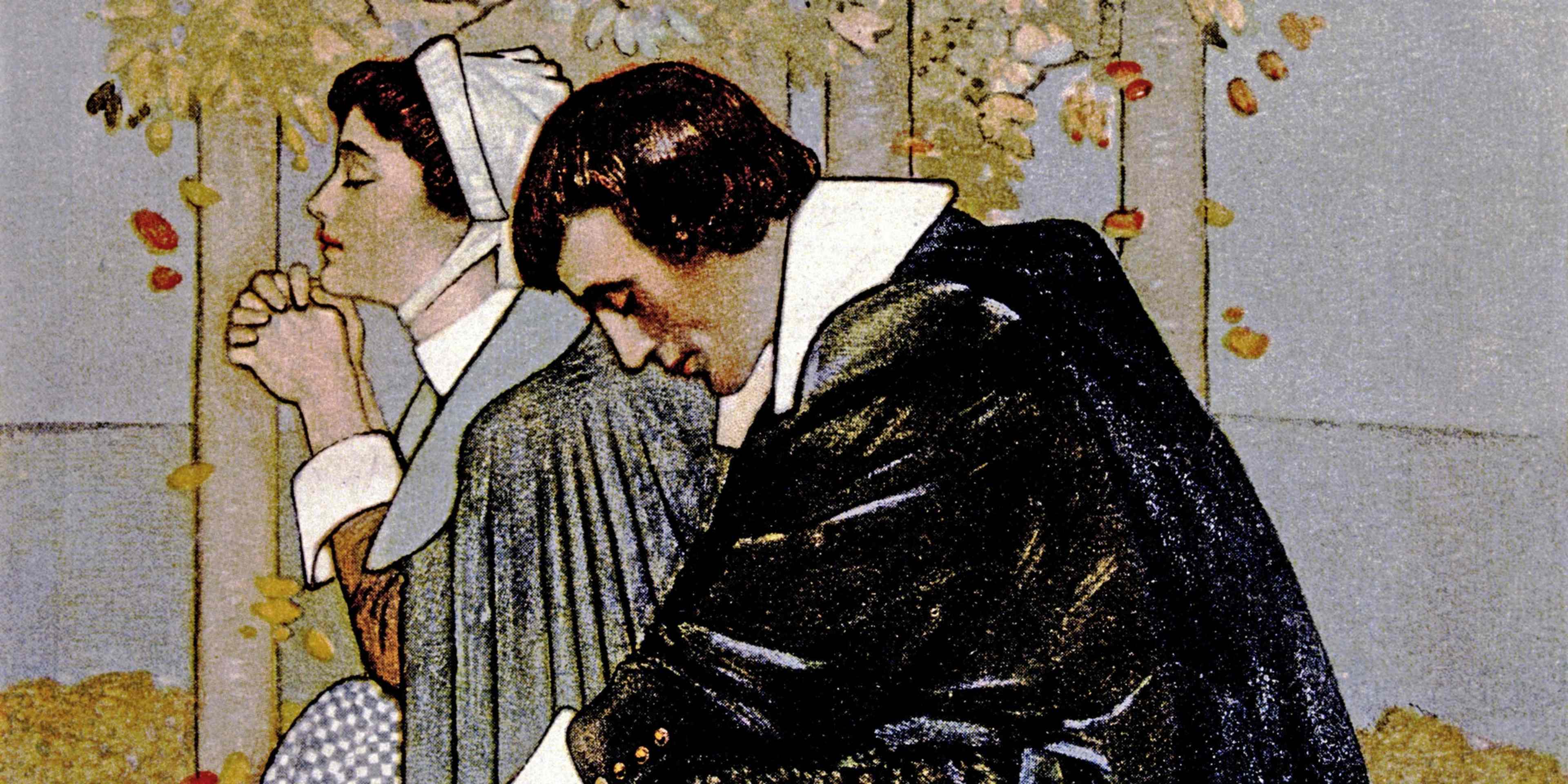
As the first governor of the Massachusetts Bay Colony, Winthrop was the political and spiritual architect of the Puritan commonwealth. Onboard the Arbella in 1630, he delivered his famous sermon, “A Model of Christian Charity,” in which he declared that their new community must be as a “City upon a Hill”—an exemplary Christian society watched by the entire world. Winthrop’s vision laid the ideological foundation for the concept of American exceptionalism.
Anne Hutchinson (1591–1643)
Hutchinson was a brilliant, charismatic midwife and spiritual leader who began hosting religious discussion groups in her home. She accused local ministers of preaching a “covenant of works” rather than a “covenant of grace.” For her beliefs, she was put on trial and ultimately banished from the colony, showcasing the strict boundaries of religious conformity in early Massachusetts. Her courage and theological arguments remain a pivotal moment in colonial history, making Anne Hutchinson’s significance and beliefs a vital study in early American dissent.
Roger Williams (1603–1683)
A passionate minister in Salem, Williams argued that the civil government had no right to police religious beliefs and that the land of New England belonged to the Native Americans, not the English king. Banished for his “new and dangerous opinions” in 1635, Williams fled south and founded the colony of Rhode Island, which became a haven for genuine religious freedom and the birthplace of the separation of church and state.
Major Turning Points in Puritan History
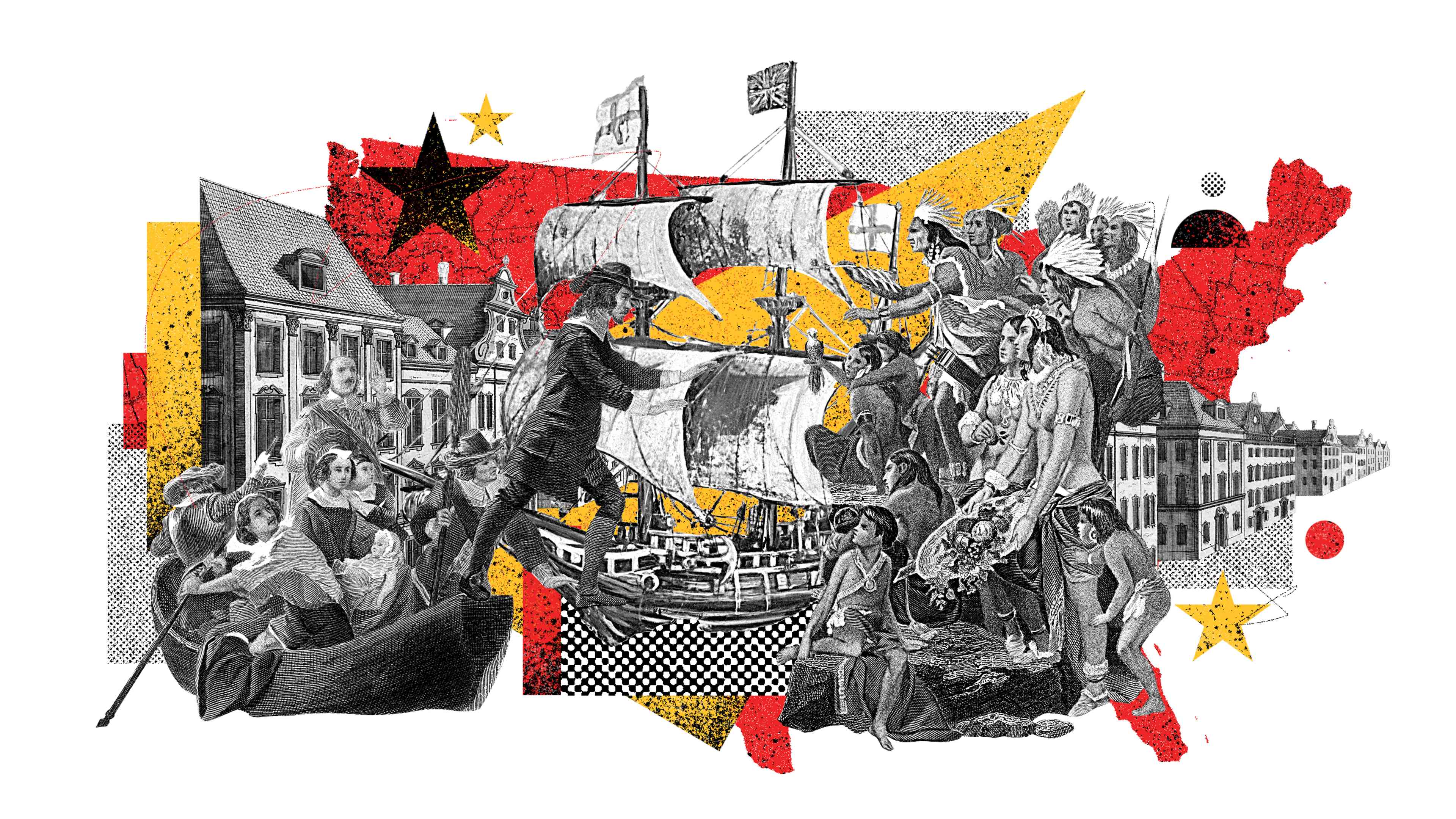
The Puritan experiment was not a static era but a dynamic and often tense evolution. The first major turning point was the Great Migration of 1630, which transformed Puritanism from an underground English reform movement into a dominant, self-governing political force in New England. By the 1640s, over 10,000 settlers had populated Massachusetts, quickly spreading into Connecticut, New Hampshire, and Maine.
A second turning point was the crisis of the second generation, leading to the Half-Way Covenant of 1662. As the initial religious fervor of the founding generation waned, many children of the original settlers failed to provide the necessary public testimony of a conversion experience required for full church membership. To prevent the church from shrinking into irrelevance, ministers allowed the children of baptized members to receive baptism and partial membership, a controversial compromise that marked the beginning of secularization.
The final and most tragic turning point was the Salem Witch Trials of 1692. Amidst political instability, Indian wars, and economic anxiety, a wave of witchcraft hysteria swept through Salem Village. The execution of twenty innocent people severely damaged the moral authority of the Puritan clergy and led to a profound reassessment of their legal and theological systems, accelerating the transition toward a more secular, pluralistic society.
Long-Term Impact on America
Though the formal religious authority of the Puritan church declined by the early 18th century, their cultural, social, and political legacy profoundly shaped the United States:
- The Protestant Work Ethic: Puritans viewed worldly success not as a way to earn salvation, but as potential evidence of divine favor. This moral imperative for hard work, thrift, and self-discipline became a cornerstone of American capitalism.
- Public Education: To ensure that every individual could read and interpret the Bible, the Puritans pioneered public education. In 1647, Massachusetts passed the “Old Deluder Satan Act,” requiring towns to establish public schools, establishing a deep-seated American commitment to literacy.
- Democracy and Local Governance: The Puritan practice of congregational church governance, where members chose their own ministers, naturally translated into the New England town meeting. This early form of direct democracy laid the groundwork for representative self-rule.
While New England was dominated by Puritan strictness, the regional variations in belief across the colonies created a unique tapestry of faiths. Exploring the surprising religious diversity of America’s 13 colonies reveals how different colonial regions balanced, or struggled with, religious freedom.
Lesser-Known Facts About the Puritans
Popular culture often caricatures the Puritans as cold, black-clad killjoys. However, historical reality is far more colorful:
- They Did Not Just Wear Black: While black was reserved for formal portraits, Sundays, and prestigious events (as black dye was highly expensive), everyday Puritan clothing was quite colorful. They wore garments dyed in shades of red, blue, yellow, green, and brown.
- They Banned Christmas: Believing that Christmas had pagan origins and lacked any biblical justification, the Puritans outlawed the celebration of Christmas in Massachusetts from 1559 until 1681. Anyone caught celebrating was fined five shillings.
- They Loved Beer and Wine: Puritans did not practice total abstinence from alcohol. In fact, they viewed beer, wine, and cider as wholesome blessings from God. What they strictly forbade and punished was drunkenness, which they viewed as a sin of excess.
Why the Puritans Still Matter Today
The cultural DNA of the Puritans still ripples through modern American life. Winthrop’s concept of the “City upon a Hill” remains a powerful political metaphor used by modern presidents from John F. Kennedy to Ronald Reagan to define America’s global mission. Furthermore, the ongoing American cultural struggle to balance individual liberty with community responsibility, and the persistent moral undercurrent in American political debates, are direct inheritances of our Puritan past.
People Also Ask
What is the difference between Pilgrims and Puritans?
The primary difference lies in their relationship to the Church of England. The Pilgrims were “Separatists” who believed the national church was beyond saving and broke away completely to form independent congregations. The Puritans were “Nonseparatists” who wished to reform the Church of England from within, using their New World colony as an exemplary model of a purified Christian society.
What were the main beliefs of the Puritans?
Puritan beliefs were rooted in Calvinism, emphasizing the absolute sovereignty of God, the total depravity of human nature, and predestination. They believed in a direct covenant with God, the supreme authority of the Bible over church traditions, and the necessity of personal, active faith manifested through self-discipline and moral living.
Why did the Puritans leave England?
Puritans left England during the Great Migration of the 1630s to escape severe religious persecution under King Charles I and Archbishop William Laud, as well as to escape the economic displacement and moral decay they perceived in rapidly urbanizing English society.
Conclusion
The Puritans were far more than the solemn, dark-frocked figures of historical caricature. They were intense, highly literate, and deeply motivated reformers whose efforts to construct a perfect, Bible-based society forever altered the trajectory of the American experiment. From the establishment of public education and early democratic governance to the enduring spirit of self-reliance and moral seriousness, the legacy of the Puritans continues to shape the identity, politics, and values of modern America.


