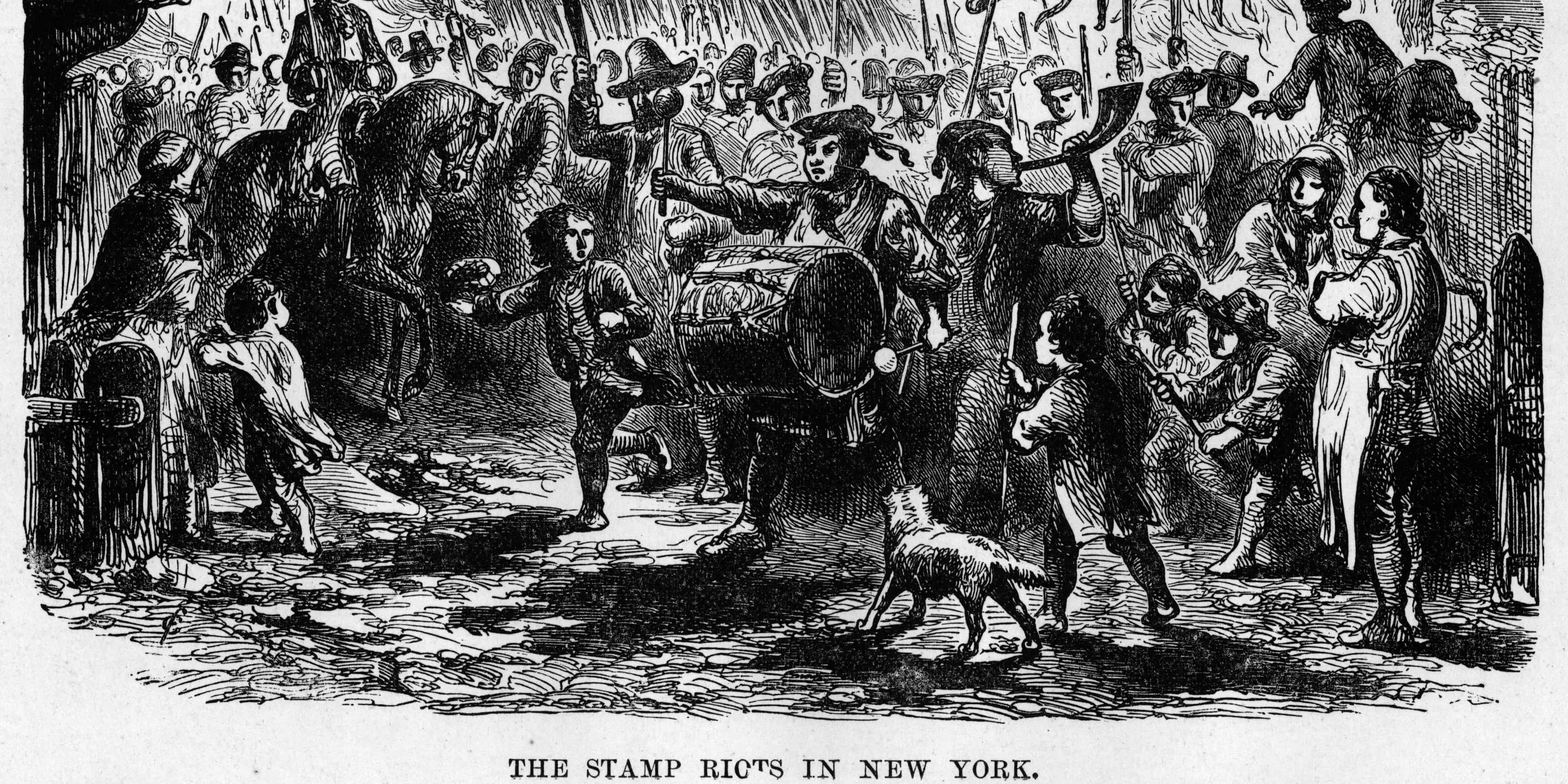
Before the Boston Tea Party and the shots fired at Lexington and Concord, there was a single, explosive catalyst that united the American colonies in defiance of the British Crown: the Stamp Act of 1765. The passage of this legislation marked a dramatic shift in British imperial policy, transitioning from mercantile trade regulations to direct taxation on internal colonial commerce. In response, a wave of unprecedented outrage, street violence, and political organizing swept across the Atlantic coast, giving rise to the Stamp Act Riots. This turbulent period did far more than simply protest a tax; it fundamentally altered the relationship between Great Britain and its American subjects, forging a shared colonial identity and birthing the revolutionary infrastructure that would eventually secure American independence. To understand the birth of the United States, one must first look at the ashes of the colonial estates destroyed during those fateful summer nights of 1765.
Historical Background and the Catalyst of the Stamp Act
In 1763, Great Britain emerged victorious from the Seven Years’ War (known in North America as the French and Indian War). While the Treaty of Paris cemented Britain’s status as the dominant global superpower, it also left the empire with a staggering national debt. Imperial administrators in London believed that the American colonists, who had benefited directly from British military protection, should contribute to the upkeep of the 10,000 British troops stationed along the western frontier. Prime Prime Minister George Grenville sought a reliable source of revenue to offset these massive expenditures.
Unlike previous customs duties that regulated external trade, such as the Sugar Act of 1764, the Stamp Act, approved by Parliament on March 22, 1765, was the first direct, internal tax levied on the daily lives of colonists. It mandated that virtually all printed paper—including legal documents, wills, land deeds, newspapers, pamphlets, academic degrees, and even playing cards—must bear an official revenue stamp, purchased from crown-appointed distributors. Furthermore, the act bypassed traditional colonial courts, stipulating that violators would be tried in vice-admiralty courts without a jury. This was a direct assault on what the colonists viewed as their fundamental rights as Englishmen, sparking immediate and fierce resistance.
Detailed Timeline of the Stamp Act Crisis (1765–1766)
The resistance to the Stamp Act unfolded rapidly, shifting from legal petitions to outright street warfare over the course of a single year:
- March 22, 1765: The British Parliament passes the Stamp Act, scheduled to take effect on November 1.
- May 30, 1765: Patrick Henry delivers his fiery speech and introduces the Virginia Resolves, asserting that only local assemblies have the constitutional right to tax colonists.
- August 14, 1765: The first major riot erupts in Boston. An effigy of stamp distributor Andrew Oliver is hung from a century-old elm tree, which would soon be christened the Liberty Tree. His home and office are ransacked by an angry mob.
- August 15, 1765: Andrew Oliver resigns his post, realizing the physical danger of trying to enforce the tax.
- August 26, 1765: Bostonians attack and gut the luxurious mansion of Lieutenant Governor Thomas Hutchinson, demonstrating that popular anger extended to the colonial administration itself.
- October 7–25, 1765: The Stamp Act Congress meets in New York City, marking the first coordinated political action by multiple colonies against British policy.
- November 1, 1765: The Stamp Act officially goes into effect, but with no distributors left to enforce it, business continues in defiance of the law.
- March 18, 1766: Parliament repeals the Stamp Act due to pressure from British merchants suffering under colonial boycotts, but simultaneously passes the Declaratory Act to assert absolute parliamentary supremacy.
Key Figures of the Resistance
The Stamp Act resistance brought together a diverse array of individuals, from wealthy merchants and brilliant lawyers to working-class artisans and tavern keepers.
Andrew Oliver and Thomas Hutchinson
Andrew Oliver, a wealthy Boston merchant and provincial secretary, was appointed the stamp distributor for Massachusetts without his prior knowledge. He quickly became the primary target of public rage. His brother-in-law, Thomas Hutchinson, the Lieutenant Governor and Chief Justice of Massachusetts, privately opposed the Stamp Act but publicly supported the supremacy of Parliament. This dual stance made Hutchinson an enemy of the radical Whigs, resulting in the complete destruction of his Boston home, where priceless historical manuscripts and books were scattered into the muddy streets.
Patrick Henry and Legislative Defiance
In the Southern theater of opposition, the newly elected Patrick Henry electrified the colonies. Speaking before the Virginia House of Burgesses, the oldest legislative assembly in colonial America, Henry declared that any individual who supported British taxation of Virginians was an enemy of the colony. His powerful rhetoric led to the adoption of the Virginia Resolves, which provided the intellectual and constitutional arguments that legitimized active resistance across the continent.

The Sons of Liberty and the Loyal Nine
In Boston, the initial resistance was organized by the “Loyal Nine,” a clandestine group of artisans and shopkeepers. Recognizing the need for a broader coalition, they expanded their network to form the Sons of Liberty. This group, which eventually included influential figures like Samuel Adams and Paul Revere, coordinated protests, enforced non-importation agreements against British goods, and established committees of correspondence to unify opposition across the 13 colonies.
Major Turning Points of the Crisis
The protest movement was characterized by two main turning points that shifted the resistance from local, uncoordinated riots to a unified, inter-colonial rebellion.
The Liberty Tree as a Sacred Symbol of Resistance
The century-old elm tree in Boston, under which Andrew Oliver’s effigy was hung, became the symbolic headquarters of the Boston patriots. Christened the “Liberty Tree,” it served as a gathering place for rallies, speeches, and symbolic hangings of British officials. This physical space galvanized the working class and bridged the gap between elite political theorists and everyday citizens, establishing a shared public square for revolutionary fervor.
The Stamp Act Congress and Coordinated Boycotts
In October 1765, representatives from nine colonies gathered in New York for the Stamp Act Congress. This historic assembly produced the “Declaration of Rights and Grievances,” which argued that since colonists were not represented in Parliament, they could not constitutionally be taxed by it. Simultaneously, merchants in major ports like Boston, New York, and Philadelphia signed non-importation agreements. The resulting economic freeze devastated British manufacturers, who then successfully lobbied Parliament for the repeal of the act.
Long-Term Impact: Laying the Groundwork for Revolution
While the Stamp Act was repealed in 1766, the political landscape of British North America had changed forever. The crisis established several crucial precedents that directly enabled the American Revolution a decade later.
First, it proved that unified colonial action could force the British government to back down. The success of the boycotts showed the power of economic warfare. Second, it created the organizational infrastructure—such as the Sons of Liberty and the Committees of Correspondence—that would later coordinate the resistance to the Townshend Acts, the Boston Massacre, and the Coercive Acts. Finally, the ideological arguments forged in 1765 regarding “no taxation without representation” became the bedrock of American constitutional theory, which the Declaration of Independence would later formalize as a list of grievances against King George III.
Lesser-Known Facts About the Stamp Act Riots
- Playing Cards and Dice Were Heavily Taxed: The Stamp Act did not just target lawyers and merchants; it directly affected sailors, tavern-goers, and gamblers. Playing cards were taxed at one shilling per pack, and dice were taxed at ten shillings per pair, making recreation in colonial taverns a highly political affair.
- The Stamp Act Denied a Basic English Right: Under the act, accused smugglers and tax evaders were tried in admiralty courts in Halifax, Nova Scotia, rather than before a local jury of their peers. Colonists viewed this as a direct assault on the Magna Carta and their fundamental rights as English subjects.
- The Destruction of a Historic Library: When the mob attacked Thomas Hutchinson’s mansion on August 26, 1765, they did not just break furniture. They destroyed one of the finest libraries in early America, throwing rare historical documents concerning the early settlement of the Massachusetts Bay Colony into the mud.
Why the Stamp Act Riots Still Matter Today
The Stamp Act Riots represent the moment when ordinary citizens realized they had the agency to challenge systemic injustice. The protests established a legacy of civil disobedience, demonstrating that when a government overreaches and acts without the consent of the governed, the public has a right—and indeed a duty—to resist. Modern debates over taxation, civil liberties, and the right to assemble peacefully all trace their lineage back to those passionate Bostonians who gathered under the boughs of the Liberty Tree.
People Also Ask
Why was the Stamp Act passed?
The British Parliament passed the Stamp Act in 1765 to raise revenue to pay off the massive debts incurred during the French and Indian War, and to fund the ongoing stationing of British troops in North America.
What does “No Taxation Without Representation” mean?
It was the political slogan of the American colonists, asserting that because they had no elected representatives in the British Parliament, Parliament had no constitutional authority to levy direct taxes upon them.
How did the British react to the Stamp Act Riots?
While the British government was shocked by the violence and initially tried to enforce the act, the combination of colonial riots and devastating merchant boycotts forced Parliament to repeal the Stamp Act in March 1766, though they simultaneously passed the Declaratory Act to assert their absolute authority.
Conclusion
The Stamp Act Riots of 1765 were the true opening salvo of the American struggle for self-determination. By attempting to impose a direct tax without colonial consent, the British Crown unwittingly united thirteen separate, often quarreling colonies under a single banner of resistance. The legacy of the Liberty Tree, the violent crowds of Boston, and the sophisticated legal arguments of the Stamp Act Congress formed the crucible from which a new, independent nation would ultimately emerge.


