The story of the American Revolution is one of the most remarkable chapters in human history, detailing how a loosely organized collection of thirteen distinct British colonies dared to challenge the world’s most formidable military and economic empire. Far from being a neat, inevitable march toward liberty, the American Revolution was a messy, dangerous, and deeply divisive conflict that reshaped the global political landscape forever. It was a war born out of fiery debates over representation, fueled by the visionary rhetoric of the Enlightenment, and ultimately decided on blood-drenched battlefields by a diverse cast of characters. To truly understand the United States today, one must explore the intricate tapestry of the Revolutionary War—a struggle defined not just by legendary generals and statesmen, but also by overlooked patriots, spy networks, and everyday citizens who risked everything for the promise of self-governance.
Historical Background: The Spark of Rebellion
The roots of the American Revolution (1775–1783) were planted decades before the first shots were fired at Lexington and Concord. For over a century, the American colonies operated under a policy of “salutary neglect,” where the British Crown largely left them to manage their own local affairs and economies. This fostered a strong sense of independence and self-reliance among the colonists. However, this peaceful coexistence shattered in the wake of the French and Indian War (1754–1763). While Great Britain emerged victorious, securing vast new territories in North America, the conflict left the empire with a staggering national debt.
To replenish its treasury, the British government, under King George III and Parliament, decided that the American colonists should help pay for the military protection they had received. What followed was a series of legislative acts designed to extract revenue from the colonies, beginning with the Sugar Act of 1764 and the infamous Stamp Act of 1765. These taxes provoked widespread outrage, not because of the financial burden they imposed, but because of the underlying constitutional principle. Colonists argued that they could not be lawfully taxed by a Parliament in London where they had no elected representatives—giving rise to the rallying cry: “No taxation without representation.”
The Root Causes: Why the Colonies Rebelled
As the British government doubled down on its right to tax the colonies, tensions escalated into open defiance. The passage of the Townshend Acts in 1767, which taxed everyday goods like glass, lead, paint, paper, and tea, led to boycotts and protests. In Boston, a hotbed of revolutionary sentiment, these tensions boiled over during the Boston Massacre of 1770, where British soldiers fired into an angry mob, killing five colonists. While a temporary calm followed the repeal of most of the Townshend duties, the spark was relit with the Tea Act of 1773.

In protest, a group known as the Sons of Liberty disguised themselves and dumped 342 chests of tea into Boston Harbor—an event now famously known as the Boston Tea Party. Furious, the British Parliament retaliated with the Coercive Acts of 1774 (called the “Intolerable Acts” by colonists), which closed Boston Harbor, suspended local self-government in Massachusetts, and forced colonists to house British troops. Instead of isolating Massachusetts as Parliament intended, these harsh measures united the colonies. They convened the First Continental Congress in late 1774 to coordinate their resistance, laying the groundwork for a break from Great Britain. When local militias and British regulars clashed in April 1775, the political dispute turned into an armed rebellion, prompting the realization that the ultimate declaration of independence was also a list of grievances that could only be resolved by sword and musket.
Chronological Timeline of Key Revolutionary War Events
The Revolutionary War was a long, grueling conflict marked by dramatic reversals of fortune. Here is a timeline of the pivotal events that shaped the war:
- April 19, 1775 – The Battles of Lexington and Concord: The “shot heard ’round the world” is fired, officially starting the armed conflict in Massachusetts.
- June 17, 1775 – The Battle of Bunker Hill: British forces capture the hills around Boston, but suffer massive casualties, proving the colonial militia can stand up to professional troops.
- July 4, 1776 – The Declaration of Independence: The Second Continental Congress formally adopts the document, transforming a rebellion for colonial rights into a war for national sovereignty.
- December 25–26, 1776 – Crossing the Delaware: General George Washington leads a daring surprise attack on Hessian forces in Trenton, New Jersey, reviving the fading morale of the Continental Army.
- October 17, 1777 – The Battle of Saratoga: British General John Burgoyne surrenders his army in New York, a massive victory that convinces France to formally enter the war as an American ally.
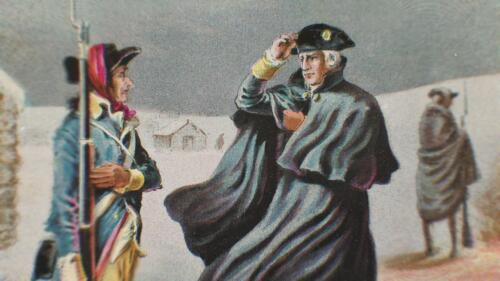
- Winter 1777–1778 – Valley Forge encampment: The Continental Army endures severe hardships but emerges as a highly disciplined fighting force under the training of Baron von Steuben.
- October 19, 1781 – The Siege of Yorktown: Combined American and French forces trap British General Lord Cornwallis in Virginia, forcing his surrender and effectively ending major land operations.
- September 3, 1783 – The Treaty of Paris: Great Britain formally recognizes the independence of the United States of America.
Pivotal Turning Points: From Despair to Victory
At the outset of the war, the American cause seemed nearly hopeless. The Continental Army had no established navy, very little money, and was facing the most powerful military machine on the planet. Even George Washington struggled initially, suffering major defeats in New York and failing to prevent the British from capturing the capital of Philadelphia. However, several critical turning points altered the course of history.

The first and most significant turning point was the Battle of Saratoga in the autumn of 1777. This American victory shattered British plans to cut New England off from the rest of the colonies. More importantly, it proved to foreign powers—particularly France—that the Americans had a genuine chance of winning. Recognizing an opportunity to weaken their imperial rival, the French signed an alliance with the young United States. There were numerous ways the French helped win the American Revolution, including providing vital naval superiority, sending seasoned commanders like the Marquis de Lafayette, and supplying the Continental Army with much-needed gunpowder, uniform fabric, and financial loans. Without French intervention, the war may have ended in an American defeat.
Key Figures of the Revolution: Leaders, Soldiers, and Spies
The success of the American Revolution relied heavily on the extraordinary leadership, resolve, and sacrifice of diverse individuals. While the


