In the quiet, deeply pious streets of 17th-century Massachusetts, conformity was not merely a social preference—it was a matter of survival. Decades before the infamous hysteria in Salem, a wealthy and outspoken woman named Anne Hibbins paid the ultimate price for challenging the rigid, patriarchal boundaries of her Puritan community. On June 19, 1656, Hibbins was marched to the Boston Common and hanged as a witch. Her execution did not stem from mysterious spells or occult rituals; rather, it was the culmination of years of social friction, a highly publicized lawsuit against local craftsmen, and her refusal to remain silent in a society that demanded female submission. As a prominent socialite and the widow of one of the colony’s most influential magistrates, her death sent shockwaves through the region, laying bare the chilling truth that in early America, no woman—no matter how wealthy or well-connected—was safe from the deadly brand of witchcraft if she dared to speak her mind.
The Historical Background: A Puritan Theocracy and a Wealthy Rebel
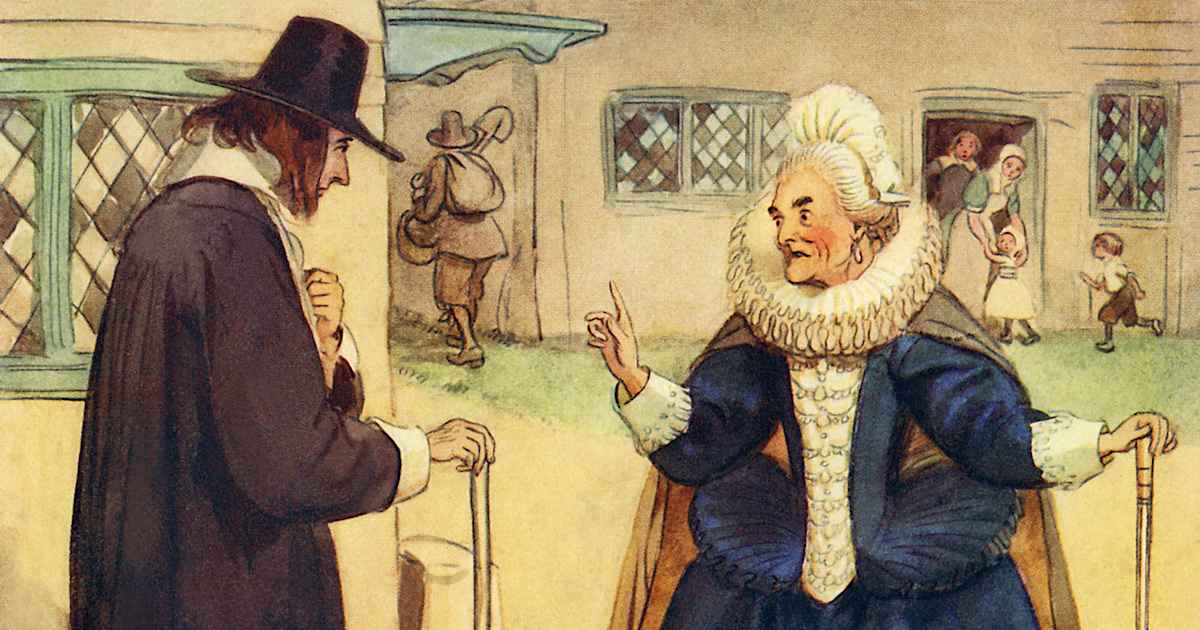
To understand the tragic fate of Anne Hibbins, one must look at the unique sociopolitical landscape of early New England. During the mid-1600s, Boston functioned as a tight-knit Puritan theocracy where church law and civil law were virtually indistinguishable. Women were expected to be “silent partners” in domestic life, deferring entirely to their husbands and church elders. You can discover more about this highly structured way of life in our exploration of life in the 13 colonies, where religious devotion dictated every aspect of daily existence.
Anne Hibbins, who immigrated to Boston from Shropshire, England in the 1630s alongside her second husband, William Hibbins, did not fit this submissive mold. William was a highly successful merchant and a respected political figure, eventually serving as an Assistant to the Massachusetts General Court—a position of immense authority in the colony. Anne was also related by marriage to Richard Bellingham, a powerful magistrate who would later become Governor of Massachusetts. This elite status initially provided the Hibbins family with immense privilege and social standing.
However, the family’s fortunes took a severe blow when William lost approximately 500 pounds in a disastrous shipping error, a monumental sum at a time when the average colonial estate was valued at less than half that amount. Historians suggest that this sudden financial decline deeply affected Anne’s temperament, making her more protective of her remaining wealth and highly sensitive to exploitation. It was this financial anxiety, combined with her naturally sharp mind and demanding standards, that set her on a direct collision course with her neighbors.
Chronological Timeline of the Tragedy
- 1630s: Anne and William Hibbins immigrate to Boston, Massachusetts, leaving three sons from Anne’s first marriage in England.
- 1640: Anne hires a group of local carpenters to remodel her house and sues them for overcharging her, initiating a bitter community dispute.
- 1641: Following a lengthy church hearing regarding her “abrasive” behavior, the First Church of Boston excommunicates Anne for “usurping her husband’s authority”.
- 1654: William Hibbins dies, stripping Anne of her primary legal protection and political shield.
- 1655: Local detractors accuse the widowed Anne of witchcraft; she is arrested, tried, and found guilty by a local jury.
- June 1656: After the magistrates hesitate, the General Court steps in to demand a retrial, ultimately reaffirming her guilty verdict.
- June 19, 1656: Anne Hibbins is hanged on the Boston Common and buried in an unmarked grave.
The Dispute with the Carpenters: The Catalyst of Accusation
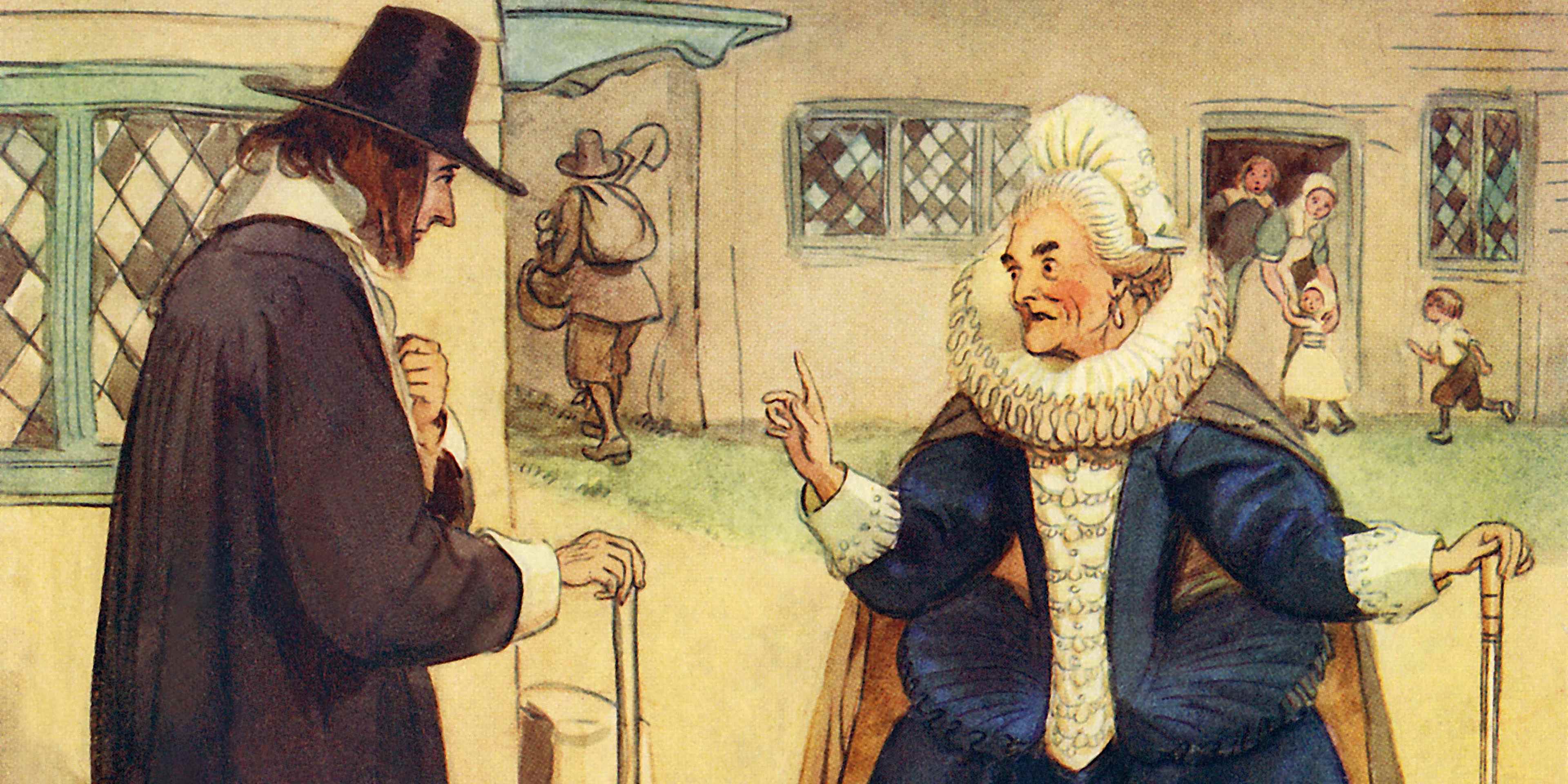
The long road to the gallows began in 1640 with a remarkably mundane conflict. Anne Hibbins hired local carpenters to carry out extensive work on her home. Upon receiving the final bill, she was outraged to find they had charged her more than double the standard rate. Rather than quietly accepting the fee, as was expected of a Puritan gentlewoman, Anne demanded a fair price and eventually took the matter to civil court.
While Anne technically won her lawsuit, her assertive, public pursuit of justice deeply disturbed the male leadership of Boston. In the eyes of the Puritan clergy, a woman engaging in public litigation was an affront to divine order. Because her husband was a magistrate, her actions were viewed as a direct failure of William to control his household. Consequently, the First Church of Boston convened an ecclesiastical inquest to investigate Anne’s “turbulent” spirit.
During the church hearings, elders did not focus on the carpenters’ potential fraud. Instead, they fiercely condemned Anne for “usurping” her husband’s authority. When Anne refused to show contrition or apologize, the church elders took the extreme step of excommunicating her. One church elder famously remarked during the proceedings that she made “a wisp of her husband,” actively undermining the patriarchal hierarchy that the colony relied upon. Although her husband’s ongoing political power kept her physically safe for the next decade, her reputation was permanently tarnished, and she was labeled a social pariah.
Important Figures and Their Crucial Roles
The tragedy of Anne Hibbins was shaped by several influential individuals whose actions and words defined her trial:
- William Hibbins: Anne’s second husband, whose high-ranking position as Assistant Governor served as a vital shield against her enemies until his death in 1654.
- Governor John Endecott: The stern and uncompromising leader of the Massachusetts Bay Colony who ultimately presided over her trial and signed her death warrant.
- John Norton: A prominent Boston minister who later criticized the hysteria surrounding her execution, famously stating that Anne was “hanged for a witch only for having more wit than her neighbors”.
- Humphrey Atherton: A military leader and magistrate who succeeded William Hibbins as Assistant Governor and was reportedly highly influential in pushing for Anne’s prosecution.
Turning Points: From Excommunication to the Gallows
The true turning point in Anne’s life occurred in 1654 with the death of her husband, William. In Puritan New England, a widow without immediate male relatives was incredibly vulnerable. Anne’s three sons from her first marriage were still living in England, leaving her completely isolated in a community that had harbored a grudge against her for over a decade.
Sensing her vulnerability, her long-time foes quickly mobilized. In 1655, rumors of witchcraft began to swirl around the wealthy widow. Accusers claimed she possessed unnatural knowledge and used dark magic to cause misfortunes, with some even whispering that she had used witchcraft to murder her late husband. Anne was arrested and put on trial. While a local jury initially found her guilty, the local magistrates—perhaps uneasy about executing the widow of their former colleague—hesitated and refused to accept the verdict, referring the case to the General Court.
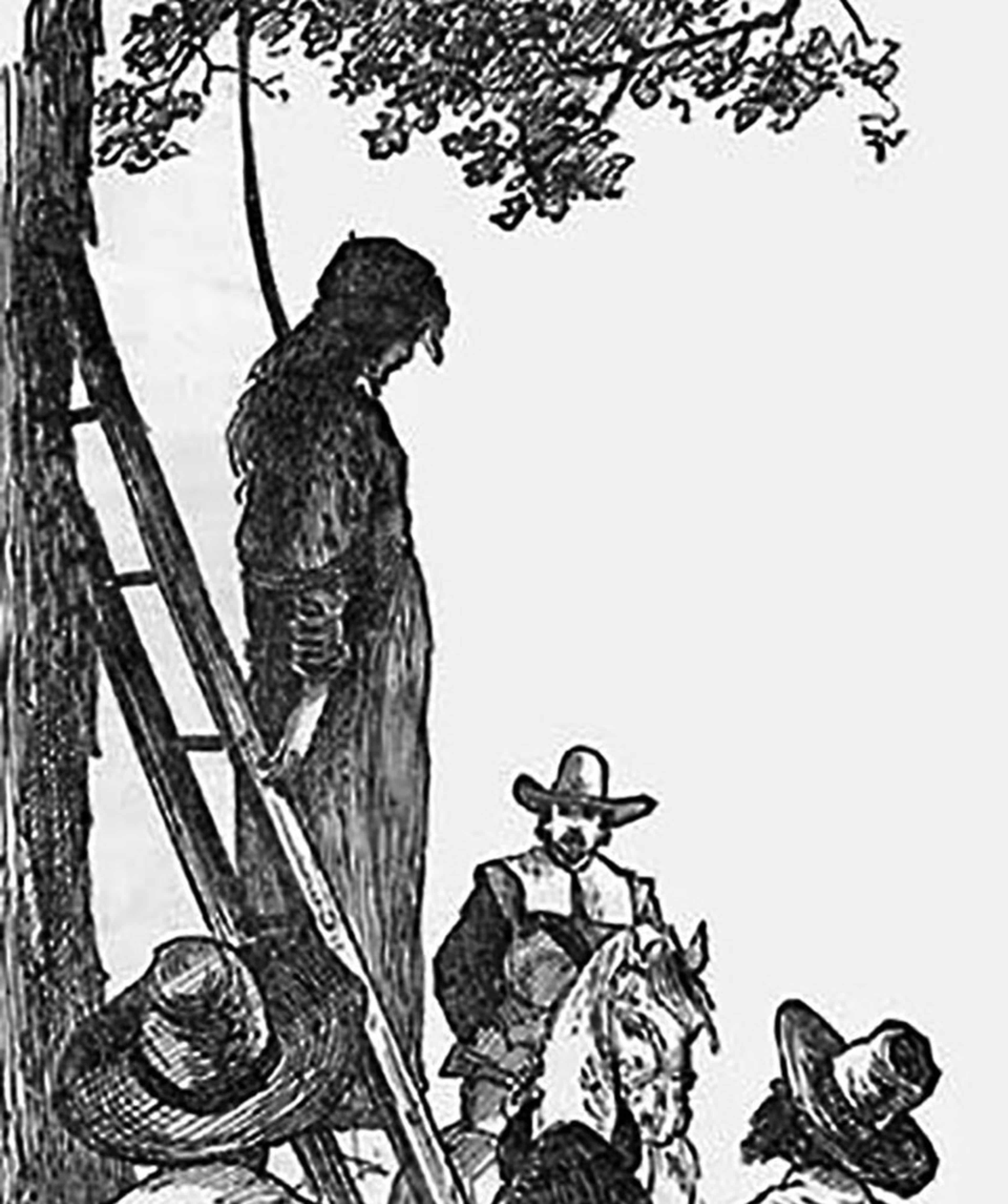
This referral was a rare and highly unusual judicial move in the history of witchcraft trials before Salem. However, the popular clamor and deep-seated resentment against Anne were too strong to contain. The General Court, made up of deputies who outvoted the more cautious magistrates, repeated the guilty verdict in May 1656. Realizing her fate was sealed, Anne spent her final weeks in prison meticulously organizing her estate and drafting a will to protect her sons’ inheritance before she was led to the Great Elm tree on the Boston Common to be hanged.
The Long-Term Impact on Colonial America
Anne Hibbins was the first high-status colonial American to be executed during the early witch trials. Traditionally, witchcraft accusations were leveled against the poorest, most marginalized members of society who lacked the resources to defend themselves. By executing a wealthy, politically connected widow, the Massachusetts authorities sent a chilling message: no one was safe from the reach of spiritual paranoia.
Ironically, her execution caused a profound backlash among the colony’s ruling elite. Shocked by the realization that even one of their own could be executed on such flimsy evidence, the magistrates and clergy of Massachusetts acted as a powerful brake on further witchcraft accusations for more than three decades. This cautious stance prevented widespread executions in the colony until the devastating outbreak of the Salem witch trials in 1692, when a new generation of accusers swept away judicial restraints.
Fascinating and Lesser-Known Facts
- The Scarlet Letter Connection: Nearly two centuries after her death, author Nathaniel Hawthorne immortalized Anne Hibbins as a fictional character, “Mistress Hibbins,” in his 1850 masterpiece The Scarlet Letter. In the novel, she is depicted as a self-aware, eerie figure who openly invites Hester Prynne to meet the “Black Man” in the forest, serving as a dark mirror to the hypocrisy of the Puritan magistrates.
- The Gallows’ Location: Anne was hanged on the Boston Common near the site of the legendary “Great Elm” tree, close to where the modern-day Frog Pond is located. Today, millions of tourists walk past this historic site, often completely unaware of the dark history beneath their feet.
- A Precise Mind to the End: Despite the terror of her impending execution, Anne remained remarkably lucid and organized. She spent her final month drafting a detailed will that ensured her estate was legally transferred to her sons in England, refusing to let the colony seize her wealth.
Why Her Story Still Matters Today
The tragic tale of Anne Hibbins is far more than a dusty historical footnote; it is a timeless case study in how societies weaponize fear and orthodoxy to silence non-conforming individuals. Today, her legacy resonates deeply in discussions surrounding gender equality, double standards for strong-willed women, and the dangers of combining religious dogma with judicial power. Anne was not executed because she practiced magic, but because she possessed “more wit than her neighbors” and refused to let a patriarchal society silence her voice.
People Also Ask
Who was the first person executed for witchcraft in Boston?
The first person executed for witchcraft in Boston was Margaret Jones in 1648, a female physician who was accused of using herbal remedies and medical knowledge to perform “witchcraft”.
How does Anne Hibbins relate to The Scarlet Letter?
Anne Hibbins appears as a fictional character named Mistress Hibbins in Nathaniel Hawthorne’s novel The Scarlet Letter. Hawthorne used her real-life execution and reputation as an accused witch to critique the deep hypocrisy of Puritan society.
Why was Anne Hibbins excommunicated from her church?
Anne Hibbins was excommunicated from the First Church of Boston in 1641 after a prolonged public dispute with local carpenters over their remodeling fees. The church elders charged her with “usurping her husband’s authority” and possessing a “turbulent” spirit because she refused to remain submissive.
The Ultimate Historical Takeaway
Ultimately, the life and death of Anne Hibbins stand as a solemn monument to the power of personal conviction in the face of absolute conformity. Her refusal to back down in a dispute over her own home, combined with her sharp intellect, transformed her from a wealthy socialite into a colonial martyr. As we look back on the complex history of early America, the story of Mistress Hibbins serves as a powerful reminder of the vital importance of protecting individual voices, defending civil liberties, and standing firm against the tides of social intolerance.


