The phrase “Shot Heard Round the World” is one of the most evocative metaphors in global history, representing the exact instant a local colonial dispute transformed into a global revolution. At dawn on April 19, 1775, a single, anonymous gunshot fired on the village green of Lexington, Massachusetts, shattered the uneasy peace between Great Britain and her American colonies. This momentous event did not merely signal the outbreak of a local rebellion; it set off a chain reaction that would permanently dismantle empires, reshape global geopolitics, and give birth to a new republic founded on the ideals of liberty and self-governance. Understanding this critical turning point requires looking beyond the myth to analyze the complex web of political defiance, military miscalculations, and the raw determination of everyday citizens who stood their ground against the world’s most formidable military power.
The Historical Background: A Powder Keg in New England
To understand why a single gunshot could trigger a global conflict, one must examine the highly volatile political atmosphere of the mid-1770s. Following the French and Indian War, Great Britain found itself deeply in debt and sought to generate revenue by taxing its American colonies. Measures like the Stamp Act, the Townshend Acts, and the Tea Act were met with fierce resistance, culminating in the Boston Tea Party of 1773. In response, the British Parliament enacted the Coercive Acts—referred to by colonists as the “Intolerable Acts”—which suspended Massachusetts’ self-governance, closed Boston Harbor, and placed the colony under direct military rule under General Thomas Gage.
As tensions escalated throughout the 13 colonies, local communities began preparing for the worst. Provincial congresses were formed, militias were reorganized, and elite groups of highly mobile militiamen, known as “minutemen,” were trained to deploy at a moment’s notice. The colonists began stockpiling gunpowder, muskets, and artillery in rural towns away from occupied Boston, creating a highly combustible situation that only needed a spark to ignite.
A Detailed Timeline of April 18–19, 1775
The events of that fateful spring morning were characterized by rapid mobilization, complex signaling networks, and unexpected encounters. Below is a chronological breakdown of how the conflict unfolded:
- April 18, 1775 (10:00 PM): British Lieutenant Colonel Francis Smith receives orders from General Gage to march secretly to Concord, Massachusetts, with roughly 700 elite British soldiers. Their objective is to locate and destroy a cache of colonial weapons and ammunition.
- April 18, 1775 (11:00 PM): Dr. Joseph Warren, a key patriot leader in Boston, discovers the plan. He dispatches silver-smith Paul Revere and tanner William Dawes to ride toward Lexington and Concord to warn local leaders, including John Hancock and Samuel Adams, of the approaching troops.
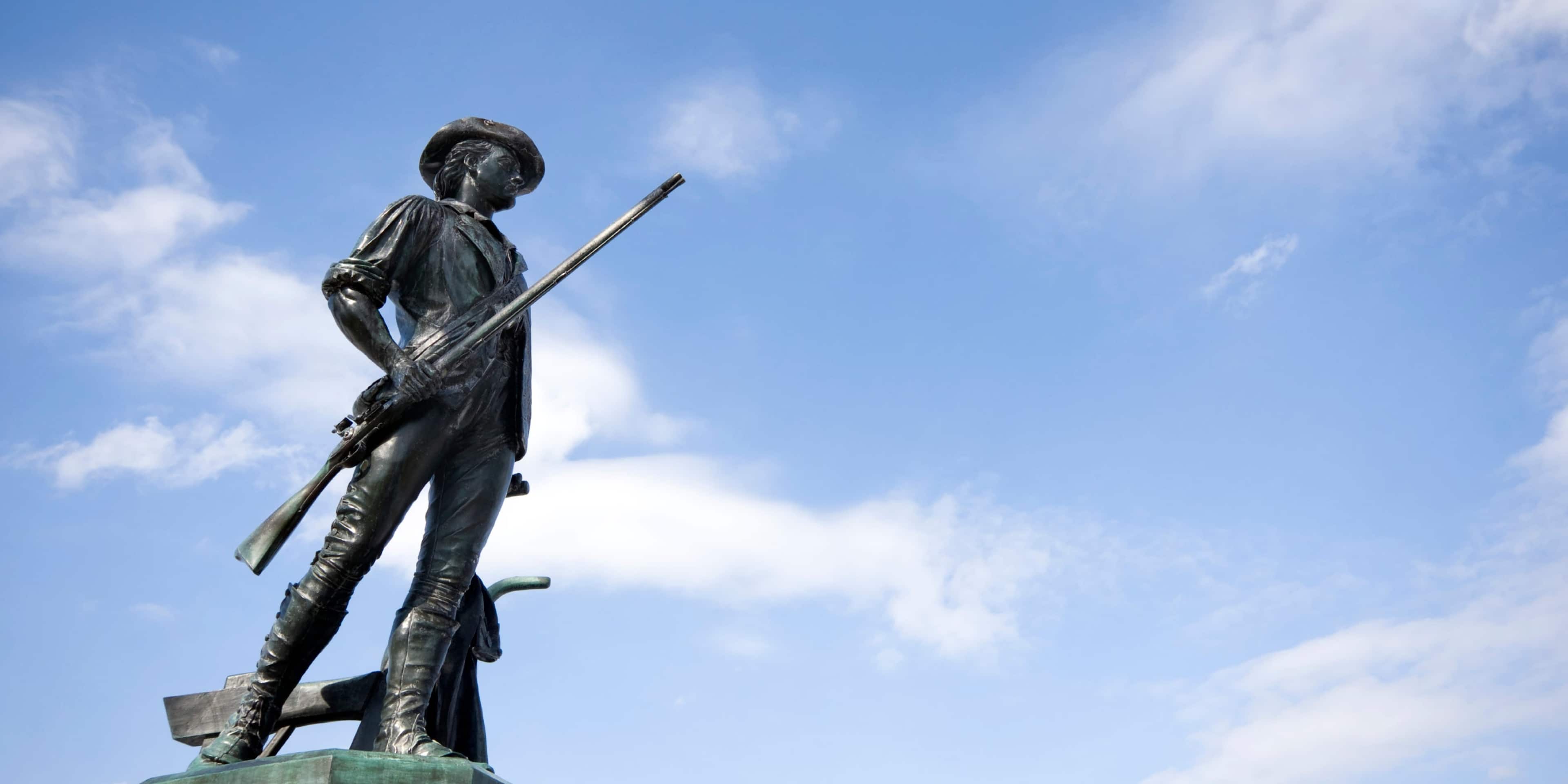
- April 19, 1775 (4:30 AM): The alarm bells, drums, and signal fires rouse local militias. In Lexington, Captain John Parker assembles approximately 70 militiamen on the village green to await the arrival of the massive British vanguard.
- April 19, 1775 (5:00 AM): The British advance guard, led by Major John Pitcairn, enters Lexington. He orders the colonists to disperse. Suddenly, a shot rings out. Although its source remains a mystery, both sides begin firing. When the smoke clears, eight Americans are dead and ten are wounded. Only one British soldier is lightly injured.
- April 19, 1775 (9:00 AM): The British army reaches Concord. Finding few weapons, they set fire to some remaining carriage wheels. Across the Concord River, hundreds of colonial militia gather at the North Bridge. Observing the smoke, they believe the town is being burned and march forward, engaging the British in a deadly exchange of gunfire.
- April 19, 1775 (12:00 PM – Evening): Realizing they are outnumbered and vulnerable, the British begin a long retreat back to Boston. Thousands of militia fighters line the roads, utilizing guerrilla-style tactics to harass the retreating redcoats. By the time they reach safety, the British suffer nearly 300 casualties, while the Americans lose approximately 95 men.
Key Figures and Their Lasting Legacy
Several historical figures left an indelible mark on the events of April 19, 1775, shaping the trajectory of the American Revolutionary War:
Captain John Parker
A veteran of the French and Indian War, Parker commanded the Lexington militia. Facing a vastly superior British force, he famously told his men: “Stand your ground. Don’t fire unless fired upon, but if they mean to have a war, let it begin here.” Though he died of tuberculosis later that year, his steadfast leadership on the green solidified him as an early icon of American resolve.
Lt. Colonel Francis Smith and Major John Pitcairn
Smith was the overall commander of the British expedition, while Pitcairn led the advance guard into Lexington. Pitcairn, a veteran Marine, actively tried to prevent his troops from firing in Lexington, but lost control of the situation as chaos erupted. Both officers represented the rigid, traditional military structure of the British Empire, which struggled to adapt to the asymmetrical warfare launched by the colonists.
Paul Revere and the “Alarm Riders”
Though Revere is immortalized in Henry Wadsworth Longfellow’s poetry, his ride was actually part of a highly coordinated network. Alongside William Dawes and Dr. Samuel Prescott, Revere successfully alerted the countryside. His capture by a British patrol before reaching Concord did not stop the warning, as Prescott rode on to deliver the crucial message.
The Turning Point: The Stand at North Bridge
While the bloodshed at Lexington was the opening skirmish, the true military turning point occurred at Concord’s North Bridge. Here, for the first time, colonial officers ordered their men to fire directly upon His Majesty’s soldiers. This defensive stand demonstrated that the colonists were not merely protesting taxes; they were willing to wage a formal war against the crown. It is a prime example of how 3 colonial towns shaped the course of US history, establishing Massachusetts as the cradle of revolutionary defiance.
Where Did the Phrase “Shot Heard Round the World” Originate?
Surprisingly, the phrase was not coined during the battle itself. It first appeared more than sixty years later, in 1837, when the legendary transcendentalist poet Ralph Waldo Emerson wrote “Concord Hymn” for the dedication of the battle monument at the North Bridge. The opening stanza reads:
“By the rude bridge that arched the flood,
Their flag to April’s breeze unfurled,
Here once the embattled farmers stood,
And fired the shot heard round the world.”
Emerson’s grandfather, William Emerson, had witnessed the battle from his home near the bridge, making the connection deeply personal. The poem was set to music and sung by townspeople, forever cementing the poetic metaphor into the global lexicon. Over time, the phrase has also been used to describe other momentous, paradigm-shifting events, such as the assassination of Archduke Franz Ferdinand in 1914 or the famous 1951 game-winning home run by Bobby Thomson.
Lesser-Known Facts About the Historic Battle
Despite its prominence in history books, several fascinating details about the battle are often overlooked:
- The Mystery Shot: To this day, historians cannot definitively prove who fired the first shot at Lexington. Both British soldiers and American militiamen maintained under oath that the other side fired first.
- The Women of Concord: While the men prepared to fight, local women worked frantically to hide the colonial weapons stockpile. They buried cannons in plowed fields, hid ammunition in attics, and disguised gunpowder inside barrels of flour.
- A Multi-Ethnic Militia: The colonial forces at Lexington and Concord included several Black and Native American patriots who fought alongside their white neighbors, laying the groundwork for a complicated legacy of liberty in the early republic.
Why the Battle of Lexington and Concord Matters Today
The events of April 19, 1775, continue to hold profound significance in modern political discourse. They laid the philosophical foundation for self-determination and civilian-led governance, elements that are key to understanding 13 facts about the 13 colonies and their political evolution. The willingness of ordinary citizens to challenge institutional authority remains a core characteristic of American cultural identity. Today, visitors still flock to the Minute Man National Historical Park to stand where these “embattled farmers” stood, reminding us that the liberties enjoyed today were born out of the bravery of ordinary people who dared to stand their ground.
People Also Ask (FAQs)
Who fired the “Shot Heard Round the World”?
The identity of the person who fired the first shot remains unknown. Eye-witness accounts from both sides contradict each other, with each claiming the other side fired first. It remains one of history’s greatest unsolved mysteries.
Did Paul Revere actually yell “The British are coming!”?
No, this is a myth. Revere’s mission was highly secretive, and shouting in the streets would have alerted British patrols. Instead, he warned residents that “the Regulars are coming out.”


