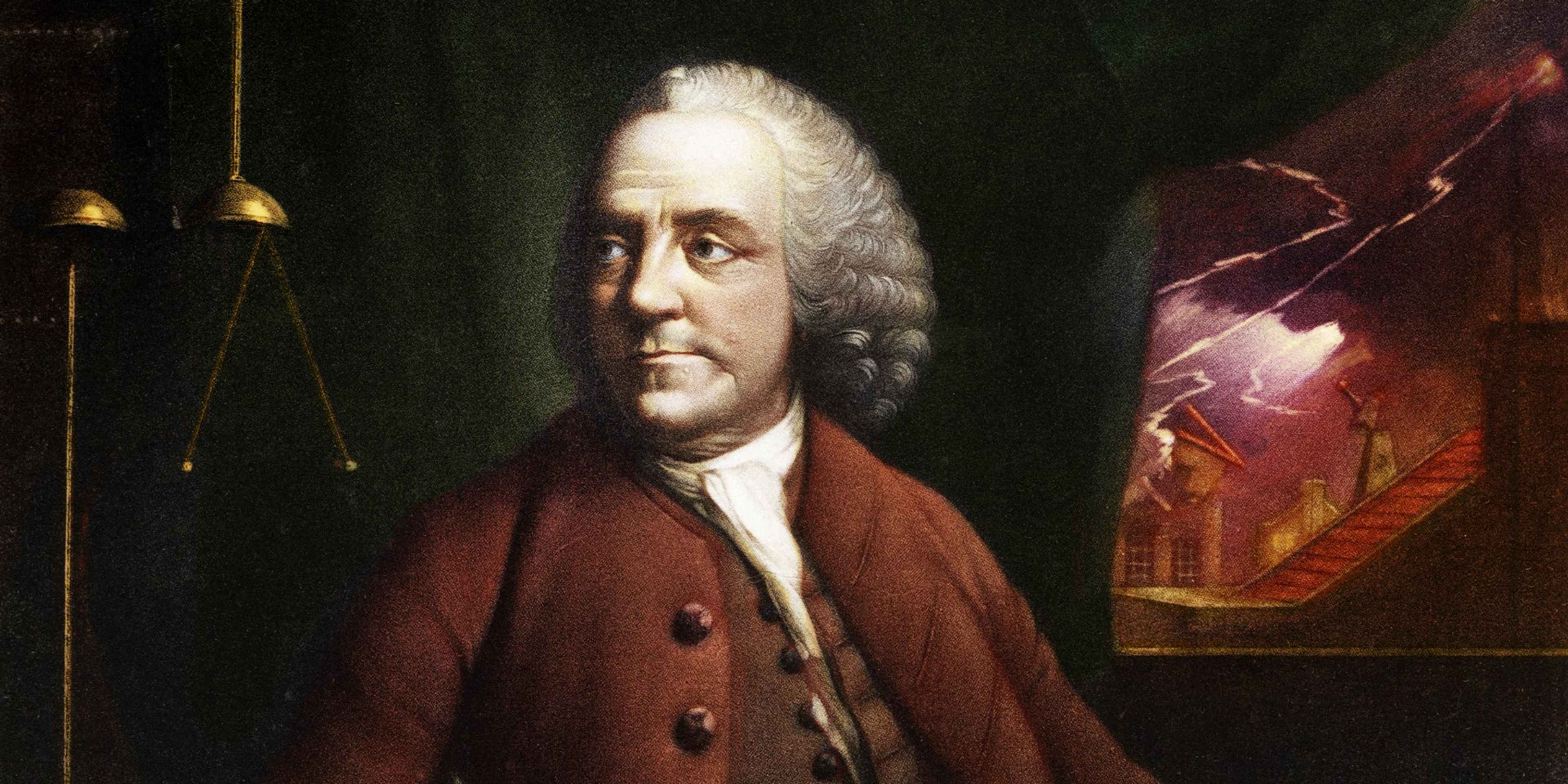
The iconic image of Benjamin Franklin standing in a rain-swept field, flying a kite with a key tied to the string, is deeply woven into the fabric of American mythology. This legendary narrative of Benjamin Franklin’s kite experiment has been taught to school children for generations as the singular moment when humanity “discovered” electricity. However, the true historical record is far more nuanced, collaborative, and shrouded in scientific mystery than popular folklore suggests. Historians and physicists alike continue to debate the exact date, the precise location, and even whether the experiment took place in the exact manner described. Far from a simple rustic display of curiosity, this endeavor was a calculated, highly dangerous attempt to prove a revolutionary theory of natural philosophy that would ultimately reshape the modern world. Exploring the factual reality behind this lightning-charged myth offers us a fascinating glimpse into the intellectual vigor of the 18th-century American Enlightenment and the practical genius of one of America’s most revered founding fathers.
The Age of Enlightenment and the Mystery of Lightning
To truly understand Franklin’s scientific pursuits, one must step back into the mid-18th century, a period defined by the intellectual curiosity of the Age of Enlightenment. During this era, electricity was not a completely unknown force. Scientists and traveling showmen across Europe and the thirteen colonies had already been experimenting with static electricity, utilizing frictional generators and storing charges in specialized glass jars known as Leyden jars. What remained highly debated, however, was the actual nature of lightning itself. Was it a supernatural warning from the heavens, a chemical combustion of sulfurous gases in the atmosphere, or something else entirely?
Franklin, based in Philadelphia, was among a vanguard of natural philosophers who proposed that lightning was not a chemical or mystical event, but simply electrical fluid acting on a monumental scale. Franklin noted that both laboratory sparks and lightning bolts produced a sharp crack, generated light, smelled of sulfur, and could fuse metals. To prove his hypothesis, he needed to find a way to extract electricity directly from the sky, a quest that would fundamentally change how humans perceived the natural world.
A Chronological Timeline of Franklin’s Electrical Discoveries
The journey from a theoretical spark in a Philadelphia study to the global acceptance of atmospheric electricity was marked by a series of critical milestones:
- 1746: Franklin first observes static electricity demonstrations conducted in Boston by Dr. Archibald Spencer, sparking his lifelong obsession with electrical phenomena.
- March 1750: Franklin sends a letter to his London correspondent, Peter Collinson, outlining his theories on lightning and proposing the concept of a protective metal rod.
- July 1750: Franklin drafts a proposal for the “sentry-box experiment,” which involved placing a tall, pointed iron rod atop a high spire to draw electrical charges from storm clouds.
- 1751: Franklin’s compiled correspondence is published in London under the title Experiments and Observations on Electricity, catapulting him into international scientific fame.
- May 10, 1752: French naturalist Thomas-François Dalibard successfully performs Franklin’s sentry-box experiment in Marly-la-Ville, France, drawing sparks from a thundercloud and proving Franklin’s theory.
- June 1752: Lacking a tall church spire in Philadelphia to conduct his own sentry-box test, Franklin reportedly devises the more mobile kite experiment, executing it with his son William.
- October 1752: Franklin publishes his famous account of the successful kite experiment in the Pennsylvania Gazette, contributing immensely to early American print culture.
- August 1753: The dangerous reality of these experiments is tragically realized when Baltic German physicist Georg Wilhelm Richmann is electrocuted and killed in St. Petersburg, Russia, while attempting to replicate the lightning rod experiment.
Key Figures in the Storm: Who Was Involved?
While history often paints Franklin as a lone scientific maverick, his work on electricity was deeply collaborative and built upon the contributions of several key historical figures:
- Benjamin Franklin: The primary theorist who conceived the core hypotheses regarding electrical charge, positive and negative polarity, and the concept of lightning rods.
- William Franklin: Benjamin’s 21-year-old son. Despite popular illustrations depicting a young child holding the kite string, William was actually a fully grown young man who actively assisted his father in performing the dangerous experiment. William would later go on to become the last royal governor of New Jersey.
- Thomas-François Dalibard: The French physicist who translated Franklin’s English papers into French. Encouraged by naturalists like Buffon, Dalibard actually conducted the first successful test of Franklin’s atmospheric electricity theories on May 10, 1752, a month before Franklin’s kite trial.
- Peter Collinson: A British botanist and merchant who acted as Franklin’s intellectual bridge to Europe, presenting Franklin’s letters to the prestigious Royal Society in London.
- Joseph Priestley: The famous English chemist who published The History and Present State of Electricity in 1767. Priestley’s text provides the most detailed description of Franklin’s kite experiment, which he wrote based on personal accounts shared directly by Franklin.
The Myth vs. The Reality: How the Kite Experiment Actually Worked
The popular depiction of the experiment—where a massive bolt of lightning directly strikes Franklin’s kite, traveling down the string and illuminating a key while Franklin stands smiling in a field—is not only a myth but a physical impossibility. Had a direct bolt of lightning hit the kite, both Benjamin and William Franklin would have been instantly electrocuted to death, just as Professor Richmann was a year later.
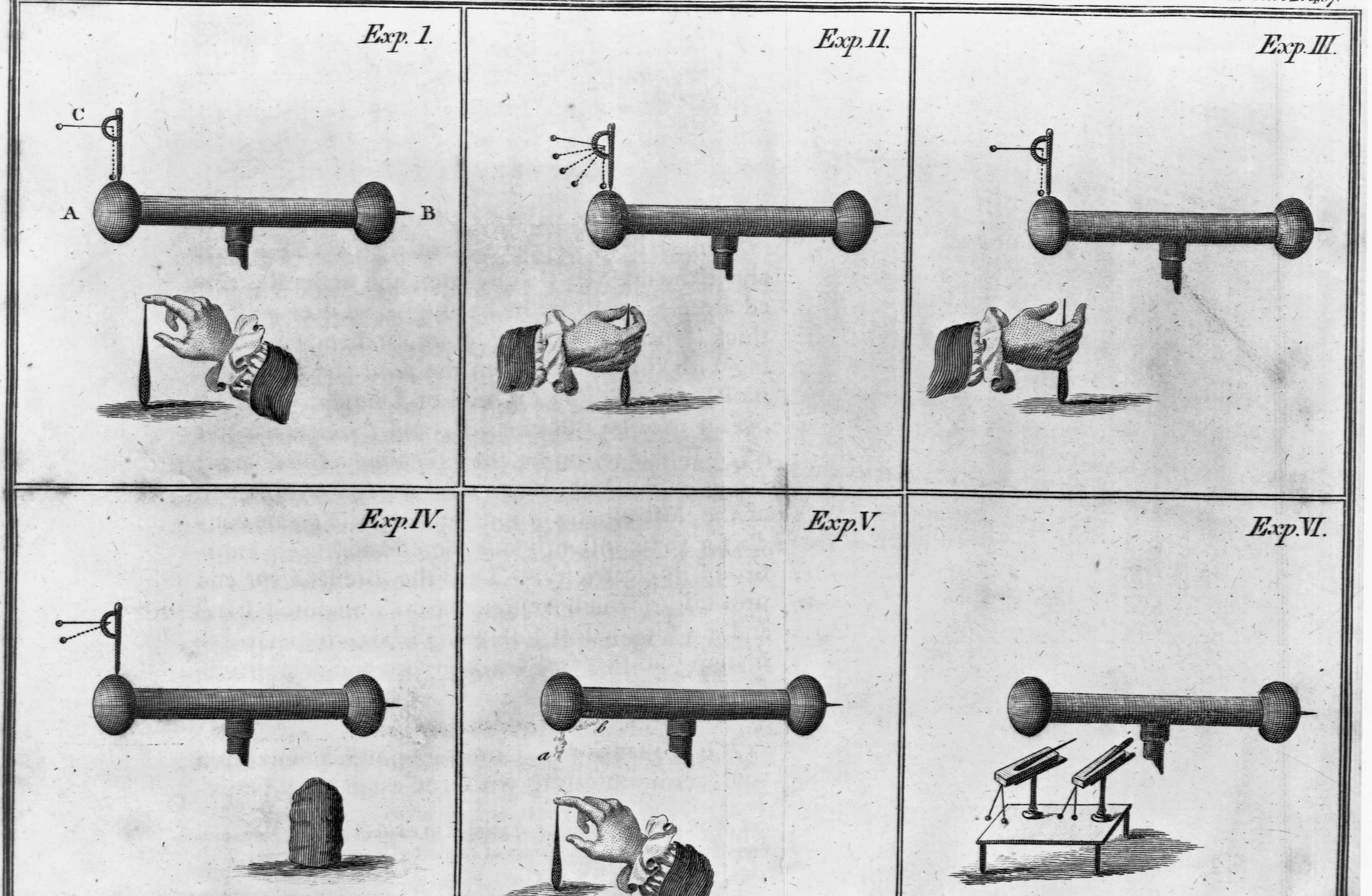
The actual mechanics of the experiment were far more subtle and elegant. Rather than seeking a direct lightning strike, Franklin was attempting to capture the *ambient* electrical charge present in the highly ionized storm clouds. The apparatus consisted of a silk handkerchief stretched over a cedar frame with a sharp pointed wire protruding from the top to collect the electrical “fire”. At the bottom of the hemp string, a metal key was attached. To protect himself, Franklin held a dry silk ribbon tied to the key, and he stood inside a dry shed or doorway. Since dry silk is an insulator, it kept the electric charge from passing into his body.
As the storm approached, the hemp string became wet from the rain, turning it into an excellent electrical conductor. The loose fibers of the hemp string began to stand on end due to mutual repulsion from the static electricity in the air. Franklin then reached out and brought his knuckle close to the key. A brilliant spark jumped from the key to his finger, demonstrating that the clouds held the exact same electrical charge that was produced in laboratories. Franklin was then able to use the key to charge a Leyden jar, proving that atmospheric electricity could be captured, stored, and manipulated just like static electricity.
Long-Term Impact: How the Lightning Rod Changed America and the World
The success of these atmospheric experiments quickly led to one of the most significant innovations in colonial America: the invention of the lightning rod. Prior to Franklin’s invention, lightning was a devastating hazard that regularly burned down wooden houses, barns, and church steeples, often taking entire city blocks with them. People largely viewed these fires as acts of divine retribution, to be met with prayer rather than practical defense.
Franklin’s lightning rod, which he refused to patent so that it could be freely used for the public good, offered a simple, rational defense. By installing a pointed iron rod on top of a building and grounding it with a wire running into the earth, the electrical charge of a storm could be safely diverted away from the structure. This invention did more than just save lives and property; it represented a massive intellectual shift. It proved that human reason, observation, and scientific inquiry could tame and manage the wild, terrifying forces of nature. Furthermore, Franklin’s international acclaim elevated the global scientific standing of the American colonies, showing Europe that profound intellectual breakthroughs could emerge from the western hemisphere.
Fascinating and Lesser-Known Facts About the Experiment
- The Experiment Was Kept a Secret: Franklin was so terrified of public ridicule if his experiment failed that he initially did not tell anyone about his plans except his son William. They slipped away to a quiet common field in Philadelphia to raise the kite in secret.
- A French Priest Repeated It with Wild Results: Following Franklin’s published instructions, a French priest named Abbé Nollet and other European enthusiasts began replicating the atmospheric experiments. In some cases, crowds of curious spectators gathered to watch sparks jump from metal rods during passing storms, turning atmospheric science into a dramatic form of public theater.
- The Date Remains Unknown: Despite schoolbooks celebrating June 10, 1752, as the official date of the experiment, Franklin never actually recorded the exact date. Historians have only been able to narrow it down to sometime in the late spring or early summer of 1752 based on subsequent correspondence.
Why Franklin’s Spark Still Matters Today
Today, Benjamin Franklin’s kite experiment serves as a brilliant reminder of the power of empirical science and the pursuit of practical utility. Franklin did not study electricity simply to satisfy his curiosity; he sought to understand it so that he could solve real-world problems. His work laid the foundation for the entire field of electrical engineering, directly influencing subsequent pioneers like Alessandro Volta, Michael Faraday, and Thomas Edison. In an era where scientific skepticism and empirical evidence are more vital than ever, Franklin’s muddy, rain-drenched pursuit of truth stands as a timeless testament to human ingenuity and the enduring spirit of American scientific exploration.
People Also Ask (FAQ)
Did Benjamin Franklin actually discover electricity?
No, Benjamin Franklin did not discover electricity. Electricity was already a known phenomenon. What Franklin discovered was that lightning is a form of electricity, proving that static laboratory charges and natural atmospheric phenomena are the same physical force.
Did lightning strike the kite during the experiment?
No. If a direct bolt of lightning had struck the kite, Franklin would have likely died. The kite merely gathered ambient electrical charge from the highly charged storm clouds, which traveled down the wet string to the metal key.
Why did Franklin use a key in the experiment?
The key was made of metal, which is an excellent conductor of electricity. It served as a termination point where the collected electrical charge could accumulate and be easily tested by drawing a spark or charging a Leyden jar.
Conclusion: The Practical Legacy of the Electric Myth
Ultimately, whether the kite experiment occurred exactly as Joseph Priestley described or was a simplified, idealized retelling of a series of atmospheric observations, its historical impact is undeniable. Benjamin Franklin successfully bridged the gap between theoretical natural philosophy and life-saving technology. By transforming a terrifying sky-born phenomenon into a controllable, understandable science, he protected early American cities and helped spark a global scientific revolution that continues to power our modern world today.


