In May 1607, three English ships—the Susan Constant, the Godspeed, and the Discovery—carrying 104 men and boys sailed into the Chesapeake Bay, carrying with them the lofty ambitions of the Virginia Company of London. Driven by dreams of gold, effortless riches, and a passage to the Orient, these eager adventurers established Jamestown, the first permanent English settlement in North America. However, the reality they faced was far from the paradise they had envisioned. Instead of gold, they found a swampy, disease-ridden peninsula, hostile native neighbors, and an unforgiving climate that pushed the colony to the absolute brink of total extinction. The story of Jamestown is not just one of heroic pioneering; it is a harrowing saga of disease, famine, political infighting, and a desperate struggle for survival that culminated in the infamous Starving Time. Understanding this dark chapter is essential, as the trials endured on the muddy banks of the James River ultimately forged the political, economic, and social systems that would define the future United States.

Historical Background: The Ill-Fated Search for Virginia Gold
The establishment of Jamestown in 1607 was primarily a commercial venture funded by the Virginia Company of London, a joint-stock company granted a royal charter by King James I. The investors and settlers expected quick returns on their investments, hoping to discover gold mines similar to those the Spanish had plundered in South America. Consequently, the initial manifest of settlers was poorly balanced. It was heavily populated by ‘gentlemen’—aristocrats who considered manual labor beneath them—along with gold refiners, jewelers, and perfumers, but critically lacking in practical farmers, carpenters, and laborers. Compounding this demographic mismatch was their choice of location. Eager to hide their settlement from Spanish warships, they selected a low-lying peninsula 40 miles inland along the James River. What they did not realize was that the site was a swampy marshland infested with malaria-carrying mosquitoes, lacking a reliable source of fresh drinking water, and situated in the middle of the powerful Powhatan Confederacy, ruled by the formidable Chief Powhatan. This precarious setup primed the colony for immediate disaster, as the natural environment itself conspired against their survival.
The Grim Timeline of Jamestown’s Survival
To understand how the colony navigated these extreme hardships, it is vital to examine the chronological progression of its early years:
- May 1607: Settlers land at Jamestown and construct a wooden fort. Within months, more than half of the initial colonists die from disease, typhoid, and starvation.
- September 1608: Captain John Smith is elected president of the local council, implementing strict military discipline and establishing vital, if tense, trade relations with the Powhatan people.
- 1609: John Smith is injured in a gunpowder accident and forced to return to England. Relations with the Powhatan quickly deteriorate.
- Winter 1609–1610: The Starving Time. Sieged by the Powhatan and lacking leadership, the colony’s population plummets from around 500 to fewer than 60 survivors.
- June 1610: The remaining survivors attempt to abandon Jamestown, but are met at the mouth of the river by Lord De La Warr, who arrives with fresh supplies, soldiers, and a mandate to rebuild.
- 1612: John Rolfe introduces a sweet Spanish strain of tobacco, establishing the colony’s first highly lucrative cash crop.
- 1619: The first representative legislative assembly in America, the House of Burgesses, meets, and the first recorded enslaved Africans arrive in the colony.
- 1622: The Powhatan launch a coordinated attack, killing nearly a third of the English population.
- 1676: Frustrated colonial rebels, led by Nathaniel Bacon, burn Jamestown to the ground during Bacon’s Rebellion.
Key Figures: Leaders, Saviors, and Diplomats
The survival of Jamestown depended heavily on a handful of pivotal individuals whose actions completely altered the course of American history.
Captain John Smith
An experienced soldier of fortune, Captain John Smith took control of the failing colony in late 1608. Recognizing that the gentlemen settlers were waiting for riches while refusing to plant crops, Smith famously declared, ‘He that will not work shall not eat.’ He reorganized the colony, ordered the digging of wells, repaired fortifications, and initiated trade with local tribes. To explore the legendary exploits of Captain John Smith is to understand how his pragmatic, authoritarian leadership kept the fragile colony alive through its first great existential crisis.
Pocahontas and Chief Powhatan
Chief Wahunsenacawh, known to the English as Chief Powhatan, ruled a sophisticated confederacy of over 30 Algonquian-speaking tribes. He initially viewed the English as potential allies or vassals, trading corn for English copper and iron tools. His daughter, Pocahontas, served as a crucial cultural intermediary, helping to defuse tensions and deliver food to the starving settlers. Her eventual marriage to John Rolfe in 1614 ushered in a temporary period of peace known as the Peace of Pocahontas, allowing the colony to expand its agricultural operations safely.
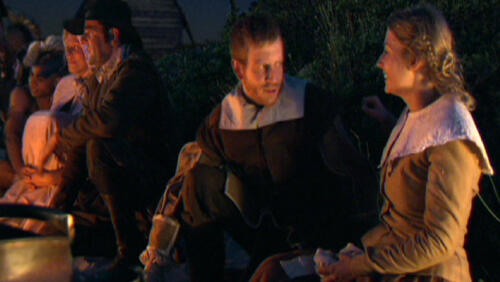
John Rolfe
While John Smith saved the colony from immediate physical destruction, John Rolfe saved it from economic bankruptcy. Realizing that the local Virginia tobacco was too harsh for European tastes, Rolfe illegally smuggled sweet Spanish tobacco seeds from South America. This new cash crop became an overnight sensation in Europe, transforming Virginia from a financial sinkhole into a highly profitable tobacco empire. This shift fundamentally altered the labor demands of the colony, paving the way for the growth of indentured servitude and, ultimately, chattel slavery.
The Causes and Horrors of the Starving Time
By the autumn of 1609, Jamestown was a powder keg waiting to explode. Following John Smith’s departure, leadership disintegrated, and relations with the Powhatan Confederacy collapsed. Recognizing the settlers’ vulnerability, Chief Powhatan ordered a siege of the fort, trapping the colonists inside their wooden palisades and cutting off all access to external food sources. What followed during the winter of 1609–1610 was the darkest chapter in early American history. To understand what daily life was truly like in the early settlement during this period is to look into the abyss of human desperation. Settlers first consumed their horses, then moved on to dogs, cats, rats, mice, and even the leather of their boots and shoes. As the famine intensified, some resorted to digging up the graves of the deceased. Forensic archaeological excavations in 2012 confirmed the grim reality of survival cannibalism, analyzing the skull of a 14-year-old girl, dubbed Jane, who had been systematically butchered after her death to keep the remaining colonists alive.
The Turning Point: What Was Actually in the Water?
For centuries, historians blamed Jamestown’s devastating mortality rates solely on starvation and Powhatan attacks. However, modern environmental science and archaeological research have revealed a silent, insidious killer: the water itself. Jamestown was situated on a low-lying peninsula where the fresh water of the James River met the salty water of the Chesapeake Bay. During the summer months, the river flow decreased, causing brackish water to back up into the local wells. This created an ecological trap. The stagnant, low-lying water became heavily contaminated with human waste and runoff, breeding deadly pathogens. Settlers unknowingly drank water laced with typhoid, dysentery, and salt poisoning. The resulting chronic illnesses weakened the colonists, making them lethargic, mentally unstable, and highly susceptible to secondary infections and starvation. The very water they relied upon for survival was actively poisoning them, proving that nature was just as hostile as any geopolitical adversary.
The Long-Term Impact on America
The trials and transformations of Jamestown established profound legal, social, and economic precedents that shaped the United States for centuries. First, the economic success of tobacco created an insatiable demand for agricultural labor. Initially filled by English indentured servants, this demand eventually drove the establishment of racialized chattel slavery, beginning with the arrival of the first recorded African captives in 1619. Second, 1619 also saw the creation of the House of Burgesses, establishing the very first representative legislative assembly in the Western Hemisphere. This early experiment in self-governance laid the ideological foundations for the American Revolution and the democratic institutions we recognize today. Finally, the expansion of tobacco plantations initiated a tragic cycle of violent displacement of Indigenous populations, setting a destructive pattern of westward expansion that would characterize American history for the next three hundred years. Decades later, during a period of intense civil unrest over frontier policy, colonial rebels led by Nathaniel Bacon famously rebelled against the royal governor and burned the capital of Jamestown to the ground in 1676, signaling early colonial resistance to royal authority.
Lesser-Known Historical Facts
- Hard Cider and Apples as Currency: In the cash-strapped early colonial economy, hard currency was incredibly rare. Colonists turned to agricultural commodities for trade, and hard apple cider was frequently used as a reliable form of payment for labor and goods, demonstrating how vital fermented beverages were to survival and commerce.
- The Bride Advertisements: To stabilize the rough, male-dominated frontier colony, the Virginia Company began marketing Jamestown to respectable English women in 1620. They placed advertisements offering passage, dowries, and land, effectively allowing lonely bachelors to buy a bride by paying the company back in tobacco for her travel costs.
- The Secret Poisoning Theory: Some modern historians have investigated whether some of the early leaders, including John Smith, were intentionally poisoned by rival factions within the colony. The intense political backstabbing and struggles for absolute control made Jamestown as much a political minefield as an environmental one.
Why It Still Matters Today
Jamestown is the dual birthplace of the defining contradictions of American society: the promise of representative democracy and the tragedy of racialized slavery. By examining the brutal realities of Jamestown—rather than a sanitized, romanticized myth—we gain a much deeper appreciation for the immense resilience of early peoples, the catastrophic cost paid by Indigenous nations, and the complex origins of modern American institutions.

People Also Ask
What caused the Starving Time in Jamestown?
The Starving Time (1609–1610) was caused by a combination of a severe Powhatan siege that trapped the colonists inside their fort, poor agricultural preparation, political instability after John Smith’s departure, and a historic drought that severely limited local food supplies.
Did the Jamestown colonists practice cannibalism?
Yes. In 2012, forensic archaeologists discovered the butchered remains of a 14-year-old girl named Jane dating to the winter of 1609-1610, providing conclusive physical evidence of survival cannibalism during the Starving Time.
Why did they choose such a poor location for Jamestown?
The settlers chose the site because it was surrounded by water on three sides, making it easily defensible against potential Spanish naval attacks, and because the water was deep enough for their ships to tie up directly to the trees. However, they failed to realize it was a swampy, malaria-infested environment with poor drinking water.
Conclusion
The story of Jamestown is a powerful testament to human endurance, adaptability, and the dark complexities of colonization. From the depths of the Starving Time to the heights of the tobacco-fueled boom, the lessons of Jamestown continue to echo through the corridors of American history, reminding us of the immense sacrifices, moral compromises, and sheer determination that laid the foundation of a nation.


