Long before the United States established itself as a global economic powerhouse and a champion of intellectual property rights, it was a young, struggling nation that relied heavily on industrial espionage to survive. Following the Revolutionary War, the newly formed United States found itself economically vulnerable, overwhelmingly agrarian, and technologically lagging far behind Great Britain, the undisputed crucible of the Industrial Revolution [2]. To secure its financial independence and bridge this vast technological chasm, the U.S. government—with the tacit encouragement of Founding Fathers like Alexander Hamilton and George Washington—embarked on a deliberate campaign of intellectual piracy [2]. American agents, merchants, and mechanics risked imprisonment to infiltrate British textile mills, memorize complex machinery designs, and smuggle these stolen secrets back across the Atlantic [2]. This covert operation of industrial espionage ultimately laid the groundwork for America’s manufacturing boom, transforming a loose confederation of former agricultural colonies into an industrial juggernaut that would eventually reshape the global economy.
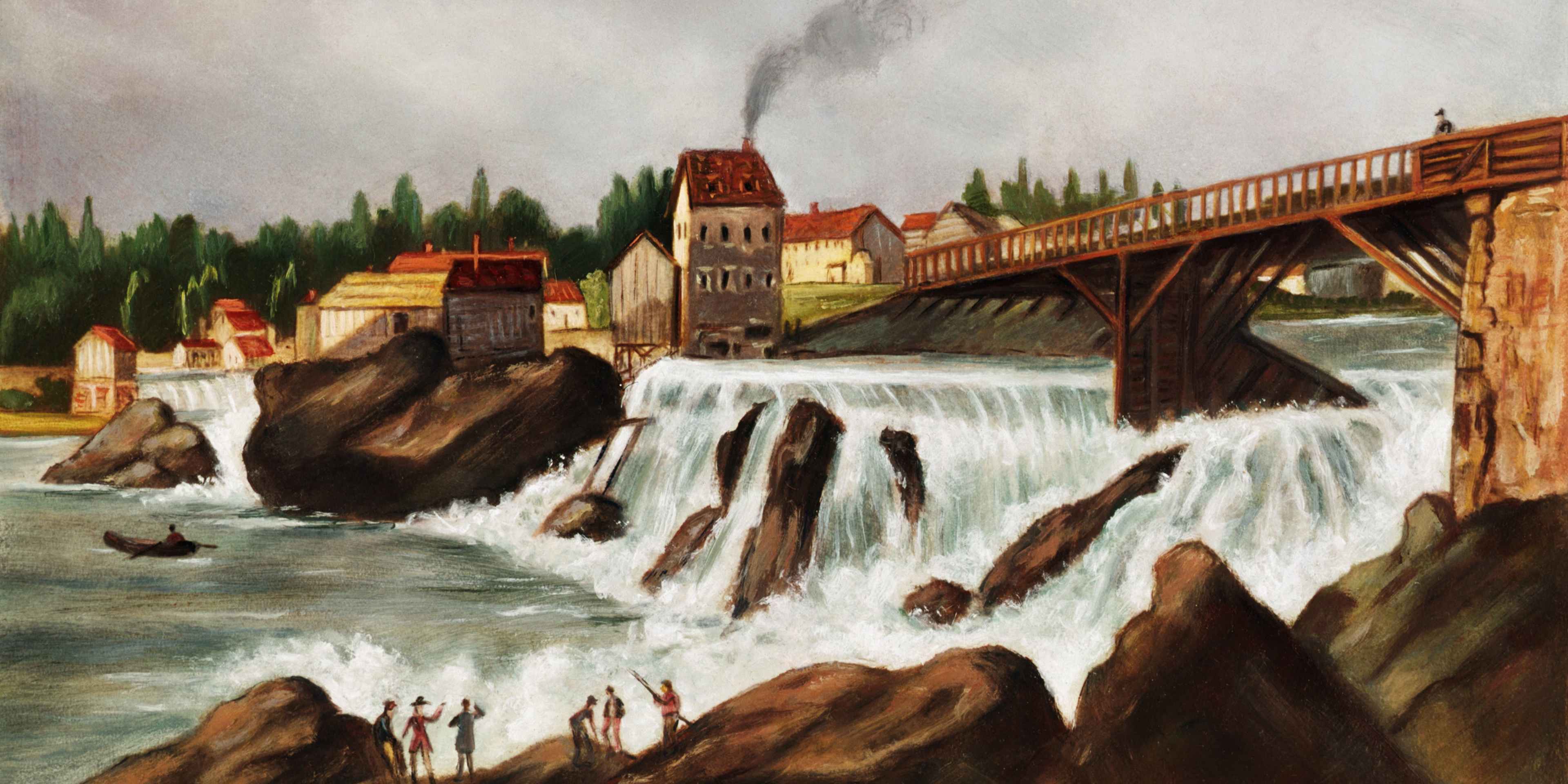
To fully comprehend this era, one must examine the Historical Background: The Agrarian Struggle of a New Nation. In the late 18th century, as the original thirteen colonies transitioned into a unified independent republic, the economic outlook was grim. Great Britain held an absolute monopoly on the advanced machinery powering the early Industrial Revolution—specifically, water-driven cotton spinning frames and mechanical power looms [2]. Britain guarded these technological secrets as state treasures, fiercely restricting anyone with mechanical knowledge from leaving the British Isles [2]. Meanwhile, a profound economic debate raged in America: Thomas Jefferson envisioned an agrarian paradise of self-sufficient farmers, while Treasury Secretary Alexander Hamilton argued that the nation’s survival depended on rapid industrialization and manufacturing [2]. Hamilton’s vision ultimately prevailed, leading the young country to look abroad for the technological shortcuts it desperately needed to build a competitive economy.
Key Events Timeline: The Chronicles of Industrial Piracy
The transition from a resource-dependent agrarian state to an industrial powerhouse did not happen overnight. It was driven by a series of high-stakes operations spanning several decades:
- 1789: Samuel Slater, an English mill apprentice, disguised himself as a farmhand and sailed to the United States carrying memorized designs of Richard Arkwright’s spinning frame [2].
- 1791: Treasury Secretary Alexander Hamilton published his landmark Report on Manufactures, which openly advocated for the acquisition of foreign industrial secrets through government incentives [2].
- 1793: The United States passed a heavily protectionist Patent Act, providing a legal sanctuary for American citizens who patented pirated foreign technologies while denying patents to foreign inventors [2].
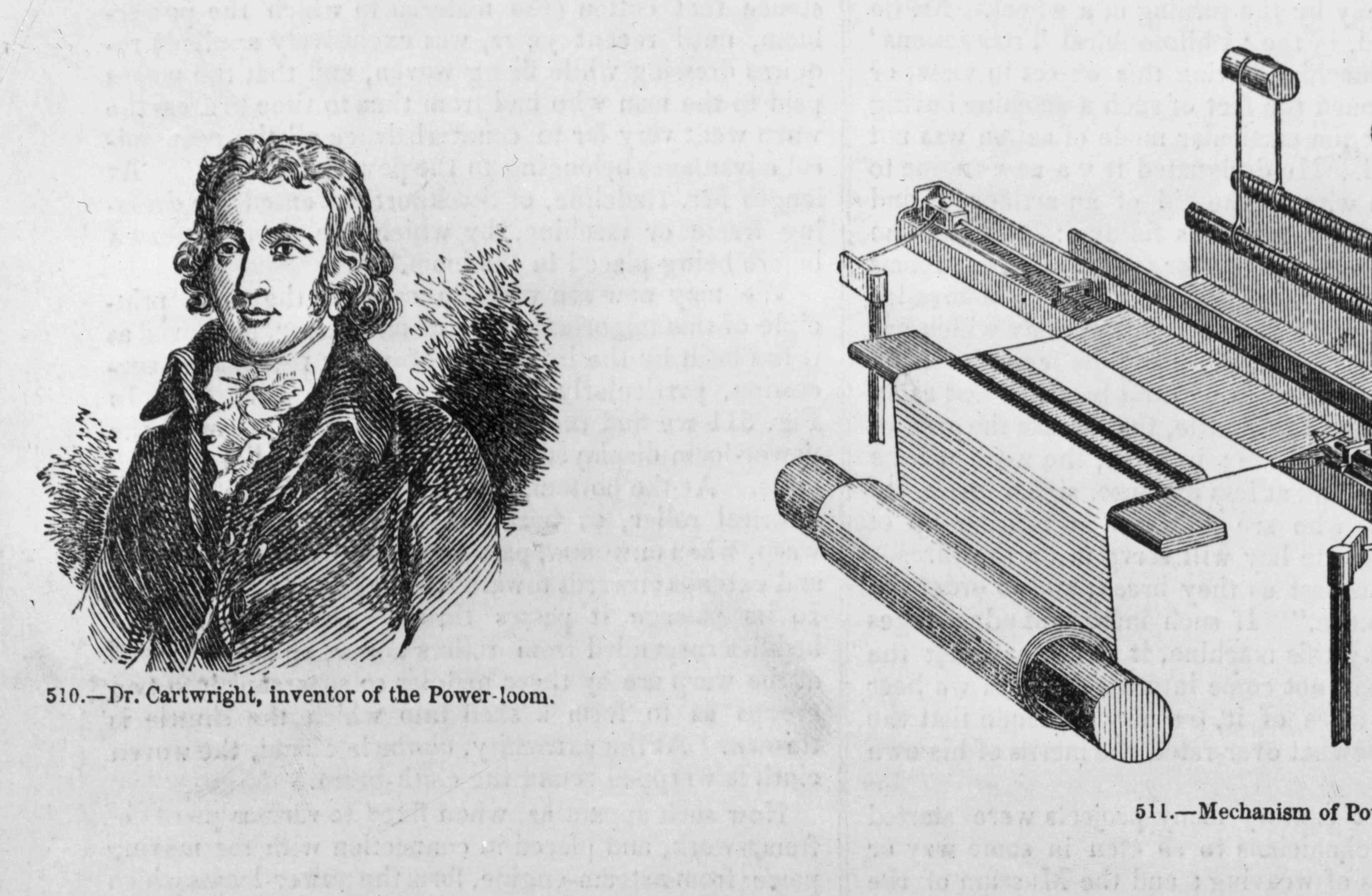
- 1811: Boston merchant Francis Cabot Lowell toured textile mills in Great Britain and Scotland, using his photographic mind to memorize the intricate blueprints of Edmund Cartwright’s power loom [2].
- 1814: Lowell, along with mechanic Paul Moody, built the world’s first fully integrated textile mill in Waltham, Massachusetts, merging spinning and weaving processes under one roof [2].
Important Figures and Their Lasting Impact
Samuel Slater: The “Father of American Manufactures”
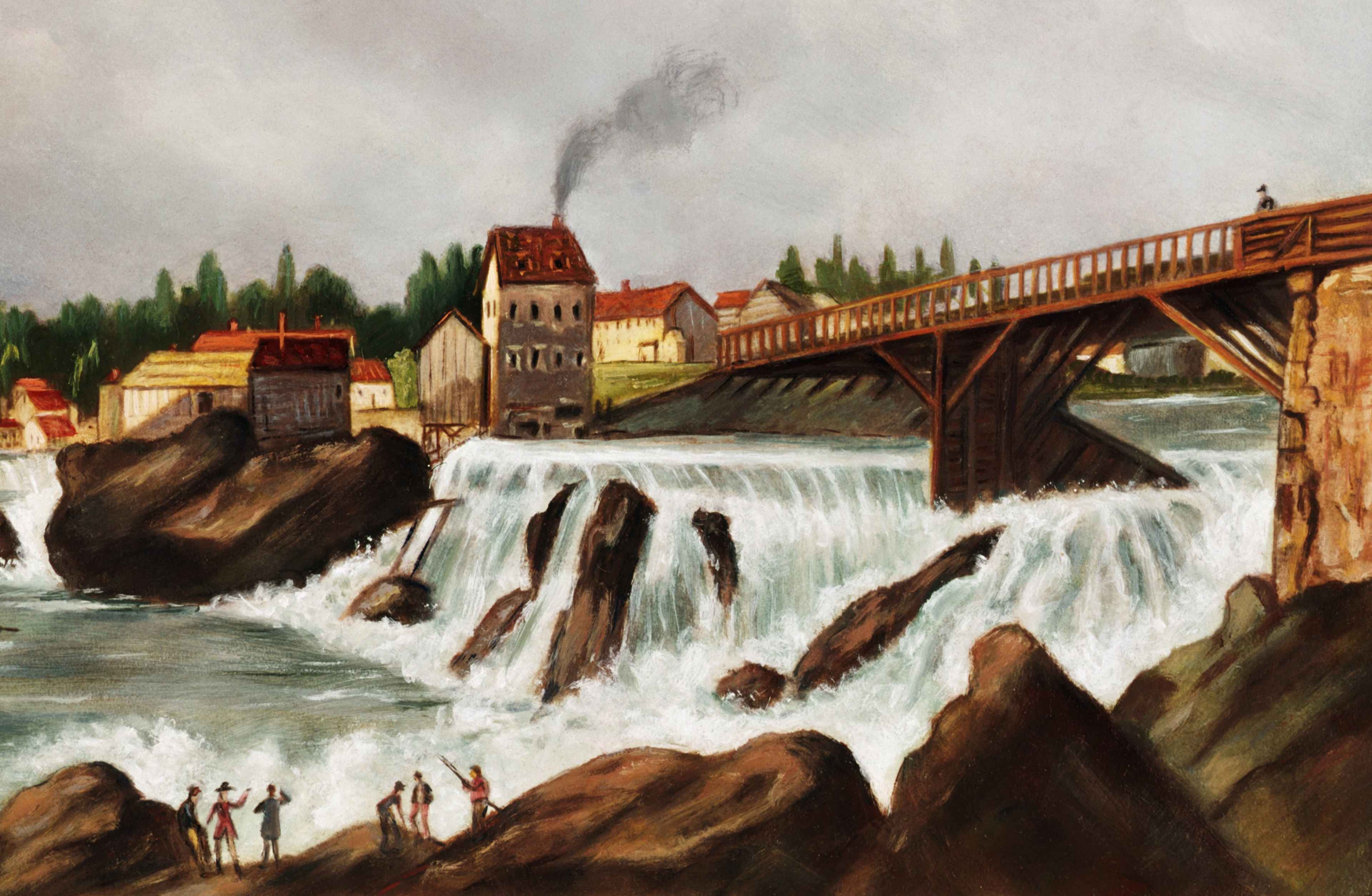
Perhaps no figure is more central to early American industrialization than Samuel Slater. Born in Derbyshire, England, Slater possessed an intimate understanding of the cutting-edge spinning frames designed by Richard Arkwright [2]. Realizing that his skills would be highly rewarded in America, Slater memorized every detail of the heavy machinery, defied British emigration bans, and arrived in New England [2]. In Pawtucket, Rhode Island, he successfully replicated the Arkwright machinery from memory, establishing the first successful water-powered cotton spinning mill in America [2]. While President Andrew Jackson hailed him as the “Father of American Manufactures,” the British public bitterly branded him “Slater the Traitor” [2]. His efforts in New England demonstrated how early American towns shaped the nation through rapid industrialization and urban development.
Francis Cabot Lowell: The Gentleman Spy
While Slater conquered the spinning process, American mills still lacked the technology to efficiently weave yarn into finished cloth. Enter Francis Cabot Lowell, a wealthy Harvard graduate and Boston merchant [2]. Suffering from chronic illness, Lowell traveled to Great Britain in 1810 under the guise of a recuperative vacation [2]. In reality, Lowell used his elite social status to gain entry into tightly guarded Scottish and English textile factories [2]. He toured these fortress-like mills, quietly studying the design of the Cartwright power loom [2]. Upon his return to Boston in 1812, his ship was boarded and searched by British authorities amid the outbreak of the War of 1812 [2]. Despite intensive searches, the British found no written plans, as Lowell had stored the entire mechanical blueprint in his photographic mind [2]. Lowell’s subsequent creation of the Boston Manufacturing Company revolutionized American textile production [2].
Alexander Hamilton: The Mastermind Behind the Policy
The mastermind who created the political environment for this espionage was Alexander Hamilton. In his famous 1791 “Report on Manufactures,” Hamilton laid out a systematic plan to encourage the importation of “improvements and secrets of extraordinary value” from Europe [2]. He actively supported agents who recruited skilled British artisans and financed projects that utilized pirated technology, establishing industrial piracy as an unofficial state policy of the early republic [2].
Causes and Context: Why America Had to Steal to Survive
The primary driver of American industrial espionage was the intense mercantilist competition between the United States and Great Britain. To protect its economic hegemony, the British Parliament enacted draconian laws [2]. It was strictly illegal to export textile machinery, models, or even detailed drawings of industrial equipment [2]. Furthermore, skilled workers—such as weavers, cotton spinners, and mechanics—were legally barred from emigrating to foreign countries [2]. Those who tried to recruit these workers faced astronomical fines and lengthy prison sentences [2]. This left the United States with a stark choice: remain a subservient agricultural exporter to Europe or break British laws to build its own industrial infrastructure. By modifying the Patent Act of 1793 to shield American intellectual thieves from foreign lawsuits, the U.S. government provided absolute legal immunity to those who could successfully steal and commercialize European designs [2]. This legally sanctioned espionage was crucial for transforming the fledgling 13 colonies into a self-sustaining sovereign nation.
Major Turning Points in the Industrial Revolution
Two major turning points catalyzed the success of early American industrial espionage. The first was the War of 1812 [2]. The conflict severely disrupted transatlantic trade, making the United States acutely aware of its dangerous reliance on British manufactured goods. This economic isolation created an urgent domestic demand for textile mills, making industrial self-sufficiency a matter of national security. The second major turning point was the transition from fragmented production to fully integrated manufacturing. Before Lowell, yarn was spun in mills but woven into cloth by individual hand-weavers in their homes. Lowell’s integrated mill in Waltham, Massachusetts, brought the raw materials, spinning machinery, power looms, and labor force together under a single roof, massively increasing output and efficiency [2].
Long-Term Impact on America: From Farms to Factories
The success of American industrial spies forever altered the cultural, social, and economic landscape of the United States. It initiated a massive demographic shift, drawing families off subsistence farms and into rapidly expanding urban manufacturing hubs. This era also birthed the “Lowell Girls” phenomenon, where young, single women entered the industrial workforce for the first time, gaining unprecedented economic independence. On a macroeconomic scale, the rapid industrialization of New England created a powerful economic engine that eventually helped fund the expansion of railroads, telegraph lines, and heavy machinery industries. However, it also widened the deep-seated cultural and economic divide between the industrialized, wage-labor North and the agrarian, slave-reliant South—a structural divergence that ultimately culminated in the American Civil War.
Lesser-Known Facts About America’s Industrial Spies
- The Double Search: During his return journey, Francis Cabot Lowell was detained for days in Halifax by British authorities who suspected him of spying [2]. They searched his luggage twice but had to release him because he had committed every single mechanical blueprint to memory [2].
- The American Vulture: Thomas Attwood Digges, a close friend of George Washington, was a prolific American spy who smuggled British mechanics to the U.S. [2] He was repeatedly thrown into British prisons but managed to escape or secure release, continuing his espionage efforts by distributing copies of Hamilton’s economic reports to entice British workers [2].
- The Archimedes of Philadelphia: One of Digges’ most valuable recruits was William Pearce, a brilliant British mechanic whom Digges referred to as a “second Archimedes” [2]. Pearce immigrated to the U.S. and built a cotton mill that was personally inspected and highly praised by President George Washington and Martha Washington [2].
Why It Still Matters Today
The history of America’s early industrial espionage offers a powerful, thought-provoking perspective on modern geopolitics. Today, the United States is the world’s leading champion of strict intellectual property enforcement, often leading the charge against rising economic powers for stealing technology, software, and industrial designs. Understanding that America built its own economic empire on the very same practice of intellectual piracy provides essential historical context, highlighting the cyclical nature of global development and the strategic measures nations take to rise from developing states to global superpowers.
People Also Ask
Who is considered the father of the American Industrial Revolution?
Samuel Slater is widely considered the “Father of the American Industrial Revolution.” He was an English-born apprentice who memorized the designs of Richard Arkwright’s spinning machinery and smuggled them to Rhode Island, where he established the nation’s first successful water-powered textile mill [2].
What technology did Francis Cabot Lowell steal?
Francis Cabot Lowell memorized the design of Edmund Cartwright’s power loom during his travels in Great Britain [2]. He brought this design back to Massachusetts, where he and Paul Moody improved upon it to create the world’s first fully integrated textile manufacturing mill [2].
Was industrial espionage legal in early America?
Under British law, industrial espionage and the emigration of skilled artisans were highly illegal [2]. However, under early American law—specifically the Patent Act of 1793—intellectual piracy was actively protected, as the U.S. government granted patents to American citizens who imported foreign innovations while denying legal protections to foreign inventors [2].
Conclusion: The Stolen Foundations of American Power
The American Industrial Revolution was not solely built on isolated domestic genius, but rather on a foundation of daring espionage, strategic intellectual piracy, and pragmatic government policy [2]. By recognizing the critical roles played by figures like Samuel Slater and Francis Cabot Lowell, we gain a deeper, more honest appreciation of how the United States secured its economic sovereignty [2]. These early industrial spies successfully turned stolen foreign ideas into the engine of American prosperity, proving that the rise of global superpowers has always been fueled as much by the strategic acquisition of knowledge as by original innovation.


