In the tense landscape of the late 1760s, a fragile calm hung over the American colonies. The repeal of the hated Stamp Act in 1766 had temporarily defused a volatile situation, but the underlying constitutional question remained unresolved: did the British Parliament have the right to tax colonies that lacked representation in London? In 1767, the answer arrived with the passage of the Townshend Acts. Initiated by the ambitious British Chancellor of the Exchequer, Charles Townshend, this series of legislative measures aimed to raise imperial revenue, enforce customs laws, and assert undisputed crown authority over the 13 Colonies. Rather than restoring order, these acts systematically ignited a firestorm of colonial rage, transforming localized grievances into a unified, continental movement for self-determination. By directly challenging the colonies’ prized legislative independence, the Townshend Acts acted as a critical catalyst on the inexorable road to the American Revolutionary War.
Historical Background: The Spark of Imperial Debt
After the conclusion of the Seven Years’ War (known in North America as the French and Indian War) in 1763, Great Britain emerged victorious but financially crippled. The national debt had skyrocketed to an unprecedented 130 million pounds, and the cost of maintaining a military presence in the newly acquired Western territories was a massive fiscal burden. British taxpayers were already heavily burdened, leading policymakers in London to look across the Atlantic. For over a century, Britain had practiced a policy of ‘salutary neglect,’ allowing the 13 Colonies to manage their own domestic affairs and levy their own taxes through local assemblies. However, the desperate need for revenue prompted Parliament to shift from a hands-off approach to direct imperial taxation. The first major attempt, the Stamp Act of 1765, met with fierce colonial resistance, riots, and coordinated boycotts, forcing its repeal in 1766. Yet, to avoid appearing weak, Parliament simultaneously passed the Declaratory Act, asserting absolute authority to bind the colonies ‘in all cases whatsoever.’ This set the stage for a dramatic political showdown.
The Five Pillars of the Townshend Acts: What Were They?
In 1767, Charles Townshend took advantage of a political vacuum in London to push through his fiscal agenda. He believed the colonists’ primary objection to the Stamp Act was that it was an ‘internal’ tax. Therefore, he reasoned that the colonists would accept ‘external’ taxes, which were tariffs collected at ports on imported goods. The legislative package passed by Parliament actually consisted of five distinct acts, each designed to tighten Britain’s economic and political grip on the colonies:
- The New York Restraining Act (June 5, 1767): This act suspended the legislative powers of the New York Assembly. Parliament took this drastic step because the assembly had refused to comply with the Quartering Act of 1765, which required colonists to provide housing and food for British soldiers. By shutting down a representative government, Parliament sent a chilling message to all colonies: their self-governance existed only at the pleasure of the Crown.
- The Revenue Act of 1767 (June 29, 1767): This was the core taxation component of the package. It placed new import duties on highly sought-after British goods, specifically glass, lead, paint, paper, and tea. Unlike previous trade regulations, which were designed to steer trade within the empire, the Revenue Act was explicitly created to raise money for the British Treasury. These mounting injustices eroded any lingering hope of imperial reconciliation. Years later, when the colonies officially declared their separation, the Declaration of Independence was a direct catalog of these grievances, marking the final rupture after years of economic and legal coercion.
- The Commissioners of Customs Act (June 29, 1767): To ensure the new taxes were actually paid, this act established a dedicated Board of Customs Commissioners based in Boston. This board operated with immense authority, deploying a network of customs officers, searchers, and informants to eliminate the widespread smuggling that had long characterized colonial trade.
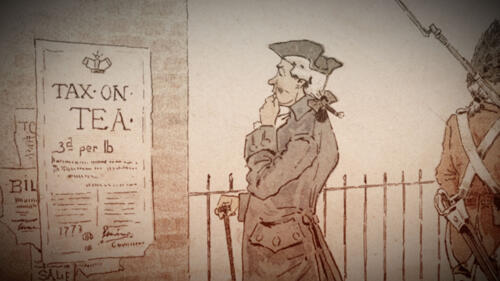
- The Indemnity Act (July 2, 1767): This measure was designed to help the financially troubled British East India Company. It removed taxes on tea imported into Great Britain, allowing the company to ship its massive surplus directly to the colonies. This set the stage for cheaper British tea to flood the American market, directly threatening local colonial merchants and smugglers alike.
- The Vice Admiralty Court Act (March 8, 1768): While passed slightly later, this act was a crucial mechanism of the Townshend program. It established new vice-admiralty courts in key ports, including Boston, Philadelphia, and Charleston. Smugglers and tax evaders were prosecuted in these courts without a jury of their peers. Instead, a single royal judge, who received a percentage of any confiscated cargo as a financial incentive to convict, decided their fate.
Key Events Timeline: The Escalation of Colonial Rage
To understand how these acts dismantled the relationship between the colonies and the Crown, we can trace the rapid escalation of events:
- June-July 1767: The British Parliament passes the primary Townshend Acts, igniting immediate alarm among colonial leaders.
- December 1767: John Dickinson, writing under the pseudonym ‘A Farmer,’ begins publishing his highly influential ‘Letters from a Farmer in Pennsylvania,’ providing a brilliant constitutional argument against the taxes.
- February 1768: The Massachusetts House of Representatives issues the Massachusetts Circular Letter. This letter, heavily promoted by firebrands like Samuel Adams, who organized popular resistance, argued that the Townshend duties violated the constitutional rights of British subjects in America.
- June 1768: British customs officials in Boston seize John Hancock’s merchant sloop, the Liberty, on suspicion of smuggling. The seizure sparks intense riots, forcing customs commissioners to flee to a military fortress in Boston Harbor.
- October 1768: In response to the growing civil unrest, British troops (Redcoats) land in Boston to occupy the city and restore order, creating a highly volatile atmosphere.
- March 5, 1770: The military occupation culminates in the tragic Boston Massacre, where British soldiers fire into an angry civilian mob, killing five colonists.
- April 12, 1770: Bowing to severe economic pressure from colonial boycotts, Parliament officially repeals all the Townshend duties, except for a nominal tax on tea, which was retained to prove Parliament still held the right to tax the colonies.
Important Figures in the Crisis
Several key individuals shaped the trajectory of the Townshend Acts crisis, each representing the contrasting perspectives of the era:
- Charles Townshend: As the Chancellor of the Exchequer, his fiscal ambition and overconfidence drove the passage of the acts. Known for his brilliant but volatile personality, Townshend sought to solve Britain’s debt crisis while asserting absolute parliamentary control over the colonies.
- John Dickinson: A wealthy lawyer from Pennsylvania, Dickinson became the intellectual voice of the moderate resistance. His twelve ‘Letters from a Farmer’ argued that while Parliament had the right to regulate trade, it had no right to tax the colonies solely for the purpose of raising revenue. He advocated for peaceful, economic resistance rather than violence.
- Samuel Adams: A passionate Boston political leader, Adams was a master organizer. He co-authored the Massachusetts Circular Letter and utilized his political networks, including the Sons of Liberty, to coordinate non-importation agreements and rally public opposition against British overreach.
Causes and Context: The Clash of Imperial Ideologies
The conflict over the Townshend Acts was not merely about money; it was a fundamental clash of political ideologies. At the heart of the dispute was the concept of representation. The British government argued for the doctrine of ‘virtual representation.’ According to this theory, every member of Parliament represented the interests of all British subjects throughout the global empire, whether they lived in London, Bristol, or Boston. The colonists rejected this concept entirely, championing ‘actual representation.’ They maintained that since they did not elect representatives to Parliament, they could not legally be taxed by it. Furthermore, the Townshend Acts introduced a dangerous systemic change known as the ‘Power of the Purse.’ Historically, colonial assemblies paid the salaries of royal governors and judges. This gave the colonists a powerful leverage point; if a governor acted tyrannically, the assembly could withhold his pay. The Revenue Act bypassed this mechanism by directing customs revenue to pay these salaries directly, rendering royal officials completely independent of colonial influence and answerable only to the British Crown.
Major Turning Points: From Boycotts to Bloodshed
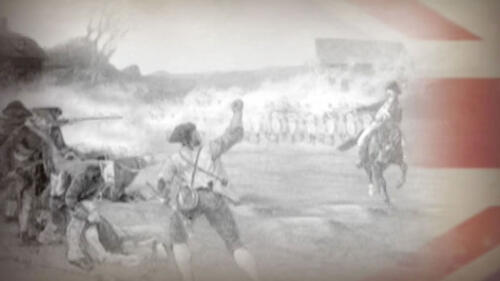
As the acts took effect, the colonists quickly realized that traditional protests would not suffice. They turned to economic warfare, organizing widespread ‘non-importation agreements.’ Merchants in major port cities like Boston, New York, and Philadelphia pledged to stop importing British goods. This economic boycott was highly effective, uniting colonists of all social classes. It also gave rise to the ‘homespun movement,’ where colonial women, calling themselves the Daughters of Liberty, organized spinning bees to produce domestic clothing, transforming everyday household work into a powerful political statement. Another major turning point occurred when customs officials began heavily utilizing ‘writs of assistance.’ These were open-ended search warrants that authorized officers to search any ship, home, or warehouse for smuggled goods without having to provide prior evidence. This systematic violation of privacy and property rights deeply angered the colonists. When British troops were dispatched to Boston in October 1768 to enforce these laws, the city became a powder keg. The constant friction between the civilian population and the occupying soldiers inevitably exploded on March 5, 1770, in the Boston Massacre, forever changing the nature of colonial resistance from peaceful protest to violent confrontation.
Long-Term Impact on America
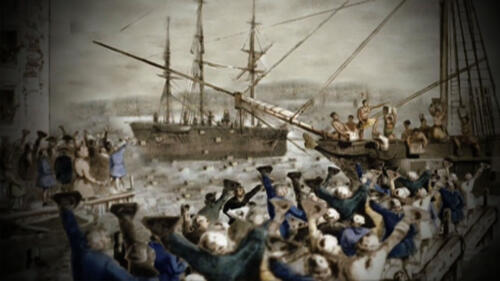
The Townshend Acts had profound, lasting effects that fundamentally altered the course of American history. First, they fostered an unprecedented level of inter-colonial unity. By forcing the 13 separate colonies to coordinate their boycotts and resistance, the acts laid the groundwork for a unified American identity. Second, the partial repeal of the acts set a dangerous trap. While the repeal defused some immediate tension, the decision to retain the tea tax kept the core ideological debate alive. This residual tax would directly provoke the iconic Boston Tea Party of 1773, showing that the colonists would not accept any tax levied without their consent. Finally, the resistance to the Townshend Acts deeply influenced early American constitutional thought. The outrage over writs of assistance and vice-admiralty courts directly inspired the protections enshrined in the Bill of Rights, specifically the Fourth Amendment (guarding against unreasonable searches and seizures) and the Sixth Amendment (guaranteeing a trial by jury).
Lesser-Known Facts about the Townshend Acts
- Charles Townshend never lived to see the chaos he created: He died suddenly of a severe fever in September 1767 at age 42, just months after his namesake laws were passed by Parliament.
- The taxes were a colossal financial failure: The revenue generated by the duties was minuscule, and it was entirely swallowed up by the immense cost of enforcing them. Furthermore, the colonial boycotts cost British merchants an estimated 700,000 pounds in lost trade, proving the acts were a massive economic disaster for Great Britain.
- The resistance transformed tea drinking into a highly political act: Colonists who continued to drink imported British tea were labeled as traitors, while patriots turned to alternative ‘liberty teas’ brewed from local herbs, pine needles, or raspberries.
Why It Still Matters Today
The legacy of the Townshend Acts remains highly relevant in our modern world. It serves as a powerful reminder of how easily civil liberties can be eroded in the name of security or revenue. The historical battle over writs of assistance mirrors modern debates regarding digital privacy, government surveillance, and the limits of law enforcement authority. Furthermore, the fundamental principle that citizens must have a direct voice in the decisions and taxation of their government remains a cornerstone of democratic societies worldwide.
People Also Ask
What were the main taxes of the Townshend Acts?
The Revenue Act of 1767 placed import taxes on five specific items: glass, lead, paint, paper, and tea, which the colonists were required to import from Great Britain.
Why did the colonists oppose the Townshend Acts so fiercely?
Colonists protested the acts because they violated the constitutional principle of ‘no taxation without representation.’ They also objected to the use of writs of assistance (warrantless searches) and the suspension of the New York Assembly.
How did the Boston Massacre relate to the Townshend Acts?
Colonial opposition to the Townshend Acts led to boycotts and riots, prompting Great Britain to send troops to occupy Boston in 1768. The constant tension between the citizens and soldiers erupted into the Boston Massacre on March 5, 1770.
Conclusion
The Townshend Acts represent one of the most critical turning points in the colonial era. What began as a misguided British fiscal policy to recover war debts ended up permanently fracturing the political bonds of an empire. By stripping the colonies of their legislative authority, violating their privacy with writs of assistance, and occupying their cities with military forces, the British government inadvertently forced a diverse group of colonies to unite. In doing so, the Townshend Acts proved that the struggle for representation, liberty, and self-governance was a flame that no imperial power could extinguish, lighting the way toward the birth of a new nation.


