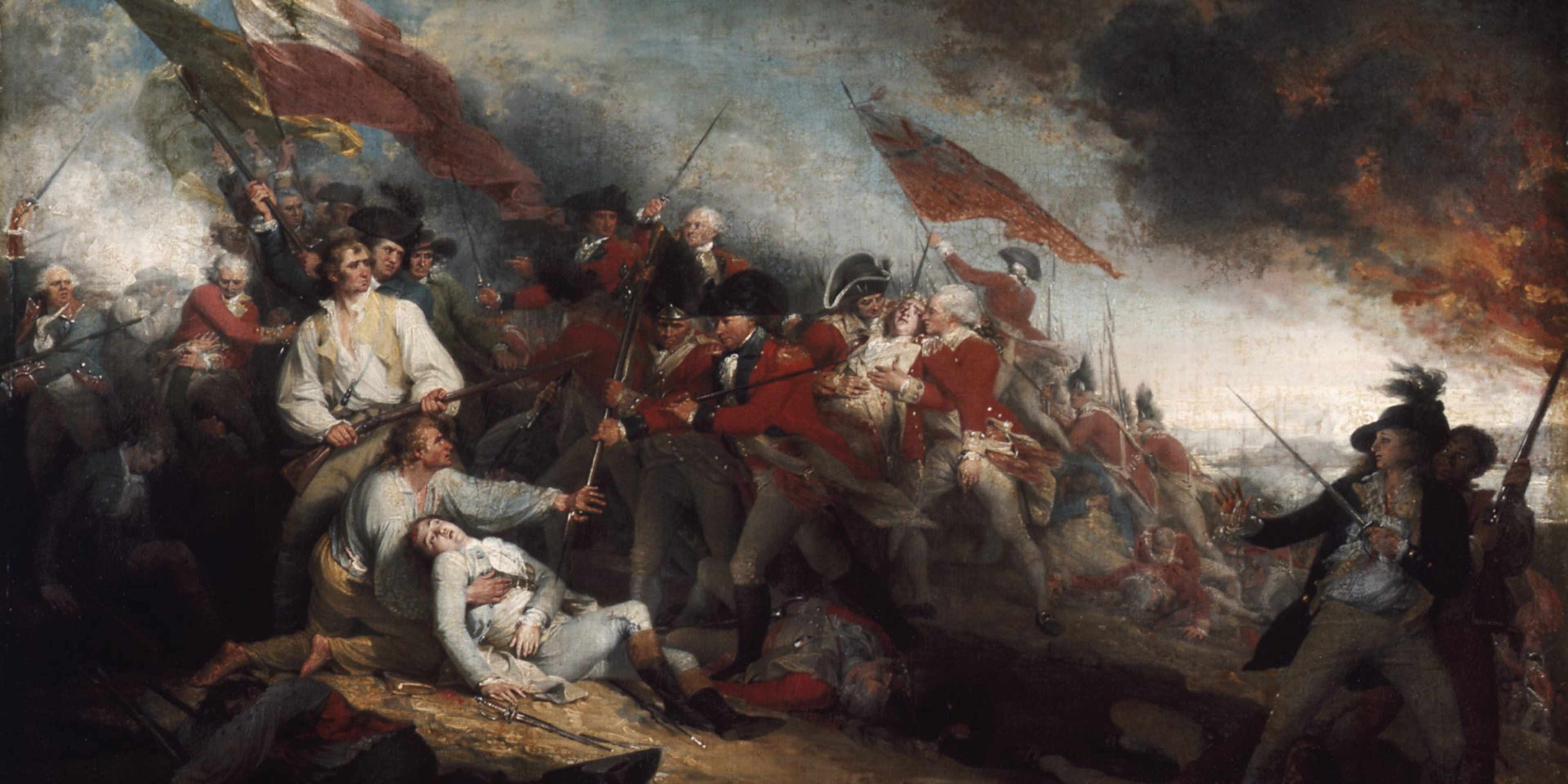
The Battle of Bunker Hill, fought on June 17, 1775, stands as one of the most defining and mythologized early clashes of the American Revolutionary War. Occurring mere months after the opening skirmishes at Lexington and Concord, this bloody confrontation on the Charlestown Peninsula transformed a local rebellion in Massachusetts into an all-out war of independence. Though technically a British tactical victory, the sheer determination of the colonial militia fundamentally shattered the myth of British military invincibility. It proved to a skeptical world—and to the colonists themselves—that a dedicated, volunteer force could stand resolute against the most professional army of the era. The heavy price paid by the Crown in this engagement altered British military strategy for the remainder of the war, ensuring that the struggle for American independence would not be easily crushed. Today, the 221-foot granite obelisk marking the site reminds us of the extraordinary sacrifices made at the very dawn of the American nation.
Historical Background & Pre-War Tension in Boston
To understand the ferocity of the Battle of Bunker Hill, one must look at the boiling cauldron of political unrest in 18th-century Boston. For over a decade, tensions had been escalating between the British Crown and the American colonists over issues of taxation without representation, royal decrees, and military occupation. Violent flashpoints, such as the Boston Massacre of 1770 and the Boston Tea Party of 1773, had already demonstrated the deep-seated resistance within the city. Following the Battles of Lexington and Concord in April 1775, the Massachusetts militia, alongside volunteers from neighboring colonies, successfully bottled up the British Army inside Boston, initiating the Siege of Boston. Under the command of General Thomas Gage, the British troops were trapped on the Boston peninsula, surrounded by newly formed colonial fortifications. Realizing their vulnerable position, the British generals devised a plan to occupy the high ground surrounding the city—specifically the hills of Charlestown and Dorchester Heights—to break the siege and secure Boston Harbor.
Causes and Context of the Confrontation
By mid-June 1775, the strategic value of the high ground overlooking Boston became the central focus of both armies. On June 15, the Committee of Safety—the governing body of the Patriot resistance—received intelligence that General Gage planned to seize the Dorchester Heights and the Charlestown hills on June 18. Recognizing that British control of these hills would allow them to bombard the surrounding colonial positions at will and lift the siege, the provincial commanders acted swiftly. They resolved to pre-emptively occupy and fortify Bunker Hill, the tallest hill on the Charlestown Peninsula. By doing so, the colonists aimed to deny the British a vital artillery outpost and demonstrate their unwavering resolve to defend their territory. However, a fateful decision on the night of June 16 would shift the battlefield closer to the British lines, setting the stage for a spectacular and bloody confrontation.
Key Events Timeline
The dramatic sequence of events unfolded rapidly over a 24-hour period, shifting the course of American history forever:
- June 15, 1775: Colonial leaders learn of the British plan to occupy the unoccupied hills surrounding Boston, prompting an immediate defensive strategy.
- June 16, 1775 (Night): Colonel William Prescott leads approximately 1,000 colonial militiamen onto the Charlestown Peninsula. Instructed to fortify Bunker Hill, Prescott and his engineers instead choose the smaller, more exposed Breed’s Hill, which was closer to the British warships and positions in Boston. Under the cover of darkness, they construct a formidable dirt fort (redoubt) measuring about 130 feet square.
- June 17, 1775 (Dawn): The British warship HMS Lively spots the newly constructed redoubt and opens fire, alerting the British garrison. General Gage and his commanders assemble a force of 2,200 soldiers to assault the hill.
- June 17, 1775 (Afternoon): British forces under Major General William Howe land on the peninsula and launch three successive infantry assaults against the colonial redoubt and defensive lines.
- June 17, 1775 (Late Afternoon): Running completely out of gunpowder, the provincial forces are forced to retreat from Breed’s Hill, allowing the British to claim victory.
- July 2, 1775: General George Washington arrives in Cambridge, Massachusetts, to formally take command of the newly formed Continental Army.
Major Turning Points: The Three Assaults on Breed’s Hill
The tactical heart of the battle lay in the three distinct infantry charges ordered by Major General William Howe. Confident that the raw, untrained provincial militiamen would flee at the sight of professional British regular troops, Howe ordered a direct frontal assault up the steep, grassy slopes of Breed’s Hill.
The first two British charges ended in absolute disaster for the Crown’s forces. Armed with muskets but possessing highly limited gunpowder, the colonial defenders held their fire until the Redcoats were remarkably close—allegedly waiting until they ‘could see the whites of their eyes.’ When the order came, the colonists unleashed a devastating, concentrated volley of musket fire. The precision of the colonial defense decimated the advancing British columns, forcing them into a chaotic retreat down the hill.
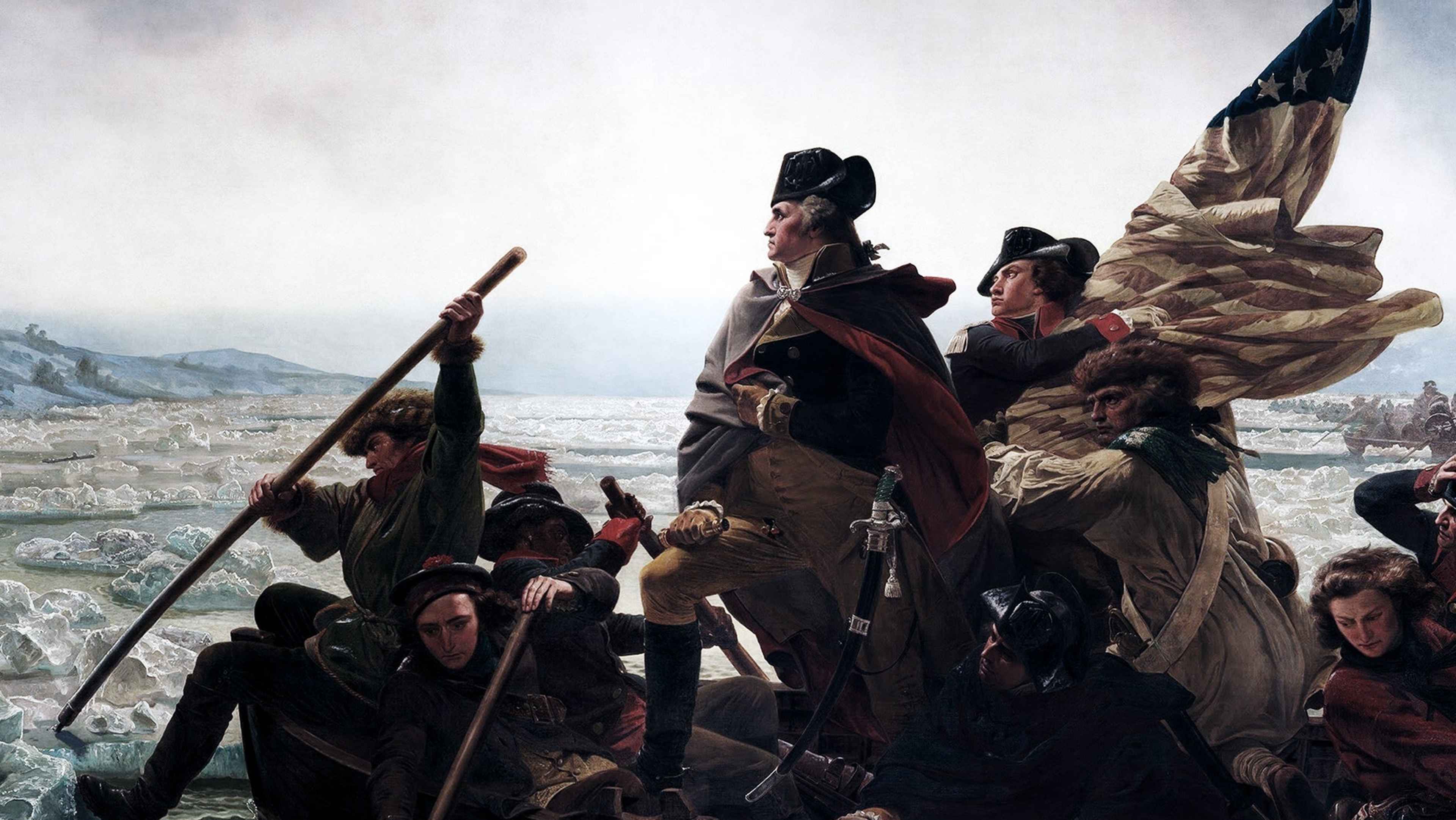
Undeterred, Howe rallied his men and ordered a second charge, which met the exact same lethal resistance. However, during the third assault, the tide turned. The colonial militiamen had exhausted their meager ammunition supply. With no bayonets to defend themselves, the Patriots were forced into brutal, hand-to-hand combat inside the redoubt against the bayonet-wielding Redcoats. Prescott finally ordered a retreat, executing one of history’s most famously organized, desperate withdrawals to prevent his men from being entirely captured. Although they lost the hill, the retreat saved the bulk of the fighting force, placing this engagement among the most notable tactical withdrawals of the war, similar to other brilliant military retreats studied by historians today.
Important Figures and Their Impact
Several key individuals shaped the dramatic outcome of the Battle of Bunker Hill, leaving an indelible mark on the historical memory of the American Revolution:
- Colonel William Prescott: The commander of the colonial forces atop Breed’s Hill. His legendary composure under pressure and tactical resourcefulness helped maximize the impact of his poorly supplied troops.
- Major General William Howe: The British commander who led the bloody frontal assaults. The high casualty rate among his men deeply traumatized Howe, influencing his cautious, slow-moving military strategies in later campaigns against George Washington.
- Dr. Joseph Warren: A brilliant physician, president of the Massachusetts Provincial Congress, and newly commissioned major general. Refusing to take command from the more experienced Prescott, Warren fought as a regular private in the redoubt and was tragically killed during the final retreat, becoming the first great martyr of the American cause.
- Peter Salem: An emancipated Black minuteman whose bravery during the final British assault became legendary. Salem is credited with mortally wounding British Major John Pitcairn, which stalled the final British charge and allowed many of his fellow Patriots to escape capture.
- Artemis Ward: The overall leader of the Massachusetts militia forces during the early stages of the siege. Historians often debate the role of those who commanded the Continental Army before Washington, noting how Ward’s initial logistical setup laid the groundwork for the army Washington would eventually inherit.
Long-Term Impact on America
The Battle of Bunker Hill was a watershed moment that structurally altered the course of the American Revolution. Financially and physically, it was the bloodiest battle of the entire war for the British Army. The Crown suffered over 1,000 casualties—nearly half of the attacking force—including an alarmingly high percentage of officers. This staggering loss shocked the British high command and destroyed any hope of a quick, bloodless pacification of the colonies.
Politically, the battle pushed both sides past the point of reconciliation. When news of the battle reached London, King George III officially rejected the Olive Branch Petition and issued the Proclamation of Rebellion, declaring the American colonies to be in open revolt. For the Americans, the battle was a massive psychological victory. It proved that their ragtag militia, composed of farmers, blacksmiths, and merchants, could stand firm against the most feared military force in Europe. This newfound confidence galvanized recruitment across the thirteen colonies and solidified the resolve needed to fight a prolonged war for independence.
Lesser-Known Facts About the Battle
- The Wrong Hill: Despite its famous name, the vast majority of the fighting actually occurred on the adjacent Breed’s Hill. The colonial forces were ordered to fortify Bunker Hill, but due to a misunderstanding, darkness, or a tactical choice by Colonel Prescott, they built the redoubt on Breed’s Hill instead.
- Diverse Defenders: Over 150 men of color—both free and enslaved—fought bravely alongside the white colonial militia at Bunker Hill, including notable figures like Peter Salem and Salem Poor. This diverse group of patriots fought for the promise of liberty, even while enduring the harsh realities of colonial-era inequality.
- The Monumental Cornerstone: On June 17, 1825, exactly 50 years after the battle, the cornerstone for the Bunker Hill Monument was laid by the legendary French General Marquis de Lafayette, accompanied by a stirring speech from orator Daniel Webster to an audience that included surviving veterans of the battle.
Why the Battle of Bunker Hill Matters Today
In the modern era, the Battle of Bunker Hill remains a powerful symbol of democratic resilience and the cost of liberty. The 221-foot granite obelisk that sits atop Breed’s Hill today serves as a monument not to a grand tactical victory, but to the enduring spirit of ordinary citizens standing up for self-determination. In an era where the divide between citizens and institutional power is a frequent subject of public discourse, Bunker Hill reminds us that the foundation of the American republic was built on the courage of everyday volunteers who risked everything for a shared vision of freedom. It challenges contemporary society to reflect on the meaning of sacrifice, national unity, and the ongoing struggle to fulfill the revolutionary ideals of equality and justice for all.
People Also Ask
Who actually won the Battle of Bunker Hill?
Technically, the British Army won the battle because they successfully captured the Charlestown Peninsula and drove the American forces from Breed’s Hill. However, it was a pyrrhic victory. The British suffered over 1,000 casualties, whereas the Americans suffered around 450, making it a major psychological and moral victory for the colonists.
Why did the Americans lose the battle?
The primary reason for the American retreat was a severe lack of ammunition. Despite repelling two major British charges, the colonial militiamen ran completely out of gunpowder and musket balls, forcing them into hand-to-hand combat where they were outmatched by British bayonets.
Did anyone actually say ‘Don’t fire until you see the whites of their eyes’?
While historically attributed to Colonel William Prescott as a way to conserve precious ammunition, historians debate whether he or General Israel Putnam actually uttered these exact words. Regardless of who said it, the quote perfectly captures the disciplined, close-quarters strategy employed by the colonial defenders.
Conclusion
The Battle of Bunker Hill remains a cornerstone of American national identity. It was a brutal initiation into the harsh realities of war, demonstrating that the path to independence would be paved with immense sacrifice. By transforming a localized Massachusetts rebellion into a unified continental struggle, the defense of Breed’s Hill set the stage for the birth of a new nation. The towering monument in Charlestown stands as a permanent tribute to the ordinary citizens who, against all odds, chose to stand their ground and reshape the course of world history.


