George Washington is universally remembered for his leadership in the American Revolution, his pioneering presidency, and his iconic, powder-white hair. But in February 2018, a startling discovery at Union College in Schenectady, New York, brought the physical reality of the first President of the United States into the modern era in a deeply personal way: a preserved lock of his actual hair was found tucked inside an 18th-century almanac. This extraordinary artifact, passed down through the family of Alexander Hamilton, offers a fascinating window into the intimate domestic customs of the founding era, where gifting strands of hair was a profound gesture of respect, love, and historical remembrance.
The Intimate History of 18th-Century Hair Keepsakes
To a modern observer, the idea of gifting a lock of hair to a friend, relative, or romantic partner might seem unusual, if not outright macabre. However, in the 18th and 19th centuries, hair was viewed as an incredibly precious, deeply personal, and highly durable keepsake. Long before the widespread invention of photography, a physical strand of a loved one’s hair was the closest tangible connection a person could retain of someone who was far away or deceased. It was an essential part of the social fabric, deeply tied to the concepts of friendship, family, and mourning.
Hair does not decay like other organic materials, making it the perfect medium for preserving memories. It was frequently woven into elaborate hair wreaths, encased in gold lockets, or set into mourning jewelry like rings and brooches. For the early Americans, these locks were among the most treasured everyday objects of colonial America, acting as sacred links between families and generations. In the case of prominent national figures, obtaining a lock of their hair was also a way for citizens to express their deep admiration and patriotic devotion. Strands belonging to early presidents like George Washington, Thomas Jefferson, and Abraham Lincoln were highly sought after, preserved by families like religious relics.
The Union College Discovery: Uncovering the Hamiltonian Link
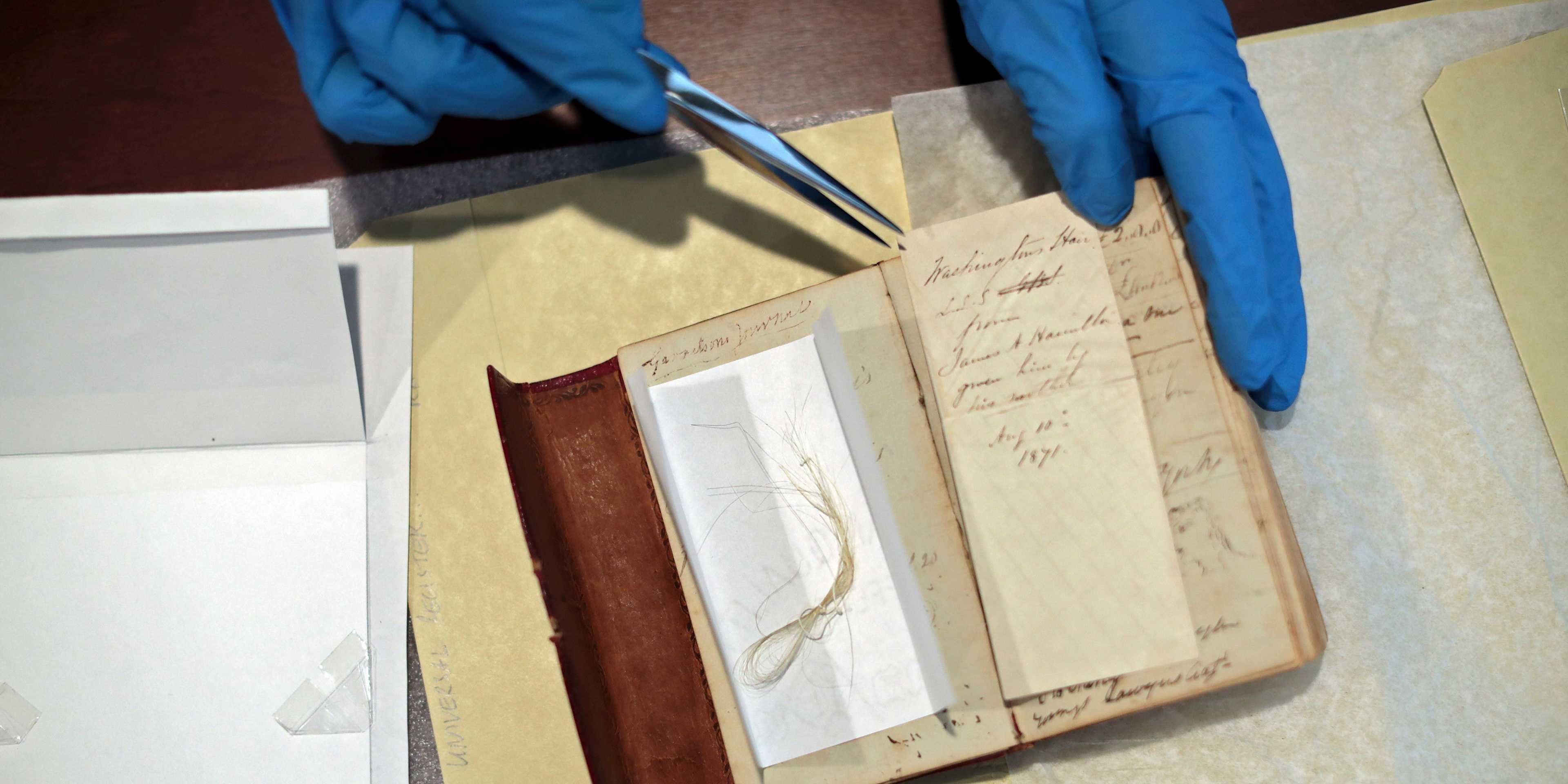
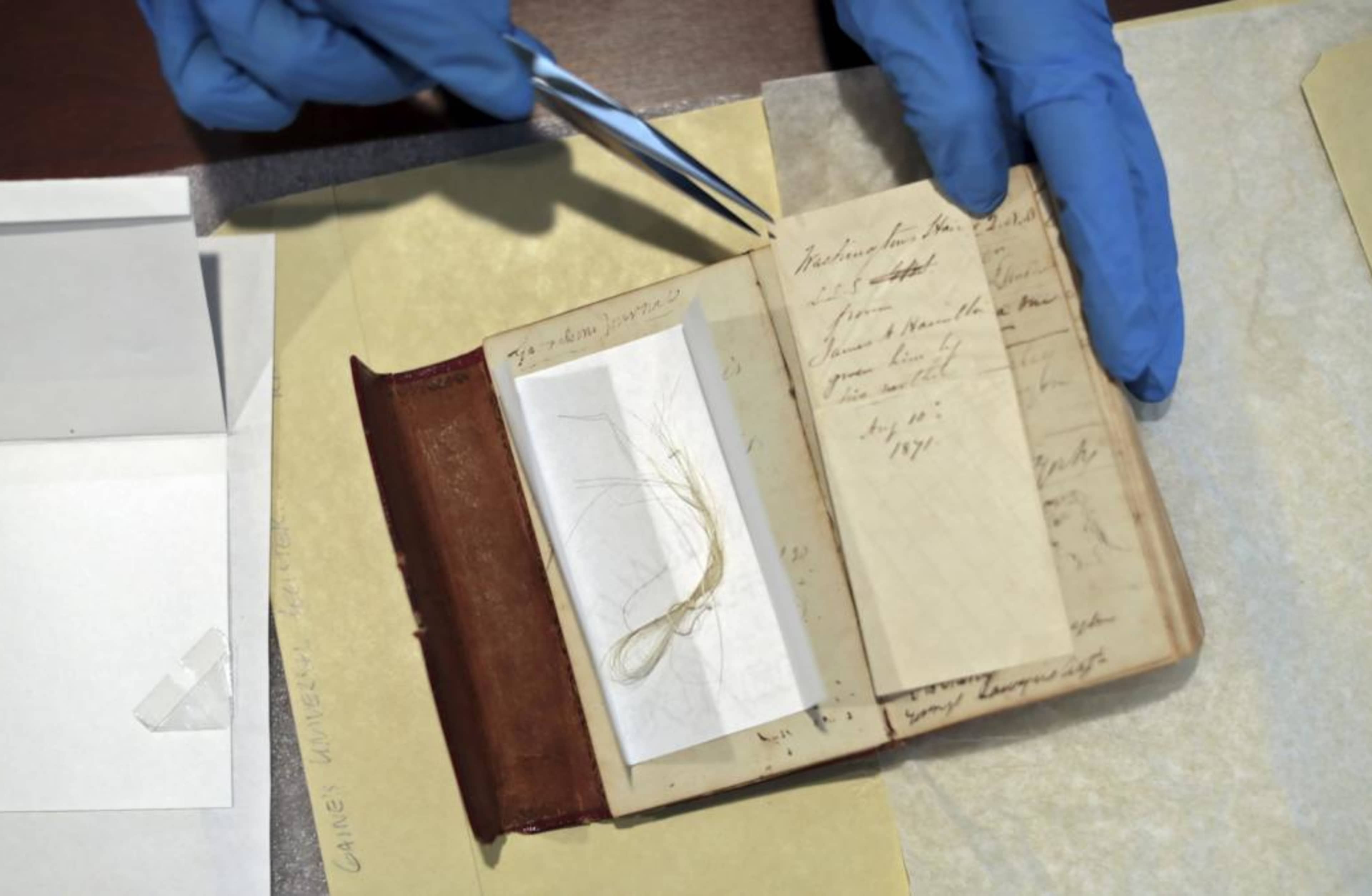
In February 2018, historical researchers and librarians at Union College’s Schaffer Library made international headlines while conducting a routine inventory of the institution’s oldest books. Tucked inside a leather-bound 1793 Gainesville/Schenectady almanac, librarian John Myers discovered a small, unassuming paper envelope. Upon opening the delicate packet, he found several six-inch strands of pale, silver-gray hair. Written on the envelope was a series of handwritten notes that traced a stunning lineage of ownership.
According to the college’s historical analysis, the 1793 almanac originally belonged to Philip Jeremiah Schuyler, whose father, General Philip John Schuyler, was a hero of the Revolutionary War and one of the primary founders of Union College. Philip Jeremiah’s sister was none other than Elizabeth "Eliza" Schuyler Hamilton, the widow of the first U.S. Treasury Secretary, Alexander Hamilton. The inscriptions on the envelope indicated that Eliza Hamilton had received the hair directly—likely as a keepsake of the close bond between her husband and the president—and had subsequently gifted the lock to her son, James Alexander Hamilton. James then passed the heirloom down to his granddaughters, who kept the presidential strands safe for generations. Though it remains a mystery exactly how and when the envelope was slipped into the family’s 1793 almanac, its presence in the Union College archives highlights the tight-knit social circles of the early American republic.
Timeline of the Artifact’s Journey
The journey of this unique historical relic spans over two centuries, connecting the birth of the nation to a modern archival discovery. Here is the chronological breakdown of the key events surrounding the lock of hair:
- February 22, 1732: George Washington is born in Westmoreland County, Virginia, destined to lead the nation.
- 1775–1783: Washington serves as the Commander-in-Chief of the Continental Army. Before his rise, the question of who commanded the Continental Army before Washington was a pivotal topic of debate among early colonial leaders.
- 1789: Washington is inaugurated as the first President of the United States.
- 1793: The almanac in which the hair was found is published. It is acquired by Philip Jeremiah Schuyler.
- December 14, 1799: George Washington passes away at Mount Vernon. Following his death, locks of his hair are widely distributed to close friends and political allies, including the Hamilton family.
- Mid-19th Century: Eliza Schuyler Hamilton passes the lock to her son, James Alexander Hamilton, who subsequently leaves it to his granddaughters.
- February 14, 2018: Librarian John Myers discovers the hair during a routine inventory at Union College in Schenectady, New York, sparking global historical interest.
Debunking the Myth: George Washington’s Natural Hair
One of the most persistent myths in popular American history is that George Washington wore a wig. This misconception is largely driven by the formal, powdered hairstyles depicted in famous portraits of the era, such as the famous Gilbert Stuart painting featured on the one-dollar bill. However, historical records confirm that Washington did not wear a wig. Instead, he took immense pride in his natural hair, which was originally a reddish-brown color.
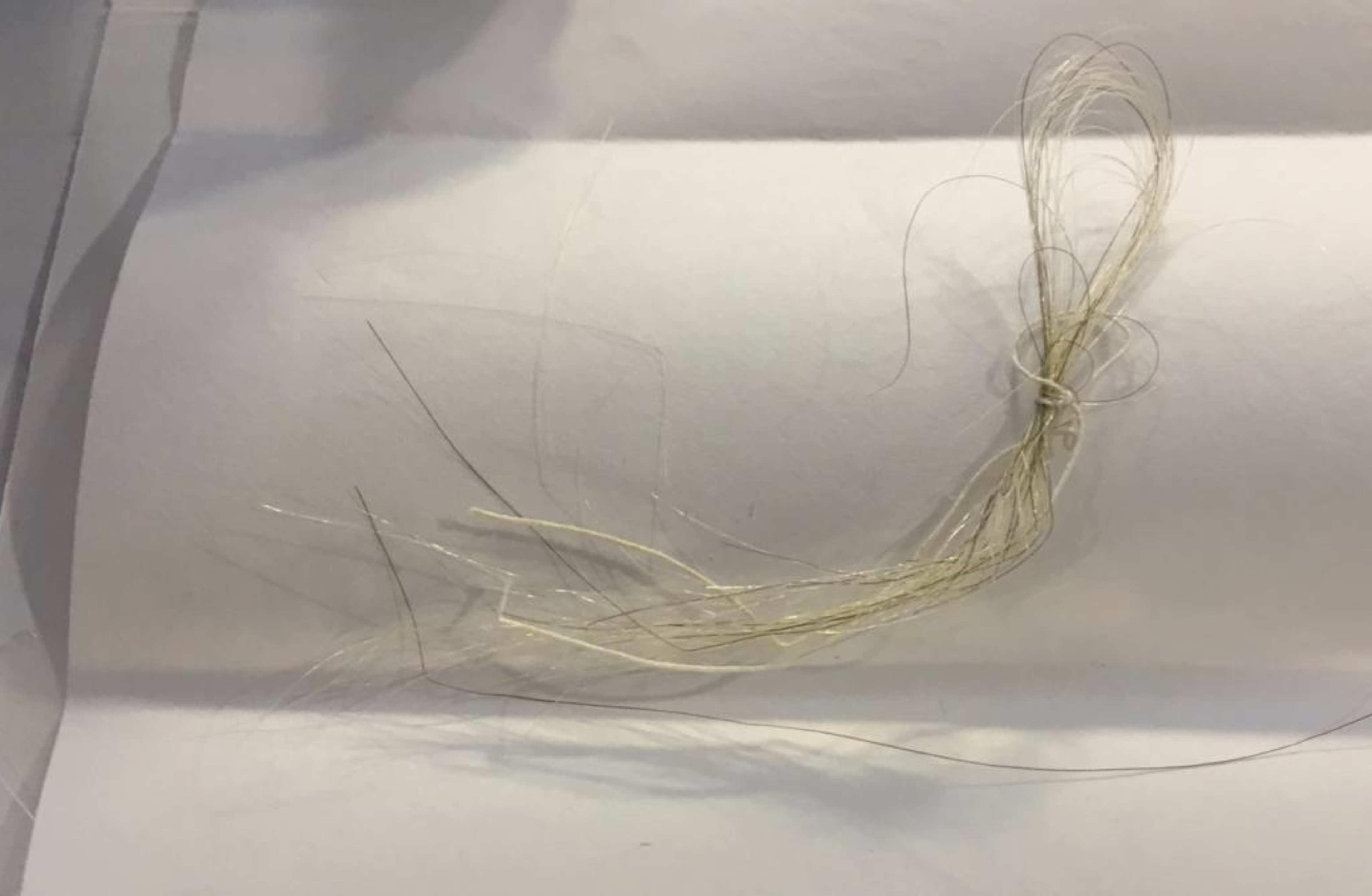
To achieve the fashionable look of an 18th-century gentleman, Washington grew his hair long, pulled it back into a tight braid or ponytail known as a "queue," and heavily coated it with hair pomade and white powder. The powder, typically made of scented starch, gave his hair its distinct stark-white appearance. The six-inch strands discovered at Union College are a testament to this practice, displaying the fine, naturally straight texture of Washington’s actual hair without the constraints of artificial hairpieces. This detail makes the discovery even more compelling, as modern observers are looking at the actual biological tissue of the first president, rather than synthetic fibers from a wig.
The Science and Art of Hair Authentication
Verifying the authenticity of centuries-old hair is a complex task that requires both historical detective work and expert consultation. To confirm whether the strands found in the almanac indeed belonged to the first president, Union College reached out to John Reznikoff, a world-renowned manuscript dealer and expert in historical hair collecting. Reznikoff, who holds a Guinness World Record for the largest collection of historic hair, has analyzed locks from numerous world-altering figures, including Abraham Lincoln, John F. Kennedy, Napoleon Bonaparte, and Ludwig van Beethoven.
After closely examining high-resolution photographs of the strands, the envelope, and the accompanying handwriting, Reznikoff declared the hair to be "100 percent authentic." While definitive proof would require destructive DNA testing—which historians are reluctant to perform on such rare artifacts—the provenance of the Hamilton and Schuyler families, combined with the physical characteristics of the hair, left no doubt. Reznikoff valued the strands at approximately $2,000 to $3,000. While this is modest compared to rare, single-owner specimens (such as a lock of Thomas Jefferson’s hair that fetched over $6,875 or Abraham Lincoln’s hair which sold for $25,000), the historical value of the Union College find is truly priceless.
Lesser-Known Facts About Historic Hair Collecting
The practice of collecting presidential hair reveals several surprising anecdotes that challenge our modern perceptions of history:
- The Macabre Lincoln Keepsake: John Reznikoff’s extensive collection contains a lock of Abraham Lincoln’s hair that was plucked immediately after his assassination by John Wilkes Booth. This chilling specimen still contains dried fragments of brain matter, serving as a visceral, tragic reminder of that fateful night at Ford’s Theatre.
- Mount Vernon’s Hair Jewelry: George Washington’s estate at Mount Vernon houses approximately four dozen documented samples of his hair. Many of these strands were set into elaborate jewelry pieces, such as rings, lockets, and stickpins, which were worn by his widow, Martha Washington, and other family members as tokens of remembrance.
- A Worldwide Commodity: In the 19th century, the demand for hair from famous figures was so high that fake hair locks were frequently sold on the black market. Genuine pieces required detailed letters of provenance, much like the handwritten genealogy found on the Union College envelope, to prove their authenticity to skeptical collectors.
Why This Discovery Still Matters Today
The discovery of George Washington’s hair in a college library reminds us that history is not a static collection of dates and dry facts; it is a living, breathing narrative waiting to be uncovered in the most unexpected places. This artifact bridges the gap between the mythic status of the Founding Fathers and their everyday human realities. It highlights the deeply personal relationships that existed behind the scenes of the American Revolution, connecting figures like Washington and the Hamiltons through shared tokens of affection.
Furthermore, it underscores the critical role of modern archivists, librarians, and historians. In an increasingly digital world, physical archives still hold secrets that cannot be digitized. The preservation of these tangible links to our past ensures that future generations can touch, see, and connect with the human beings who shaped the foundations of the United States.
People Also Ask
Did George Washington actually wear a wig?
No, George Washington did not wear a wig. He grew his natural hair long, styled it back into a queue, and applied pomade and white powder to achieve the popular, formal look of his era.
How did Union College get George Washington’s hair?
The lock of hair was found inside a 1793 almanac belonging to Philip Jeremiah Schuyler. His sister, Eliza Schuyler Hamilton (wife of Alexander Hamilton), had preserved the hair and passed it through her family, though the exact circumstances of how the book and envelope arrived at the college library remain a historical mystery.
Is presidential hair valuable?
Yes, presidential hair is highly collectible. While the Union College strands are valued at a few thousand dollars, some rare locks from Abraham Lincoln and Thomas Jefferson have sold at auctions for tens of thousands of dollars.
A Tangible Legacy of America’s First President
The accidental discovery of George Washington’s hair inside a 225-year-old book at Union College is a powerful reminder of the intimate, human side of history. Through the preservation efforts of the Hamilton and Schuyler families, this delicate physical remnant survived the centuries to offer us a direct connection to the father of our country. It encourages us to look closer at the archives of our past, proving that sometimes, the most extraordinary historical treasures are hidden right between the pages of an old book.


