To many, the third Monday in April is fondly known as “Marathon Monday”—a day when elite runners and passionate spectators from across the globe descend upon the historic streets of Boston. However, this vibrant spring celebration is deeply intertwined with another, far older commemoration: Patriots’ Day. Originating in Massachusetts, this unique holiday does not merely mark a sporting event; it serves as a solemn and triumphant remembrance of the pivotal moments that sparked the American Revolutionary War. On April 19, 1775, ordinary colonial citizens stood up against the global military might of Great Britain, forever altering the trajectory of world history. By understanding the origins of Patriots’ Day, we can appreciate the profound sacrifice, enduring courage, and revolutionary spirit of the men and women who fought for self-determination. From the silent, tense green of Lexington to the grueling modern marathon route, this holiday unites America’s revolutionary past with its resilient present, reminding us of the high cost of freedom.
The Historical Background: Tensions and Rebellion in New England
To grasp the true weight of Patriots’ Day, one must travel back to the turbulent spring of 1775. For over a decade, relations between Great Britain and its North American colonies had been rapidly deteriorating. Grievances over oppressive taxation, arbitrary colonial policies, and the forced quartering of British soldiers in private homes had pushed the populace to the brink of open revolt. In Massachusetts, resistance was particularly fierce. The British Parliament had officially declared the province to be in a state of open rebellion, prompting colonial leaders to organize secret governing bodies and stockpile military supplies. The tensions across the thirteen colonies had reached an absolute boiling point, and New England was the epicenter of this brewing storm.
The primary catalyst for the confrontation on April 19 was a covert British plan. British General Thomas Gage, governor of Massachusetts, received orders to disarm the colonial rebels and arrest key revolutionary leaders like Samuel Adams and John Hancock, who were hiding in the town of Lexington. Gage dispatched a force of roughly 700 British regulars under the command of Lieutenant Colonel Francis Smith to march from Boston to nearby Concord, where a large cache of colonial gunpowder, weapons, and provisions was being stored. However, the colonists’ sophisticated intelligence network caught wind of the operation, setting the stage for an explosive confrontation.
The Chronological Timeline of April 19, 1775
The events of that fateful day unfolded with breathtaking speed, forever changing the course of human liberty. Below is the chronological breakdown of how the first day of the American Revolution played out:
- April 18, 10:00 PM – The Midnight Signal: Dr. Joseph Warren discovers the British march route. He dispatches Paul Revere and William Dawes to ride through the countryside, warning local militias (the Minutemen) and alerting Adams and Hancock in Lexington. Contrary to popular myth, they did not scream “the British are coming,” but rather quiet warnings that “the Regulars are coming out.”
- April 19, 5:00 AM – The Shot Heard ‘Round the World: On the village green in Lexington, Captain John Parker and approximately 80 colonial militiamen stand in silent defiance as the vanguard of British troops arrives. An ordered standoff quickly dissolves into chaos when an unidentified spectator fires a shot. The British respond with devastating volleys, leaving eight colonists dead and ten wounded. The war had officially begun.
- April 19, 9:00 AM – The Battle of Concord: Having cleared Lexington, the British march onward to Concord. At the North Bridge, colonial militia forces, now numbering in the hundreds, confront the British infantry. Under orders to return fire, the patriots force the British to retreat. This marked the first time American colonists successfully ordered a retreat of the King’s professional army.
- April 19, Afternoon – The Bloody Retreat: As the British attempt to march the 16 miles back to Boston, they face a harrowing gauntlet. Thousands of local militia fighters, arriving from surrounding towns, utilize guerrilla warfare tactics—firing from behind trees, stone walls, and buildings. By the time the British troops reached safety in Charlestown, they had suffered nearly 300 casualties.
Key Historical Figures of the Day
The triumph of the American patriots on April 19 was built on the shoulders of remarkable individuals, many of whom became legendary names in the annals of American heritage:
Captain John Parker
A veteran of the French and Indian War, Captain Parker commanded the Lexington militia. Facing overwhelming British forces, he famously commanded his men: “Stand your ground; don’t fire unless fired upon, but if they mean to have a war, let it begin here.” Though his men took heavy losses, his bravery established the moral resolve of the revolution.
Paul Revere and William Dawes
While Revere has received the lion’s share of historical fame thanks to Henry Wadsworth Longfellow’s famous poem, both riders risked their lives riding through the treacherous Massachusetts night to rouse the countryside and secure the safety of colonial leaders. Their swift action prevented a total tactical surprise.
Major John Buttrick
At the North Bridge in Concord, Major Buttrick commanded the militia forces. When the British began firing upon his men, he issued the historic command: “Fire, fellow soldiers, for God’s sake, fire!” This direct action solidified the transition from passive resistance to active revolutionary warfare.
The Evolution of a Holiday: From Fast Day to Marathon Monday
For more than a century after the war, Massachusetts commemorated the events of April 19 through localized reenactments and church services. However, by the late 19th century, New England’s cultural landscape was changing. In 1894, Massachusetts Governor Frederic T. Greenhalge sought to modernize the state’s calendar. He decided to abolish “Fast Day”—a colonial-era Puritan tradition of fasting and prayer that had largely lost its cultural relevance. In its place, Greenhalge officially established Patriots’ Day on April 19.
Governor Greenhalge strategically selected this date to accomplish multiple historical purposes. It not only honored the revolutionary battles of Lexington and Concord but also commemorated the Baltimore Riot of April 19, 1861, which marked the first bloodshed of the American Civil War. By celebrating both events, Patriots’ Day was envisioned as a grand monument to the preservation of American liberty and union. It demonstrated how early colonial towns shaped the course of U.S. history by anchoring national identity in local heritage.
In 1897, the holiday gained a new, globally recognized tradition. Inspired by the revival of the marathon at the 1896 Olympic Games in Athens, the Boston Athletic Association established the Boston Marathon. Scheduled to coincide with Patriots’ Day, the race honored the legendary run of Pheidippides from Marathon to Athens, drawing a powerful parallel to the grueling journeys of the midnight riders. Over the decades, the marathon evolved into a spectacular, world-class event. To make the holiday more accessible, Massachusetts shifted the official observance of Patriots’ Day to the third Monday in April in 1969, creating a permanent three-day weekend that continues to draw millions of spectators and athletes today.
Lesser-Known Facts and Historical Anecdotes
While the broader strokes of the American Revolution are well-known, several fascinating and surprising details about Patriots’ Day and the events of April 19 often escape the history textbooks:
- News of the Battles Traveled Slowly: Without modern communication, news of the conflict had to be carried by horseback and printed broadsides. It took days for other colonies to learn about the battles, with reports eventually finding their way into America’s first newspapers and pamphlets, galvanizing the continental war effort.
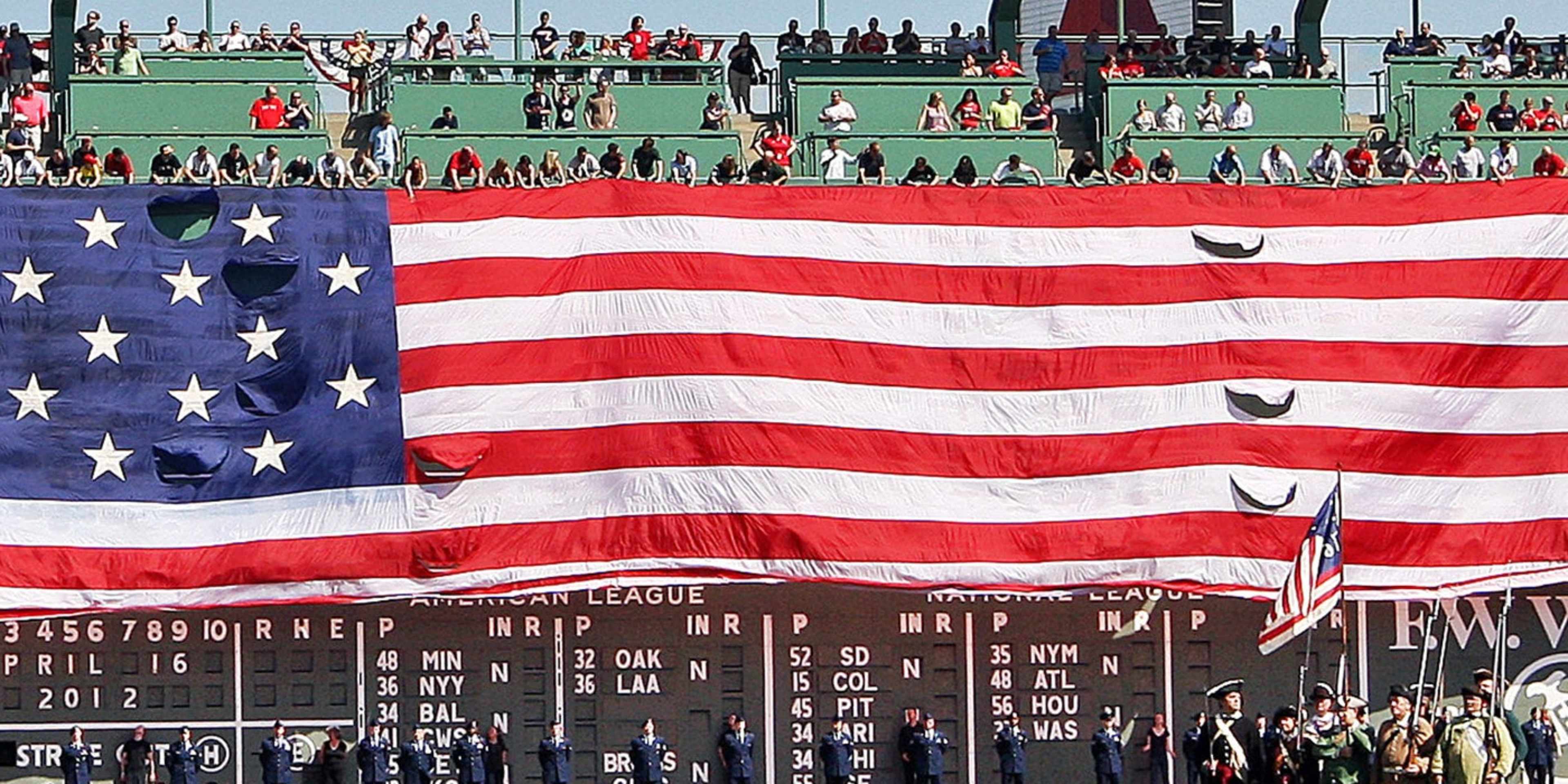
- The Dawn of a Morning Baseball Tradition: In 1959, the Boston Red Sox began playing an annual home game at Fenway Park on Patriots’ Day, starting at the unusual time of 11:05 AM. This allows fans to spill out of the ballpark just in time to watch the marathon runners cross the finish line nearby, creating a unique Boston sports tradition.
- It is Not a Federal Holiday: Despite its profound significance, Patriots’ Day is only an official, paid state holiday in Massachusetts and Maine (which was part of Massachusetts until 1820). However, it is officially recognized through local observances in several other states, including Connecticut, Wisconsin, and North Dakota.
Why Patriots’ Day Still Matters Today
In the modern era, Patriots’ Day has evolved into far more than a historical reenactment or a physical test of endurance. It stands as a profound testament to the power of community, democratic ideals, and human resilience. This was never more evident than in the aftermath of the tragic 2013 Boston Marathon bombing. The phrase “Boston Strong” became a rallying cry that echoed the unwavering determination of the early patriots of 1775. The holiday continues to remind us that freedom, democracy, and civic unity require active participation and enduring strength. By celebrating Patriots’ Day, we honor not only the historical figures who laid the foundation of the United States but also the contemporary values of courage, diversity, and mutual support that keep the American spirit alive.
People Also Ask (FAQ)
Is Patriots’ Day different from Patriot Day?
Yes, they are entirely different. Patriots’ Day (plural) is celebrated on the third Monday in April to honor the Battles of Lexington and Concord (1775). Patriot Day (singular) is observed annually on September 11 as a national day of remembrance for the victims of the 2001 terrorist attacks.
Do people get the day off on Patriots’ Day?
Patriots’ Day is a state-level public holiday in Massachusetts and Maine, meaning state and local government offices, public schools, and many local businesses are closed. In other states, it is a normal business day.
Why does Maine celebrate Patriots’ Day?
Maine celebrates Patriots’ Day because, during the American Revolution and up until the Missouri Compromise of 1820, Maine was geographically and politically a part of the Commonwealth of Massachusetts. Thus, the two states share this deep-rooted historical heritage.
Conclusion
From the early morning skirmishes on the Lexington Green to the modern cheers lining the Boylston Street finish line, Patriots’ Day is a beautiful mosaic of American history, sacrifice, and community triumph. It is a day that invites us to look back at the origins of our democracy, honor those who risked everything for the dream of liberty, and celebrate the enduring, unbreakable spirit that defines the American legacy.


