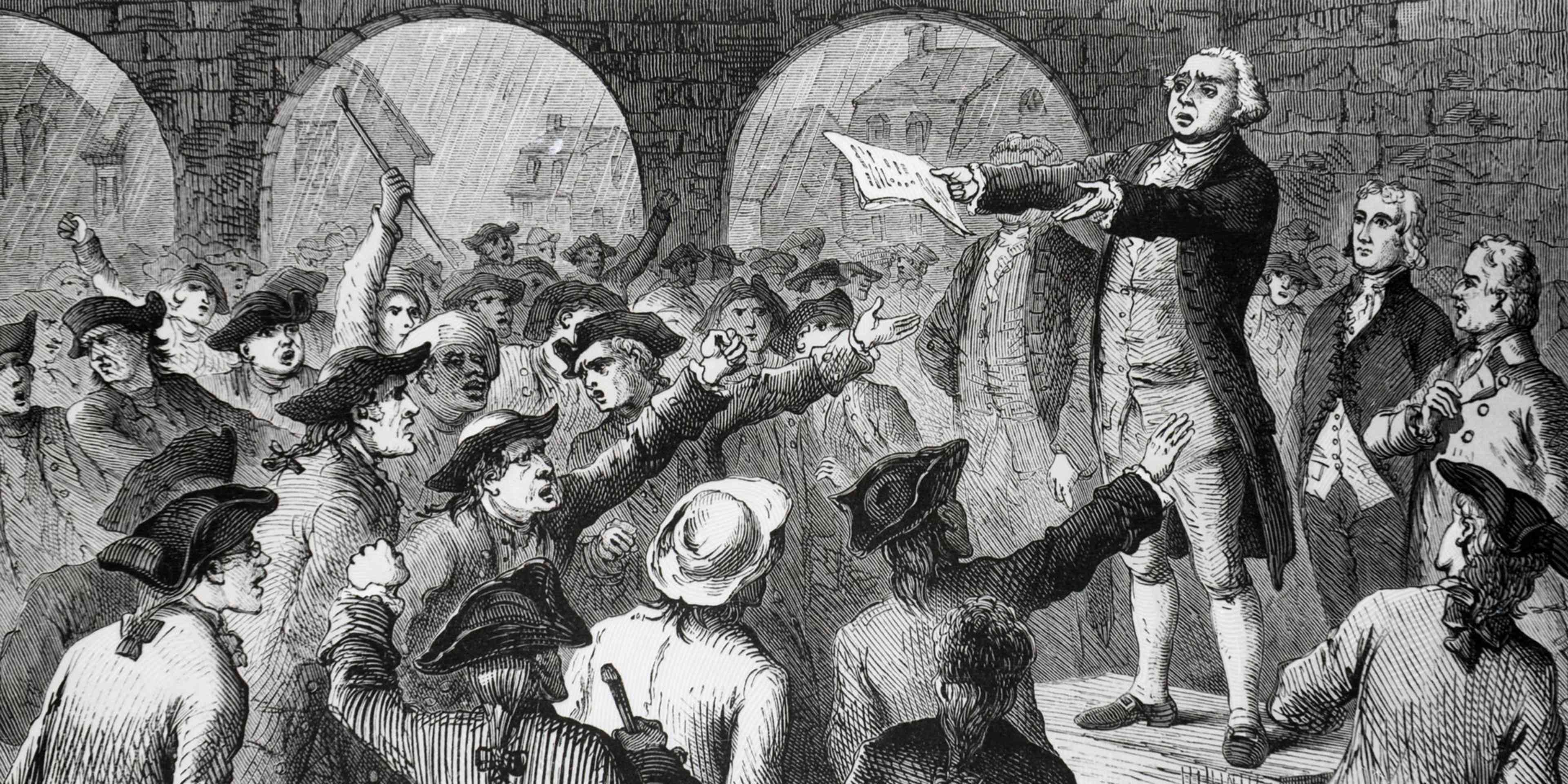
The American Revolution did not begin on a battlefield; it started in the minds, hearts, and crowded taverns of colonial America. At the absolute center of this intellectual and physical rebellion was the Sons of Liberty, a clandestine, grassroots network of political agitators, merchants, and working-class citizens who dared to challenge the might of the British Empire. Operating in the shadow of the British Crown, this group utilized an aggressive blend of public propaganda, economic boycotts, and targeted civil disobedience to unite a fractured continent [1]. Their bold actions transformed localized grievances over taxation into a unified movement for national independence. To understand the birth of the United States, one must understand who the Sons of Liberty were, what drove them to radical action, and how their defiance permanently reshaped global history.
Historical Background and Origins of the Rebellion
The origins of the Sons of Liberty can be traced to the mid-1760s, a period of immense geopolitical shift in North America. Following the British victory in the French and Indian War (1754–1763), Great Britain found itself in possession of vast new territories but burdened with a staggering national debt. Parliament argued that because the war had been fought to defend the American colonies, the colonists should help pay for their own defense. Up to this point, the colonies had enjoyed decades of ‘salutary neglect,’ governing and taxing themselves through local legislatures. The sudden shift in British policy, marked by the passage of the Sugar Act in 1764 and the infamous Stamp Act in 1765 [1], sparked outrage across the geography of the thirteen colonies.
In Boston, a small group of nine local artisans, shopkeepers, and businessmen—initially calling themselves the ‘Loyal Nine’—began meeting in secret to plan protests against the Stamp Act [1]. This group eventually expanded and allied with more prominent political figures, evolving into the Boston chapter of the Sons of Liberty [1]. The name ‘Sons of Liberty’ itself was borrowed from a spirited speech delivered in the British Parliament by Isaac Barré, an Irish member of Parliament who was sympathetic to the American cause [1]. Barré warned his colleagues that the government’s oppressive policies had ’caused the blood of these sons of liberty to recoil within them’ [1]. The colonists enthusiastically adopted the moniker, and chapters quickly spread from Boston and New York to Philadelphia, Charleston, and beyond, establishing a revolutionary communications network across the eastern seaboard.
Causes and Context of Colonial Anger
To fully comprehend the radicalization of the Sons of Liberty, one must examine the socio-economic and political landscape of the era. The primary catalyst for their anger was the concept of ‘taxation without representation.’ Because the colonies had no elected representatives in the British Parliament, they argued that any taxes levied directly upon them by London were unconstitutional and a direct violation of their rights as English subjects.
The Stamp Act of 1765 was the first direct tax on the colonists, requiring a physical stamp on all paper goods, including legal documents, newspapers, playing cards, and academic degrees [1]. The Sons of Liberty saw this as a dangerous precedent. If Parliament could tax their daily paper goods without their consent, what would stop them from taxing their lands, homes, and lives? Local governments passed formal resolutions condemning the tax, but the Sons of Liberty believed that legal petitions were not enough. They recognized that to force the British government’s hand, they needed to make the administration of these taxes impossible on the ground. This struggle played out deeply within urban centers, demonstrating how colonial towns shaped American history by becoming hotbeds of revolutionary thought and physical defiance.
Important Figures and Their Roles
While the Sons of Liberty operated as a decentralized network with many anonymous members, several prominent historical figures emerged as its leaders and intellectual architects:
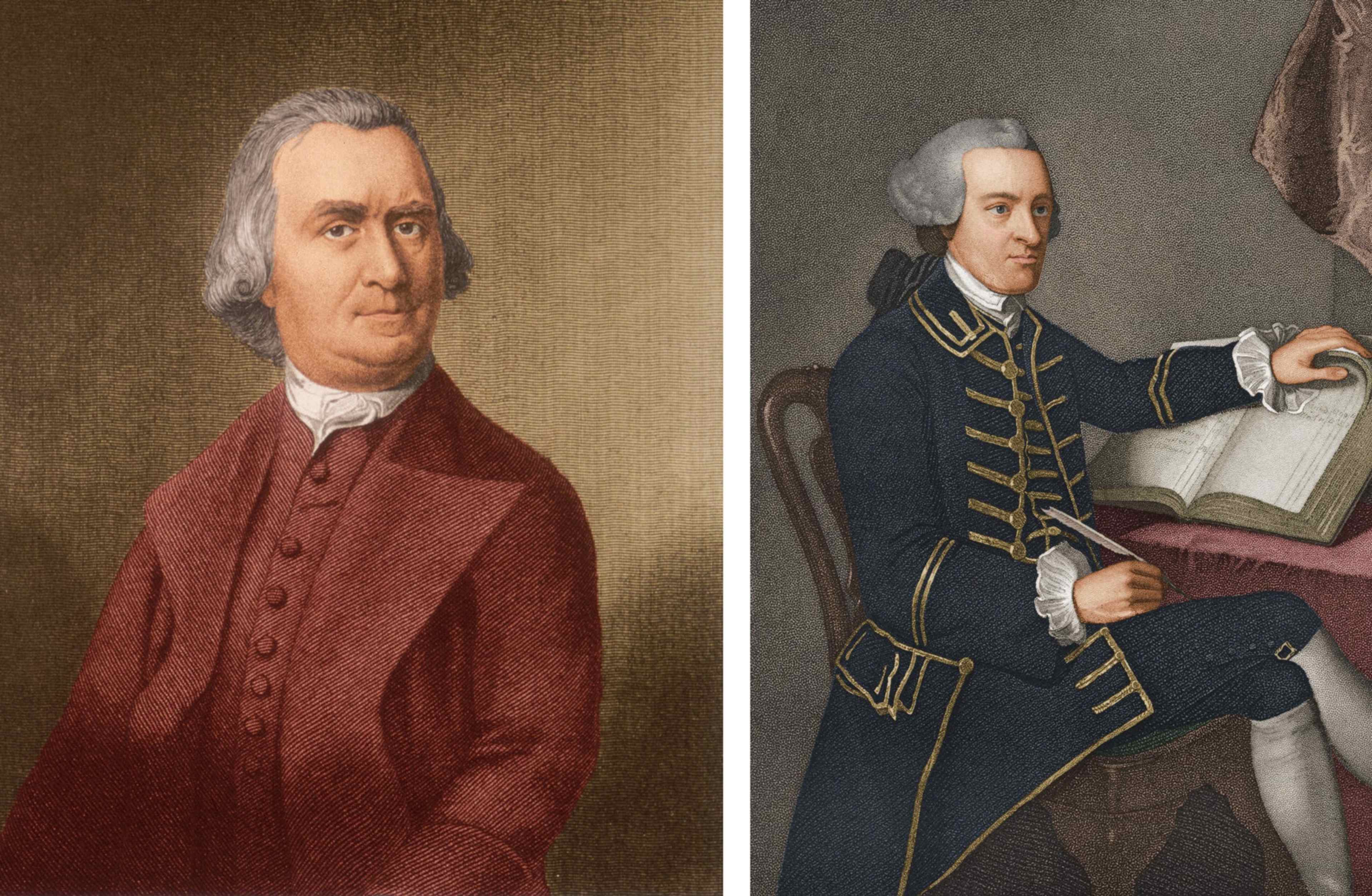
- Samuel Adams: Often regarded as the firebrand of the American Revolution, Adams was a Harvard-educated political theorist and writer who excelled at grassroots organizing and propaganda [1]. He was highly effective at translating complex constitutional arguments into easily understood slogans and broadsides that mobilized the working-class citizens of Boston.
- John Hancock: A wealthy merchant and smuggler, Hancock provided the financial backing that the Sons of Liberty needed to print pamphlets, organize rallies, and support families affected by British trade restrictions [1]. His massive wealth and high social standing lent credibility to a movement that the British dismissed as a rabble of low-class rioters.
- Paul Revere: A skilled silversmith and industrialist, Revere served as a primary courier for the Boston Committee of Correspondence, carrying news of revolutionary actions between colonies [1]. He was also a master propagandist, most famously creating a highly sensationalized engraving of the Boston Massacre that fueled anti-British sentiment.
- James Otis: A brilliant lawyer who coined the phrase ‘Taxation without representation is tyranny,’ Otis provided the intellectual framework for the legal arguments used by the Sons to oppose parliamentary acts [1].
Key Events Timeline
The history of the Sons of Liberty is marked by a series of escalating confrontations with royal authorities:
- August 14, 1765: The Boston Sons of Liberty hanged an effigy of Andrew Oliver, the newly appointed stamp distributor, from a large elm tree (later known as the Liberty Tree) [1]. A mob subsequently looted Oliver’s office and home, forcing him to flee [1].
- December 17, 1765: Under intense pressure and threats of violence, Andrew Oliver was forced to publicly resign his post under the Liberty Tree before a cheering crowd of 2,000 citizens [1].
- 1767–1768: Following the passage of the Townshend Acts, which taxed imported goods like paper, glass, paint, and tea, the Sons of Liberty organized a highly effective non-importation agreement, enforcing a strict boycott of British merchandise [1].
- March 5, 1770: Tensions between colonists and British soldiers boiled over into the Boston Massacre. The Sons of Liberty used the tragic deaths of five colonists to rally public support against the presence of peacetime standing armies in American cities.
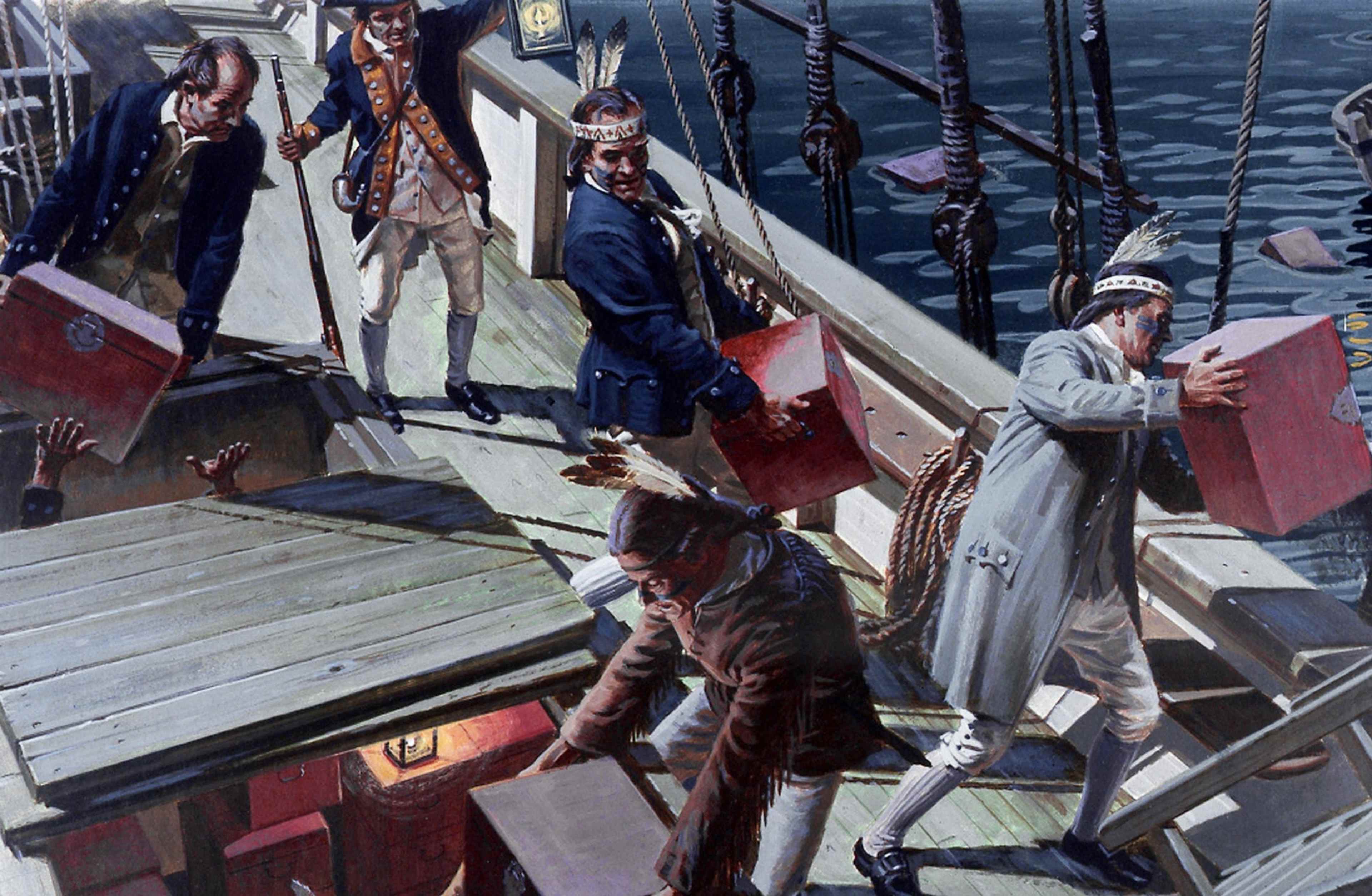
- December 16, 1773: The Boston Tea Party. In response to the Tea Act, members of the Sons of Liberty boarded three British merchant ships and dumped 92,000 pounds of tea into Boston Harbor, marking the most famous act of political defiance in American history [1].
- April 19, 1775: The Battles of Lexington and Concord. British troops marched to seize colonial arms and arrest Samuel Adams and John Hancock, resulting in the ‘shot heard ’round the world’ and the outbreak of the Revolutionary War [1].
Major Turning Point: The Boston Tea Party
The crowning achievement of the Sons of Liberty—and the ultimate catalyst for the Revolutionary War—was the Boston Tea Party on December 16, 1773 [1]. When Parliament passed the Tea Act, it granted a monopoly on the tea trade to the financially struggling British East India Company, allowing them to sell tea directly to the colonies at a cheaper price than smuggled Dutch tea, while still collecting the Townshend tea tax [1].
The Sons of Liberty recognized this as a clever trap. If colonists bought the cheap British tea, they would be tacitly agreeing to Parliament’s right to tax them [1]. Furthermore, the monopoly threatened the livelihoods of local merchants and shippers [1]. When three tea ships—the Dartmouth, the Eleanor, and the Beaver—arrived in Boston Harbor, the royal governor, Thomas Hutchinson, refused to let them leave without paying the required duties, while the colonists refused to let the tea be unloaded [1].
Faced with a political stalemate, a large town meeting was held at the Old South Meeting House, led by Samuel Adams. When it became clear that the governor would not yield, Adams gave a prearranged signal. A group of Sons of Liberty, some disguised as Mohawk Native Americans to mask their identities and symbolize their distinct American identity, marched to Griffin’s Wharf. In a remarkably disciplined and quiet operation, they boarded the ships, broke open 342 chests of tea, and dumped them into the cold waters of the harbor [1]. The event stunned the British establishment and led directly to the passage of the Coercive Acts, which closed Boston Harbor, suspended colonial self-government in Massachusetts, and set both sides on an irreversible path to war.
Lesser-Known Facts About the Sons of Liberty
History books often present a sanitized version of the American Revolution, but the reality was far more complex and gritty. Here are three fascinating, lesser-known facts about the Sons of Liberty:
- They Practiced Brutal Forms of Torture: The Sons of Liberty were not afraid to use physical intimidation. Loyalist officials and merchants who broke boycotts were often subjected to ‘tarring and feathering’ [1]. This agonizing process involved pouring hot, sticky pine tar over a victim’s bare skin and covering them with feathers. The physical and psychological scars from this practice could last a lifetime.
- The Liberty Tree Was Their Sacred Headquarters: The massive elm tree in Boston’s South End was the physical center of the rebellion [1]. The Sons of Liberty decorated it with lanterns, hung effigies of British officials from its branches, and nailed political broadsides to its trunk [1]. When the British army occupied Boston in 1775, one of their first acts of retaliation was to cut the Liberty Tree down and burn it for firewood.
- They Had a Secret Flag and Code Words: To signal meetings and identify members across different colonies, the Sons of Liberty developed secret codes, handshakes, and symbols. Their official flag featured nine vertical red and white stripes, representing the original ‘Loyal Nine’ members of the Boston cell.
Long-Term Impact on America
The legacy of the Sons of Liberty extends far beyond the defeat of Great Britain in 1783. By organizing a coordinated, multi-colony resistance, they laid the organizational and psychological foundation for American nationhood [1]. Before the 1760s, the colonies functioned as separate entities with little common identity. The Sons of Liberty proved that the colonies could work together toward a shared political goal, a concept that was crucial to understanding fascinating facts about the thirteen colonies and their ultimate unification.
Furthermore, their emphasis on popular sovereignty—the idea that governments derive their just powers from the consent of the governed—became the bedrock of the United States Constitution and the Bill of Rights. Their tactics of public protest, boycotts, and grassroots organizing established a vibrant and enduring American tradition of political activism [1].
Why It Still Matters Today
In the 21st century, the spirit of the Sons of Liberty remains a powerful and sometimes controversial touchstone in American political discourse. The group occupies a unique space in history: they were undeniably patriots who fought for liberty and self-determination, but they were also lawbreakers who used intimidation, property destruction, and political violence to achieve their goals [1].
This duality continues to spark intense debates today. When modern protest movements engage in civil disobedience, occupy public spaces, or destroy property to protest perceived injustices, they often draw comparisons to the Sons of Liberty [1]. Their legacy forces us to grapple with fundamental questions: What is the line between a patriot and an extremist? When is civil disobedience justified? How does a democratic society balance the rule of law with the right to dissent? By studying the Sons of Liberty, we gain a deeper appreciation for the messy, complicated, and revolutionary roots of American democracy.
People Also Ask
Who was the actual founder of the Sons of Liberty?
While no single person is credited as the sole founder, Samuel Adams is widely recognized as the primary political organizer and leader of the Boston chapter, which evolved from an earlier secret group of nine Bostonians known as the ‘Loyal Nine’ [1].
Did the Sons of Liberty use violence?
Yes, the Sons of Liberty frequently used physical violence, property damage, and severe intimidation tactics [1]. They looted the homes of British officials, enforced economic boycotts by damaging the shops of non-compliant merchants, and subjected loyalists to the painful torture of tarring and feathering [1].
Why did the Sons of Liberty dress up as Native Americans during the Boston Tea Party?
The disguises served two main purposes. First, they protected the identities of the participants, as destroying British property was a high-treason offense punishable by death. Second, dressing as Mohawk Native Americans was a symbolic assertion of their distinct American identity, signaling that they no longer considered themselves English subjects.
Conclusion
The Sons of Liberty were the vital spark that ignited the American Revolution [1]. Through a combination of bold political philosophy, clever propaganda, and fearless grassroots activism, this decentralized group of colonial radicals successfully united thirteen separate colonies against the world’s greatest superpower [1]. While their methods were often controversial and sometimes violent, their unwavering commitment to self-determination and local representation laid the very foundations of American democracy. Today, their legacy lives on in every citizens’ right to protest, debate, and demand accountability from their government [1].


