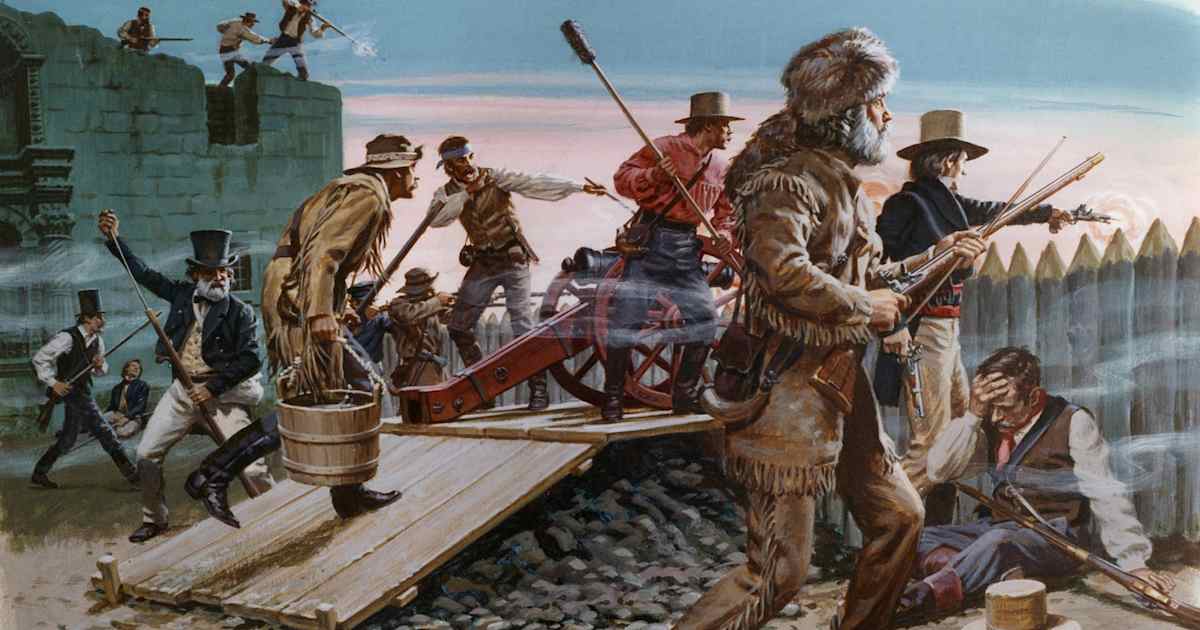
The morning of March 6, 1836, marked one of the most tragic, heroic, and legendary chapters in American history. As the pre-dawn darkness enveloped the Alamo—a former Spanish mission turned improvised fortress in San Antonio, Texas—the air was shattered by the battle cries of over 1,800 Mexican soldiers. When the smoke cleared, almost all of the roughly 200 Texian defenders had perished, leading many to believe that there were no survivors at all. However, amidst the devastation, a small group of courageous individuals—mostly women, children, and enslaved people—miraculously lived through the carnage. Their stories of survival and resilience not only humanize this legendary battle but also served as the primary eyewitness accounts that shaped the enduring legacy of Texas independence.
Historical Background and the Spark of Rebellion
To understand why the Alamo became a battleground, one must look back to the socio-political climate of early 19th-century Mexico. Having won its independence from Spain in 1821, Mexico struggled to establish a stable government. Under the federalist Mexican Constitution of 1824, Texas was joined with Coahuila, forming the state of Coahuila y Tejas. The Mexican government actively encouraged immigration from the United States to populate and develop the vast northern frontier, promising cheap land and temporary tax exemptions.
However, tensions soon escalated. The influx of American settlers, who brought with them their Protestant faith, English language, and the institution of chattel slavery, clashed with the laws and cultural expectations of Catholic, anti-slavery Mexico. To fully grasp the distinct identity of these newcomers and their role in the brewing rebellion, it is essential to understand who were the Texians and how their socio-political values diverged from the central Mexican state. When General Antonio López de Santa Anna seized power in Mexico City, repealed the 1824 Constitution, and established a centralized dictatorship, both Texians and native Tejanos (Mexicans of Texas) rose in open revolt to defend their local autonomy.
A Timeline of the 13-Day Siege
The confrontation at the Alamo was not a single, isolated battle, but rather a grueling 13-day siege that tested the limits of human endurance. Below is the chronological breakdown of the key events that defined this legendary stand:
- February 23, 1836: General Santa Anna’s vanguard arrives unexpectedly in San Antonio de Béxar. The Texian garrison, caught off guard, withdraws into the Alamo. Santa Anna raises a blood-red flag from the tower of San Fernando Church, signaling “no quarter”—meaning no prisoners would be taken. William Barret Travis responds by firing the Alamo’s massive 18-pounder cannon.
- February 24, 1836: James Bowie, the co-commander of the garrison, falls desperately ill with a debilitating disease, leaving the young Lieutenant Colonel William Barret Travis in sole command. On this day, Travis pens his famous, stirring letter “To the People of Texas & All Americans in the World,” declaring, “I shall never surrender or retreat.”
- March 1, 1836: A glimmer of hope arrives. Thirty-two brave volunteers from the town of Gonzales, known as the “Immortal 32,” successfully slip through the Mexican lines to reinforce the garrison, fully aware of the deadly odds they face.
- March 3, 1836: Courier James Bonham returns to the Alamo with the grim news that Colonel James Fannin’s forces at Goliad will not be coming to their aid. The defenders realize they are completely on their own.
- March 5, 1836: The Mexican artillery bombardment suddenly ceases, plunging the area into an eerie silence. This allows the exhausted defenders to fall into a deep sleep. Meanwhile, Santa Anna finalizes his plans for a decisive, multi-pronged infantry assault.
- March 6, 1836: Around 5:00 a.m., under the cover of darkness, four columns of Mexican soldiers storm the Alamo walls. Despite putting up a ferocious defense, the outnumbered Texians are overwhelmed. By 6:30 a.m., the battle is over, and the fortress is entirely in Mexican hands.
Important Figures and Their Crucial Roles
The defense of the Alamo brought together a diverse group of larger-than-life characters, each leaving an indelible mark on American folklore and history:
- Lieutenant Colonel William Barret Travis: Only 26 years old, Travis was a passionate lawyer and soldier who commanded the regular Texian army at the Alamo. His unwavering refusal to surrender and his literary genius in drafting pleas for help galvanized the wider Texas revolution, elevating him into a symbol of ultimate sacrifice.
- Colonel James Bowie: Famous across the American frontier as a deadly knife fighter and land speculator, Bowie co-commanded the volunteer forces. Despite being confined to his cot during the final assault, his reputation as a fierce combatant remained intact, and legend holds he died fighting from his bed.
- David “Davy” Crockett: The legendary frontiersman, storyteller, and former Tennessee Congressman arrived at the Alamo with a small band of volunteers. Crockett’s presence boosted morale significantly. Whether he died in the thick of the final assault or was captured and executed immediately afterward remains one of the most fiercely debated mysteries in American history.
- General Antonio López de Santa Anna: The President of Mexico and commander of the Mexican forces. Driven by a desire to crush the rebellion and assert absolute centralist control, his decision to assault the fort rather than starve it out resulted in massive Mexican casualties and fueled an intense, retaliatory fire among the Texian rebels.
Who Survived the Alamo? The Untold Stories of Resilience
While General Santa Anna’s “no quarter” policy meant that virtually all fighting Texian combatants were slain, around 15 to 20 non-combatants survived the carnage. These survivors, consisting of women, children, and enslaved men, witnessed the terrifying final moments of the battle from within the dark rooms of the Alamo chapel and side quarters.
Susanna Dickinson and Her Infant Daughter
Perhaps the most famous of all the survivors was Susanna Dickinson, the young wife of Alamo artillery captain Almeron Dickinson. Susanna spent the terrifying final hours of the battle huddled in the sacristy of the chapel with her 15-month-old daughter, Angelina. As the battle raged, Susanna witnessed the horrors of close-quarters combat. Following the victory, Santa Anna interviewed her, spared her life, and provided her with two silver dollars and a blanket. He sent her on a grueling journey to Sam Houston’s camp in Gonzales, accompanied by an escort, to deliver a letter of warning intended to demoralize the remaining rebels. Instead, her eyewitness testimony of the defenders’ bravery became a powerful rallying cry.
Joe: The Enslaved Survivor
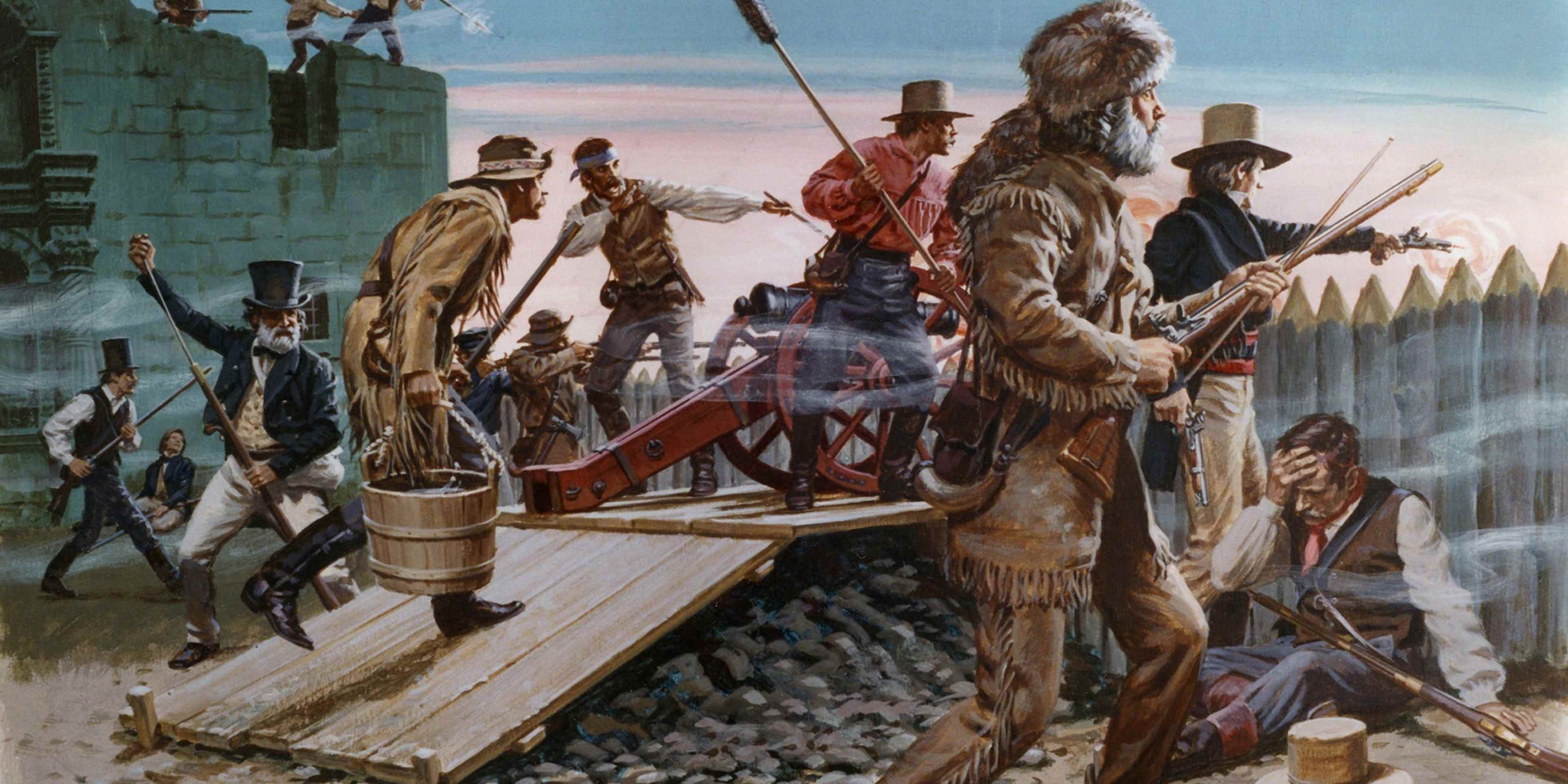
Another key survivor was Joe, the personal slave of William Barret Travis. During the final assault, Joe fought alongside Travis but was spared by Mexican soldiers who recognized his status as an enslaved non-combatant, as Mexico had abolished slavery and generally opposed the institution. Joe was shot and bayoneted during the chaos but survived the ordeal. Afterward, Santa Anna had him briefly questioned before releasing him. Joe was eventually returned to the Travis estate, but his quest for freedom did not end at the Alamo. Barely a year later, Joe escaped to freedom, leaving behind a lasting legacy as the only adult male on the Texian side to survive the battle.
The Tejana Survivors: Keeping the History Alive
While early accounts focused primarily on Susanna Dickinson, several native Mexican-Texan (Tejana) women and their children also survived the siege. These women came from families that deeply opposed Santa Anna’s centralist dictatorship:
- Juana Navarro Alsbury and Gertrudis Navarro: Juana, the sister-in-law of James Bowie, and her sister Gertrudis, sought refuge along the west wall of the Alamo. Juana opened her door to signal peace as Mexican troops swept through, and a Mexican officer quickly escorted them to a safe area.
- Ana Salazar Esparza and Her Children: The wife of defender Gregorio Esparza, Ana huddled in the chapel’s sacristy with her four children, including her eight-year-old son Enrique Esparza. Enrique later provided incredibly detailed, vivid, and harrowing accounts of the battle’s final moments, describing the deafening noise and the terrifying darkness of the chapel as soldiers fired blindly into the rooms.
- Brigido Guerrero: A former Mexican soldier who chose to fight alongside the Texians. When the fort fell, Guerrero managed to save his own life by convincingly telling the victorious Mexican troops that he had been taken prisoner and held against his will, showcasing a remarkable act of quick-thinking survival.
- The Controversy of Madam Candelaria: In her later years, Andrea Castañón Villanueva (better known as Madam Candelaria) claimed to have been inside the Alamo nursing a dying Jim Bowie. While she became a legendary figure in San Antonio, receiving a state pension, modern historians heavily dispute her claims, highlighting contradictions in her various accounts.
Causes, Context, and Global Dynamics
The fall of the Alamo was not merely a local border dispute; it was a conflict deeply tied to international geopolitics, economic ambitions, and social structures. The underlying causes of the Texas Revolution included the clash between American-style democratic expectations and the centralized military rule of Mexico. Additionally, the economic reliance of Anglo settlers on the cotton industry made the preservation of slavery a primary, though controversial, catalyst for the rebellion. For the Mexican government, maintaining sovereignty over its northern territories was a matter of national survival and defense against American territorial expansion.
Major Turning Points and Aftermath
The destruction of the Alamo garrison had the opposite effect of what Santa Anna intended. Instead of crushing the rebellion, the tragedy served as a profound turning point. Combined with the brutal execution of hundreds of Texian prisoners at the Goliad Massacre shortly afterward, the defense of the Alamo united the divided Texian factions. The cries of “Remember the Alamo!” and “Remember Goliad!” became powerful psychological weapons. On April 21, 1836, at the Battle of San Jacinto, General Sam Houston led a surprise counterattack, decimating Santa Anna’s forces in just 18 minutes and capturing the Mexican president, securing Texas’s independence.
Long-Term Impact on America
The historical ripples of the Alamo extended far beyond the borders of the short-lived Republic of Texas. In 1845, the United States annexed Texas, an action that directly triggered the Mexican-American War (1846-1848). The resulting American victory led to the Treaty of Guadalupe Hidalgo, through which Mexico ceded over 500,000 square miles of territory to the United States—including modern-day California, Nevada, Utah, Arizona, and parts of Colorado, Wyoming, and New Mexico. This massive territorial expansion reshaped the global balance of power, fueled the domestic ideology of Manifest Destiny, and tragically intensified the political debate over the expansion of slavery, setting the stage for the American Civil War.
Lesser-Known Facts About the Alamo Survivors
- The Myth of the Sole Survivor: For decades, sensationalist newspaper articles and popular folklore portrayed Susanna Dickinson as the “sole survivor” of the Alamo. This narrative largely erased the vital accounts of Tejana survivors and enslaved individuals whose testimonies were equally crucial in piecing together the events.
- The Tragic Fate of the Wolf Child: During the chaotic final sweep of the chapel, a young boy believed to be the son of defender Anthony Wolf stood up to wrap a blanket around his shoulders. Tragically, Mexican soldiers mistook him for an active combatant in the dark and bayoneted him, highlighting the absolute chaos and terror of the battle’s end.
- A Diverse Defense: The Alamo was not defended solely by Anglo-Americans. Several native Tejanos, including Gregorio Esparza, fought and died alongside Travis and Bowie, showing that the struggle was deeply rooted in local political beliefs rather than simple ethnic division.
Why the Alamo and Its Survivors Matter Today
Today, the Alamo stands as a powerful, multi-layered historical monument that continues to spark intense discussion. Rather than viewing it through a singular, mythologized lens, modern historians emphasize a more inclusive narrative that respects indigenous heritage, honors the contributions of Tejana and Tejano families, and addresses the complex reality of slavery in early Texas. By studying the diverse array of survivors, we gain a deeper, more accurate understanding of the human cost of empire-building and the enduring power of historical memory.
People Also Ask (FAQ)
Did any adult male Texian defenders survive the Battle of the Alamo?
Technically, no armed Texian combatants survived the final assault, as Santa Anna ordered “no quarter” to be given. However, two adult males on the Texian side survived: Joe, the enslaved servant of William B. Travis, who was spared because of his non-combatant status, and Brigido Guerrero, a former Mexican soldier who successfully convinced the victors that he had been held prisoner by the defenders.
What happened to Susanna Dickinson after the battle?
After the battle, General Santa Anna sent Susanna Dickinson and her infant daughter Angelina to Gonzales to deliver a warning to Sam Houston. Susanna later remarried several times, survived the hardships of early Texas, and lived a long life, sharing her vivid, though sometimes conflicting, eyewitness accounts of the siege until her death in 1883.
Why did General Santa Anna spare the women and children?
Despite his ruthless “no quarter” policy toward armed rebels, Santa Anna adhered to military customs of the era regarding non-combatants. He spared the women, children, and enslaved servants, viewing them as innocent bystanders or victims of the rebel leadership, and used them to spread terrifying reports of the Mexican army’s power to discourage further rebellion.
How many people actually survived the Alamo?
Historians estimate that between 15 and 20 non-combatants survived the final battle on March 6, 1836. This group consisted primarily of Tejana women, their children, a few enslaved servants, and the wife and daughter of defender Almeron Dickinson.
Conclusion
The Battle of the Alamo remains one of the defining touchstones of American and Texan history. While the tragic deaths of leaders like Travis, Bowie, and Crockett have dominated the public imagination, the true story of survival belongs to the women, children, and enslaved individuals who lived through the terror. Their chilling eyewitness accounts, resilience in the face of absolute destruction, and subsequent contributions to history remind us that the legacy of the Alamo is far richer, more diverse, and more profound than any myth could ever capture.


