The American Revolutionary War battles were not just localized colonial skirmishes; they were the crucible in which the modern democratic world was forged. Spanning from 1775 to 1783, this epic struggle pitted a ragtag coalition of colonial militias and a newly formed Continental Army against the most formidable military empire of the eighteenth century. Achieving independence required eight grueling years of military campaigns, political maneuvering, and immense human sacrifice. While the British Redcoats possessed superior training, vast financial resources, and a dominant global navy, the American colonists relied on resilience, innovative tactics, foreign alliances, and key regional victories to turn the tide of history. Understanding how these underdogs secured a triumph requires looking past the grand declarations and analyzing the hard-fought battles where the fate of a new nation was forged in fire.
The Road to Revolution: Historical Background and Causes
The seeds of the American Revolution were sown long before the first shots were fired at Lexington and Concord. In the wake of the French and Indian War (1754-1763), Great Britain found itself burdened with massive national debt. To replenish its treasury, the British Parliament levied a series of heavy, direct taxes on the American colonists without providing them representation in Parliament. Acts such as the Stamp Act of 1765 and the Townshend Acts of 1767 ignited widespread outrage across the 13 colonies, sparking protests, boycotts, and a growing sense of shared American identity. The colonists argued that “taxation without representation” was tyranny, violating their historic rights as Englishmen. As tensions escalated into violence—most notably during the Boston Massacre of 1770 and the Boston Tea Party of 1773—the British Crown responded with punitive measures known as the Coercive (or Intolerable) Acts. By 1774, the colonies had established the First Continental Congress, setting the stage for an inevitable military confrontation.
A Timeline of the American Revolutionary War
To understand the progression of the war, it is essential to map out its chronological path:
- April 19, 1775: The Battles of Lexington and Concord mark the outbreak of armed conflict.
- May 10, 1775: Green Mountain Boys capture Fort Ticonderoga, seizing critical artillery.
- July 4, 1776: The Second Continental Congress adopts the Declaration of Independence.
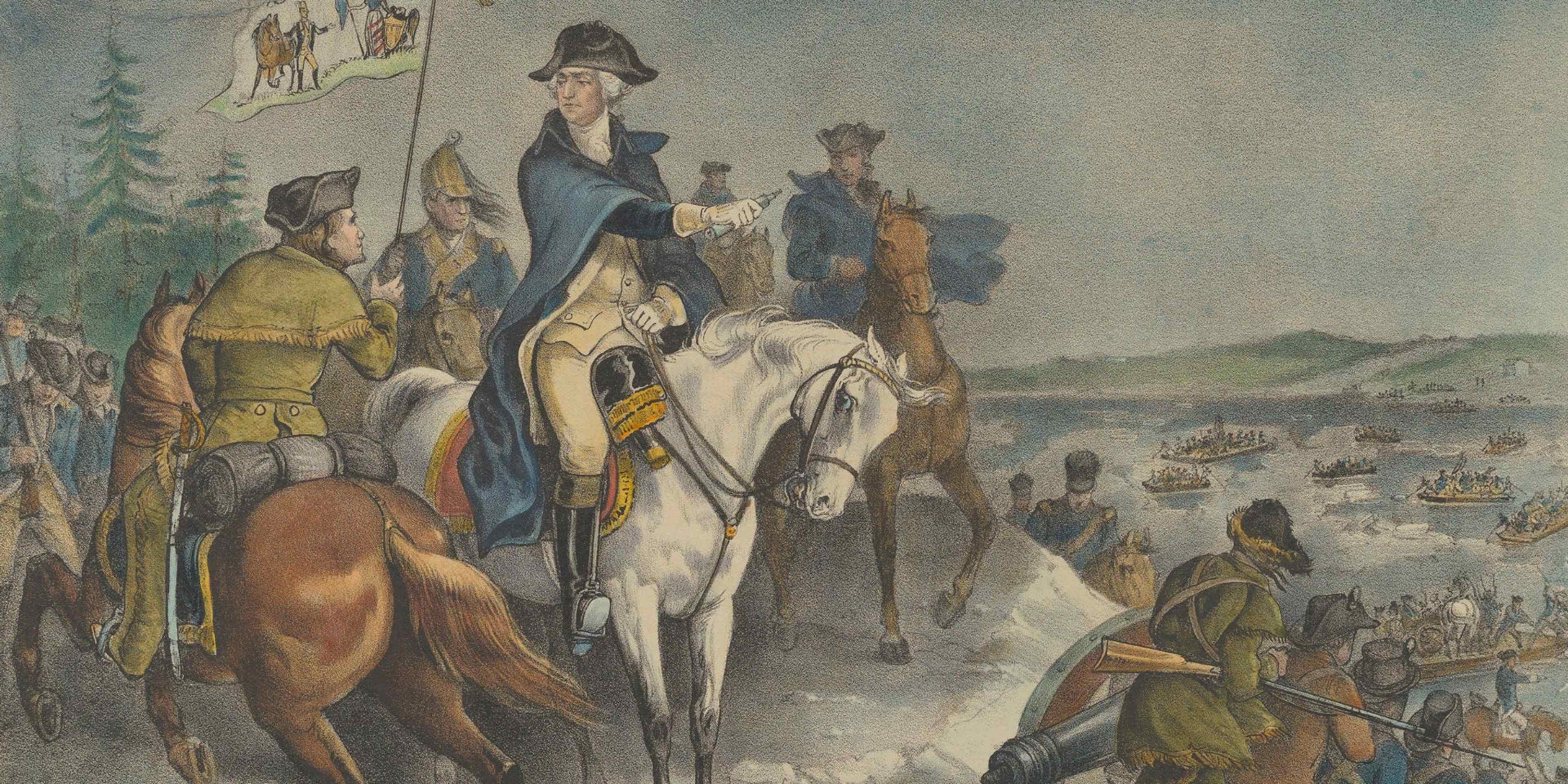
- December 26, 1776: General George Washington leads his famous crossing of the Delaware River to win the Battle of Trenton.
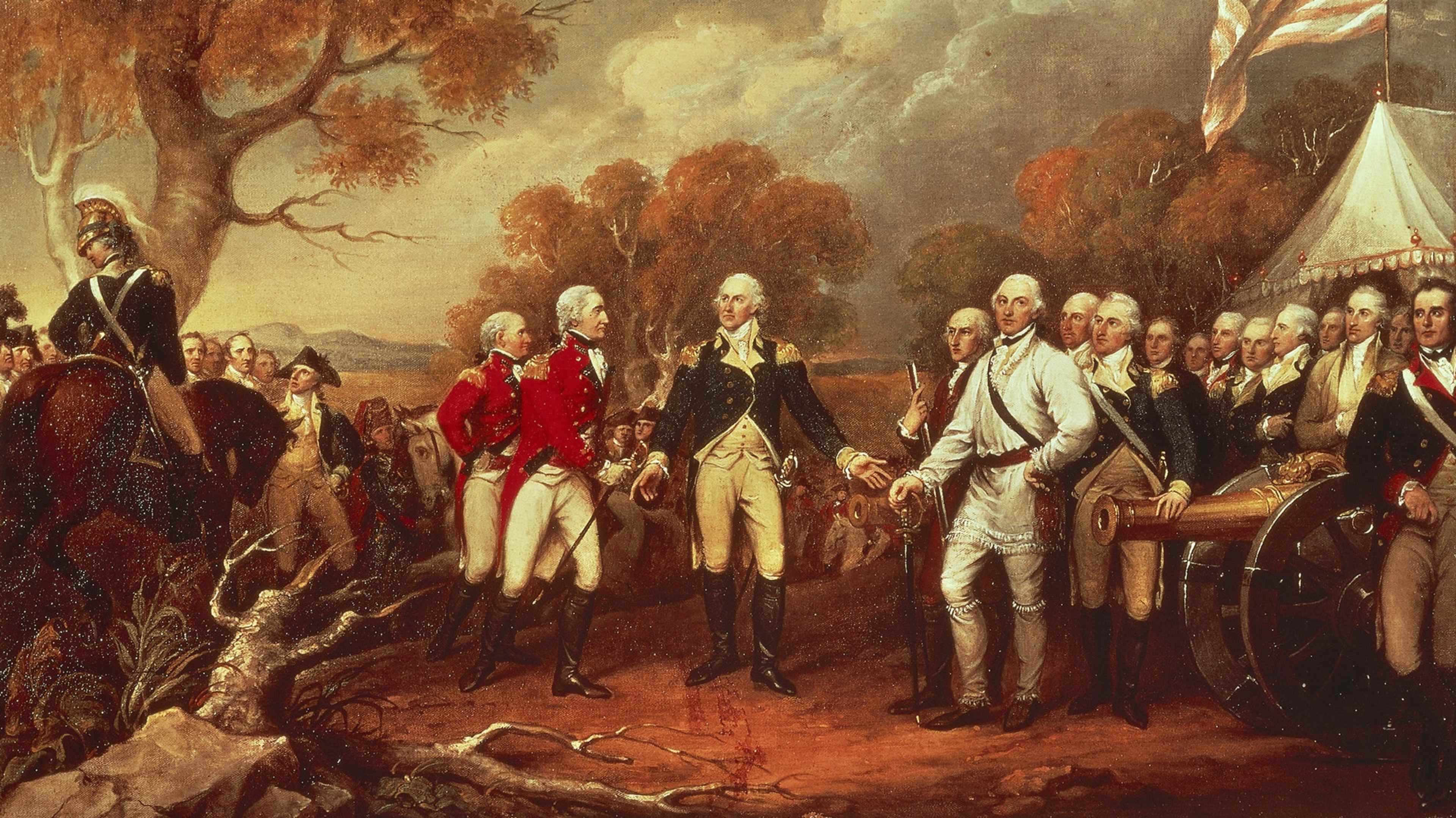
- October 17, 1777: British General John Burgoyne surrenders at Saratoga, securing a major turning point.
- February 1778: France formally signs an alliance with the United States, transforming the war into a global conflict.
- October 7, 1780: American frontier militiamen defeat Loyalist forces at the Battle of Kings Mountain.
- January 17, 1781: General Daniel Morgan achieves a tactical masterpiece at the Battle of Cowpens.
- October 19, 1781: The Siege of Yorktown ends with the surrender of British General Cornwallis.
- September 3, 1783: The Treaty of Paris is signed, officially recognizing American independence.
Seven Hard-Fought Battles That Won Independence
1. The Capture of Fort Ticonderoga (May 10, 1775)
Located on Lake Champlain in northeastern New York, Fort Ticonderoga occupied a vital strategic corridor between Canada and the Hudson River Valley. Despite its geographical importance, the British maintained a light garrison of only about 50 men. Sensing an opportunity, the Green Mountain Boys—a rugged militia from Vermont led by Ethan Allen—joined forces with Colonel Benedict Arnold to orchestrate a daring surprise attack. At dawn on May 10, fewer than 100 militiamen slipped across the lake and captured the fort while the British soldiers were still asleep. This bloodless victory significantly boosted colonial morale and yielded an invaluable prize: dozens of heavy cannons. Under the ingenious supervision of bookseller-turned-artillerist Henry Knox, these massive guns were dragged through hundreds of miles of winter snow to Boston, where they would soon alter the course of the war.
2. The Evacuation of Boston and Dorchester Heights (March 1776)
Following the bloody stalemate at the Battle of Bunker Hill, the British army held Boston under a tight grip. However, the arrival of the captured Ticonderoga cannons in early 1776 changed the strategic equation. In a stealthy overnight operation, General George Washington ordered his troops to fortify Dorchester Heights, a high-ground position overlooking Boston and its harbor. When British General William Howe awoke to find dozens of heavy artillery pieces pointed directly at his fleet, he realized his position was entirely untenable. On March 17, 1776, the British evacuated Boston, marking a monumental strategic triumph for the young Continental Army and ending an eight-year-long military occupation of the city.
3. The Battle of Trenton (December 26, 1776)
By December 1776, the American cause was on the verge of collapse. Having suffered devastating defeats in New York, Washington’s army had retreated across New Jersey into Pennsylvania. Morale was at an all-time low, and enlistments were set to expire at the end of the year. To rekindle his soldiers’ fighting spirit, Washington had them read Thomas Paine’s newly published pamphlet, The American Crisis, which famously declared, “The harder the conflict, the more glorious the triumph.” Knowing he needed a bold stroke, Washington executed a daring plan on Christmas night. Leading 2,400 men across the ice-choked Delaware River during a blinding nor’easter, he marched to Trenton, New Jersey. At dawn, the Americans launched a surprise attack on a garrison of 1,500 Hessian auxiliary troops. The battle was a decisive American victory; nearly 1,000 Hessians were captured, and their commander, Colonel Johann Rall, was mortally wounded. This stunning success revived the American spirit and saved the revolution from premature death.
4. The Battle of Saratoga (September–October 1777)
Often regarded as the single most critical turning point of the war, the Battle of Saratoga shattered British plans to isolate New England. British General John Burgoyne attempted to lead an army south from Canada to meet other British forces in Albany. However, his march was severely slowed by rugged terrain and active American resistance. At Bemis Heights, south of Saratoga, an American force led by General Horatio Gates and bolstered by the battlefield brilliance of General Benedict Arnold stood waiting. In two major engagements—the Battle of Freeman’s Farm and the Battle of Bemis Heights—the Americans inflicted heavy casualties on the British. On October 17, 1777, Burgoyne was forced to surrender his entire army of over 6,000 men. This monumental victory convinced King Louis XVI of France that the Americans had a viable chance of winning, prompting France to formally enter the war as an American ally, bringing vital naval and financial support.

5. The Battle of Kings Mountain (October 7, 1780)
Following several British victories in the Southern theater, including the capture of Charleston, General Charles Cornwallis sought to consolidate control over the South. He dispatched Major Patrick Ferguson to organize a Loyalist militia to protect his western flank. Ferguson issued a hubristic warning to the local frontier settlers, threatening to lay waste to their land if they did not surrender. This threat backfired spectacularly, mobilizing the “Overmountain Men”—rugged backcountry riflemen from the Appalachian region. Detailed geographical understandings found in the thirteen colonies map and history highlight how this region’s challenging terrain favored the stealth tactics of the frontiersmen. Surrounding Ferguson’s Loyalist forces on the rocky hilltop of Kings Mountain, the American marksmen utilized guerrilla tactics to systematically defeat them. Ferguson was killed in action, and his entire command was captured or killed. This battle halted Cornwallis’s momentum and proved that the Southern backcountry would not easily submit to British rule.
6. The Battle of Cowpens (January 17, 1781)
To counter British advances in the South, General Nathanael Greene divided his forces, sending Brigadier General Daniel Morgan to threaten British outposts. Cornwallis dispatched his aggressive and ruthless cavalry commander, Lieutenant Colonel Banastre Tarleton, to eliminate Morgan. The two forces met at Cowpens, a pasture in South Carolina. This region’s political identity and local defenses had been heavily shaped by early legislative systems such as the early Virginia House of Burgesses, which emphasized local defense organization. Morgan devised a brilliant “defense-in-depth” strategy. He positioned his militia in the front lines, instructing them to fire two volleys and then retreat, feigning panic. As Tarleton’s overconfident forces rushed forward in pursuit, they ran directly into a hidden, disciplined line of Continental regulars and a devastating cavalry charge led by Colonel William Washington. The double-envelopment was a resounding success, decimating Tarleton’s force and forcing Cornwallis to abandon his campaign in South Carolina.
7. The Siege of Yorktown (September–October 1781)
By 1781, both sides were financially exhausted and physically weary. Sensing a decisive opportunity, General George Washington bypassed an assault on British-occupied New York City and instead marched south to Virginia. He joined forces with French Lieutenant General Comte de Rochambeau and a massive contingent of French soldiers. Meanwhile, the French navy, commanded by Admiral de Grasse, defeated the British fleet at the Battle of the Capes, successfully cutting off Cornwallis’s escape route by sea. Surrounding Yorktown with over 19,000 allied troops, Washington and Rochambeau initiated a relentless siege. After weeks of heavy bombardment and a daring nighttime assault on key British redoubts led by Alexander Hamilton, Cornwallis realized escape was impossible. On October 19, 1781, the British forces formally surrendered. While sporadic skirmishes continued, Yorktown effectively broke the British political will to fight, leading directly to the peace negotiations that finalized American independence.
Key Historical Figures and Their Legacies
The success of the American Revolution depended on the leadership of extraordinary individuals:
- George Washington: Serving as the Commander-in-Chief of the Continental Army, Washington’s greatest strength was not his tactical record, but his ability to keep a fragile army intact through sheer force of will, political diplomacy, and strategic patience.
- Daniel Morgan: A brilliant frontier tactician, Morgan’s innovative battlefield strategies, particularly at Cowpens, became textbook examples of military science.
- Benedict Arnold: Before his infamous betrayal, Arnold was arguably the most aggressive and successful combat commander in the Continental Army, playing a crucial role in the victories at Ticonderoga and Saratoga.
- Comte de Rochambeau: The commander of the French Expeditionary Force, Rochambeau’s professional military experience and seamless cooperation with Washington were indispensable in securing the victory at Yorktown.
The Long-Term Impact on America and the World
The American victory ushered in a new era of global history. Domestically, it led to the creation of a constitutional republic founded on the principles of liberty, representative government, and individual rights. It challenged traditional European monarchies and inspired subsequent democratic movements worldwide, including the French Revolution and the Haitian Revolution. However, the war also left the new nation with massive debts, complex social divisions, and unresolved questions regarding slavery and the treatment of Indigenous peoples, setting the stage for future internal conflicts.
Fascinating and Lesser-Known Facts
- The Monument to a Leg: At the Saratoga National Historical Park, there is a monument dedicated to Benedict Arnold’s leg. Because of his subsequent treason, his name is omitted from the monument, which honors only the leg that was severely wounded while he led the charge at Bemis Heights.
- The Weather Factor: The Battle of Trenton might never have succeeded without a severe winter storm. The heavy snow and sleet masked the sound of Washington’s advancing army, preventing Hessian sentries from detecting the American approach until it was too late.
- The Diverse Ranks: Despite the historical focus on white colonists, the Continental Army was highly diverse. It is estimated that thousands of Black soldiers—both free and enslaved—as well as Native American allies from nations like the Oneida and Tuscarora fought alongside the patriots.
Why the American Revolution Still Matters Today
The lessons of the American Revolution remain deeply relevant in contemporary political discourse. The struggle highlighted the fundamental human desire for self-determination and the belief that governments derive their power from the consent of the governed. Today, as nations continue to debate the balance between individual liberty and state authority, the sacrifices made at Trenton, Saratoga, and Cowpens serve as a powerful reminder of the high cost of freedom and the ongoing effort required to maintain a democratic society.
People Also Ask (FAQ)
What was the turning point of the American Revolution?
The Battle of Saratoga is widely considered the turning point of the war. The surrender of British General John Burgoyne’s army proved to European powers, particularly France, that the Americans were capable of defeating the British military, leading to formal French military and financial alliances.
Did the Americans win every major battle?
No. In fact, the Continental Army lost more battles than they won. However, George Washington’s strategic goal was not necessarily to win every battle, but to keep the army intact, deplete British resources, and prolong the war until Britain lost the political will to continue fighting.
How did geography affect the outcome of the war?
Geography played a critical role. The vast size of the American colonies made it difficult for the British to control territory effectively. Additionally, American forces utilized their knowledge of the local terrain to launch successful guerrilla campaigns, particularly in the Southern backcountry and northern forests.
Conclusion
The path to American independence was not a straightforward march to victory, but a series of desperate struggles, strategic bluffs, and hard-fought battles. From the surprise raid at Fort Ticonderoga to the dramatic siege at Yorktown, each conflict served to forge the resilience of a new nation. By studying these pivotal engagements, we gain a deeper appreciation for the complex, multifaceted struggle that birthed the United States and continues to shape the democratic ideals of the modern world.


