The American flag is one of the most globally recognized symbols of national identity, representing freedom, democracy, and a complex historical journey. However, behind the iconic red, white, and blue stripes lies a history shrouded in mystery, myth, and intense political compromise. While every schoolchild is taught the legendary story of Betsy Ross sewing the first flag in Philadelphia, the actual historical evidence tells a much more complicated and fascinating tale. The origins of “Old Glory” reflect the fragmented nature of the early American colonies as they struggled to unite against British rule. Understanding how this flag evolved from a series of regional banners into a singular national emblem is crucial to appreciating the broader story of the United States. It is not just a tale of fabric and stars, but a window into the evolving soul of a nation searching for its collective identity. Let us dive deep into the archives to uncover the true, often surprising, history of the Stars and Stripes.
Historical Background: Out of Many, One Banner
When the American Revolution erupted in 1775, the concept of a unified nation was still in its infancy. The colonists did not immediately rally under a single, standardized banner. Instead, early revolutionary battles were fought under an array of local, unit, or regimental flags. These flags reflected the distinct cultural, geographic, and political identities of the thirteen original colonies.
Some regiments marched under the famous Gadsden flag, which featured a coiled timber rattlesnake on a yellow field with the warning, “Don’t Tread on Me.” Others carried the Pine Tree flag, depicting a hardy New England pine with the inscription, “An Appeal to Heaven.” In the southern colonies, flags often bore blue fields with silver crescents. These early symbols drew heavily on local flora, fauna, and religious sentiments, showcasing a regionalism that threatened to undermine the collective military effort. There was no standardized set of stars and stripes, and certainly no consensus on what a national symbol should look like. The transformation from regional insignia to a collective national flag was born out of military necessity and the pragmatic search for global legitimacy.
The Evolution of the Early Flag: 1775 to 1777
The Continental Colors: A Tense Compromise
In June 1775, the Second Continental Congress established the Continental Army, appointing George Washington as its commander-in-chief. Recognizing the need for a cohesive symbol to unite his troops, Washington raised the “Continental Colors” (also known as the Grand Union Flag) on New Year’s Day in 1776 during the siege of British-occupied Boston. However, this early flag was a fascinating political compromise. It featured thirteen alternating red and white stripes to represent colonial unity, but in the upper left canton, it displayed the British Union Jack.
According to vexillologists, this design was intentionally ambiguous. It signaled that the colonists were united in their grievances but were still holding out hope for reconciliation with the British Crown. However, this dual symbolism caused immense confusion on the battlefield. British observers in Boston reportedly mistook the flag’s raising as a sign of surrender, realizing only later that the colonists were still fighting. Washington quickly recognized that flying a flag so closely resembling the enemy’s was a strategic liability.
The Flag Resolution of 1777
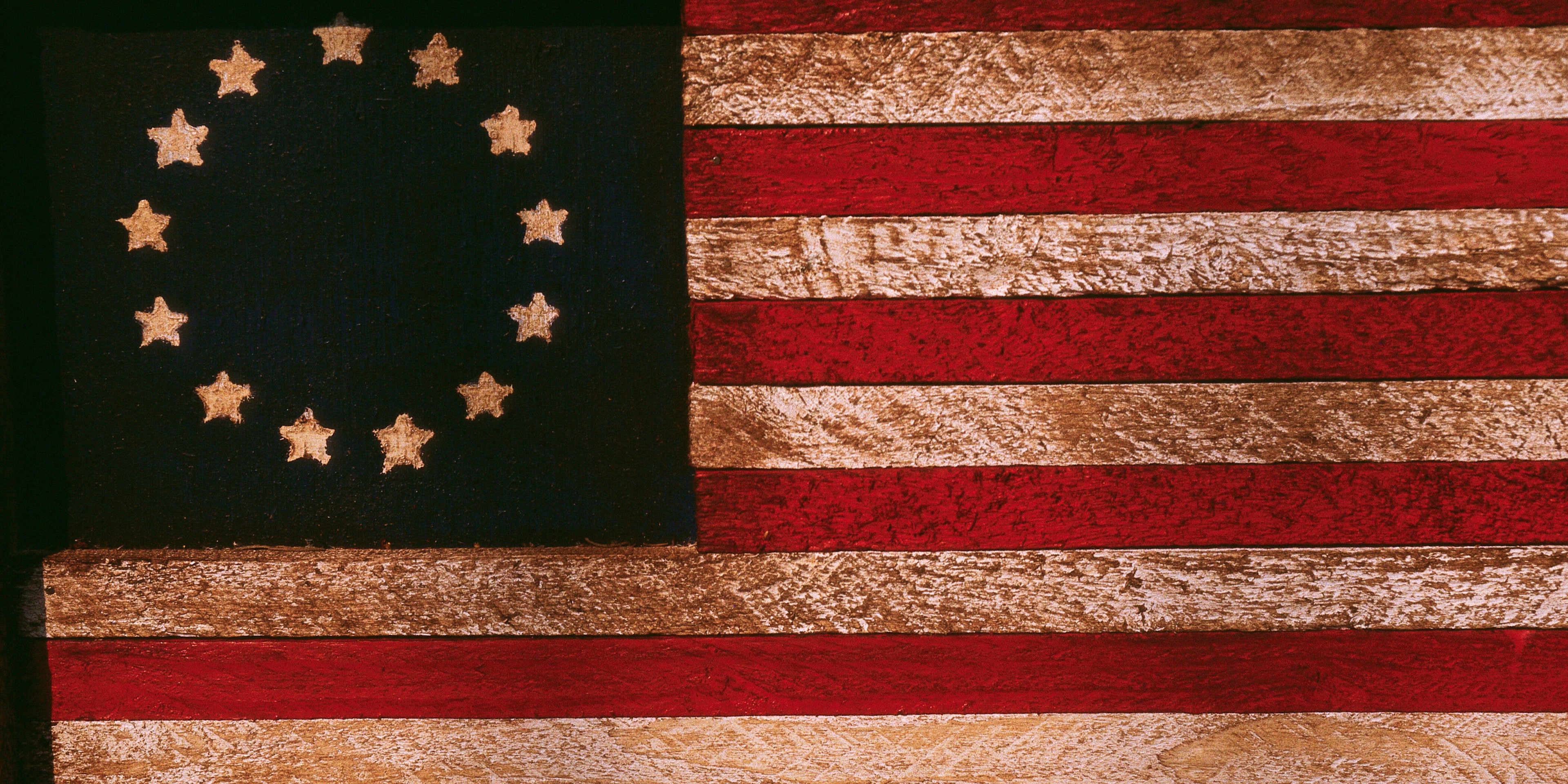
As the war progressed and reconciliation became impossible, the Continental Congress shifted its focus toward securing international alliances, particularly with France. To be recognized as an independent sovereign nation, America needed a flag that completely severed ties with British iconography. On June 14, 1777, the Second Continental Congress passed a brief, unassuming resolution: “Resolved, That the flag of the United States be thirteen stripes, alternate red and white; that the union be thirteen stars, white in a blue field, representing a new constellation.” This historic decree officially gave birth to the Stars and Stripes, though it left many artistic details completely open to interpretation.
Key Figures in the Flag’s Creation
Who actually brought this “new constellation” to life? While the legend of Betsy Ross is deeply woven into the fabric of American folklore, historical scrutiny reveals a different set of primary actors.
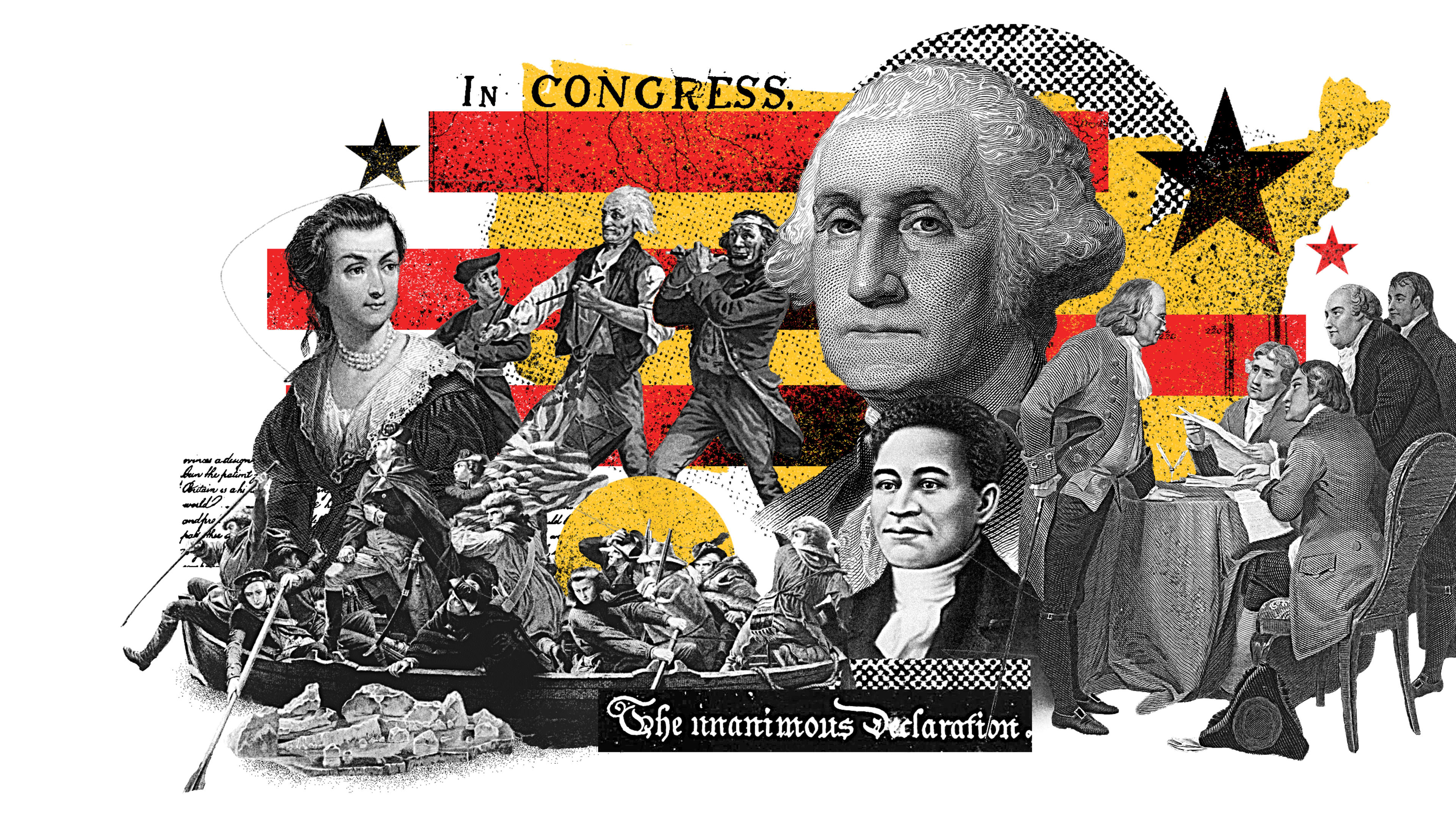
- George Washington: As the commander of the Continental Army, Washington was instrumental in pushing for a distinct military banner that could clearly differentiate his forces from the British. While legend claims he personally designed the flag and presented the sketch to Betsy Ross, no contemporary documentation supports this claim.
- Francis Hopkinson: A native of New Jersey, a signer of the Declaration of Independence, and a talented designer, Hopkinson is widely recognized by modern historians as the most likely designer of the first Stars and Stripes. Hopkinson served on the Continental Navy Board and actually submitted a bill to Congress for his design work on the flag and the Great Seal. Although Congress acknowledged his contribution, they ultimately refused to pay him, claiming that several people had been involved in the process.
- Betsy Ross: The story of Betsy Ross sewing the first flag in 1776 did not emerge until 1870, when her grandson, William Canby, presented the tale to the Historical Society of Pennsylvania. While Ross was indeed a skilled Philadelphia upholsterer who made flags for the Pennsylvania Navy, there is no archival evidence from 1776 linking her to the creation of the first national flag. To explore this fascinating historiographical debate further, discover the evidence surrounding whether did Betsy Ross really make the first American flag.
The Socio-Political Causes and Strategic Context
The creation of the American flag was not merely an aesthetic choice; it was deeply tied to the survival of the nascent republic. During the late 1770s, the Continental Congress was operating under extreme pressure, struggling to fund the war effort and establish a functional government. The political landscape was highly unstable, characterized by intense debates over how the Founding Fathers divided power between local state authorities and a centralized federal government.
In this fragile political climate, a national flag served two vital purposes. Locally, it acted as a unifying visual anchor for citizens of disparate colonies who often felt little connection to one another. Globally, it was a crucial diplomatic tool. To secure vital military and financial aid from European powers like France and Spain, the United States had to present itself as a legitimate, sovereign nation on the high seas. A distinct naval ensign was required to prevent American privateers and warships from being treated as stateless pirates under international maritime law.
Respecting Indigenous Perspectives on Territory and Symbols
As the United States adopted the Stars and Stripes to assert its sovereignty, the physical expansion represented by the flag had profound implications for Native American nations. For Indigenous communities, the concept of a national flag as an absolute marker of exclusive territorial ownership was highly foreign. Native diplomacy relied heavily on symbols of shared stewardship and mutual respect, such as wampum belts and ceremonial pipes, which represented living covenants between peoples rather than rigid geopolitical borders. The rapid advance of the American flag across the continent often signaled the unilateral displacement of these ancient agreements, transforming the banner into a complex symbol of both democratic promise and colonial dispossession.
Major Turning Points: From Military Ensign to National Cult
For the first several decades of the nation’s history, the American flag was rarely flown by ordinary citizens. It was primarily used as a military marker, a naval ensign, or an identifier for federal customs houses and forts. This changed dramatically with the outbreak of the American Civil War in 1861. When Confederate forces fired on Fort Sumter, a wave of patriotic fervor swept the North, and the Stars and Stripes suddenly became a ubiquitous symbol of national unity and preservation.
This period marked the beginning of what historians call the “cult of the flag”—a deeply emotional, almost religious reverence for the red, white, and blue. In the decades following the Civil War, patriotic organizations pushed for flag protection laws, and the Betsy Ross legend was popularized to give the symbol a warm, personal origin story. The flag’s design was finally standardized in 1912 when President William Howard Taft signed an executive order establishing precise proportions and arranging the stars in neat, horizontal rows. Prior to this, flag makers had absolute freedom to arrange the stars in circular, star-shaped, or irregular patterns, sometimes even using six- or eight-pointed stars.
Lesser-Known Facts About Old Glory
- The Accidental Surrender Signal: When George Washington raised the Continental Colors at Prospect Hill in 1776, the British army in Boston mistook it for a signal of submission because the flag still contained the British Union Jack in its canton.
- The Six-Pointed Star: Early American flags did not have a standardized five-pointed star. Many early hand-sewn banners featured six- or even eight-pointed stars, reflecting the personal preference of individual seamstresses.
- The Bill for Public Wine: When Francis Hopkinson billed the Continental Congress for designing the national flag, he requested a quarter-cask of public wine as payment. Congress ignored his request, and he was never compensated for his legendary design.
Why the Flag’s History Matters Today
Today, the American flag remains at the center of intense cultural and political conversations. From debates over free speech and peaceful protest to its role in international diplomacy, the flag is a living canvas onto which Americans project their values, hopes, and disagreements. Understanding the flag’s mysterious, highly collaborative, and sometimes chaotic origins reminds us that the United States itself is an ongoing experiment. The flag did not arrive fully formed from a single designer; it evolved, adapted, and grew alongside the nation, serving as a reminder that national symbols are shaped by the diverse hands of every generation.
People Also Ask (FAQ)
Who actually designed the first American flag?
While folklore credits Betsy Ross, historical evidence points to Francis Hopkinson, a signer of the Declaration of Independence and member of the Continental Navy Board, as the primary designer of the first Stars and Stripes flag.
Why does the flag have 13 stripes and 50 stars?
The 13 alternating red and white stripes represent the original thirteen colonies that declared independence from Great Britain. The 50 white stars on the blue field represent the fifty states that currently make up the United States.
Why is June 14 celebrated as Flag Day?
Flag Day commemorates June 14, 1777, the day the Second Continental Congress passed the Flag Resolution, which officially established the stars-and-stripes design as the national emblem of the United States.
Conclusion: A Symbol Crafted by History
The journey of the American flag from a collection of fragmented regional banners to a globally recognized symbol of unity is a testament to the complex evolution of the United States. Shrouded in the myths of Betsy Ross and forged in the crucible of the Revolutionary War, the Stars and Stripes represents the collaborative efforts of forgotten designers, practical military commanders, and ordinary citizens. As the nation continues to grow and redefine its ideals, the flag remains a powerful, evolving emblem of the ongoing American experiment.


