For generations, early American history has been characterized by its Puritan roots, its harsh wilderness, and its brush with mass superstitions. Long after the famous witch trials of the 17th century had faded into memory, a new, equally terrifying wave of hysteria swept across the rural landscape of the Northeast. Known to historians as the New England Vampire Panic, this dark chapter of the 19th century saw communities exhuming the dead, burning human organs, and searching for the undead in a desperate attempt to halt the devastating spread of tuberculosis. This was not a product of malicious witchcraft hysteria, but a tragic consequence of scientific ignorance in the face of a ruthless killer. As families watched their loved ones pale, waste away, and cough up blood, they turned to folklore to explain the inexplicable, resulting in some of the most bizarre and heartbreaking rituals in American history.
Historical Background: The Grip of the Great White Plague
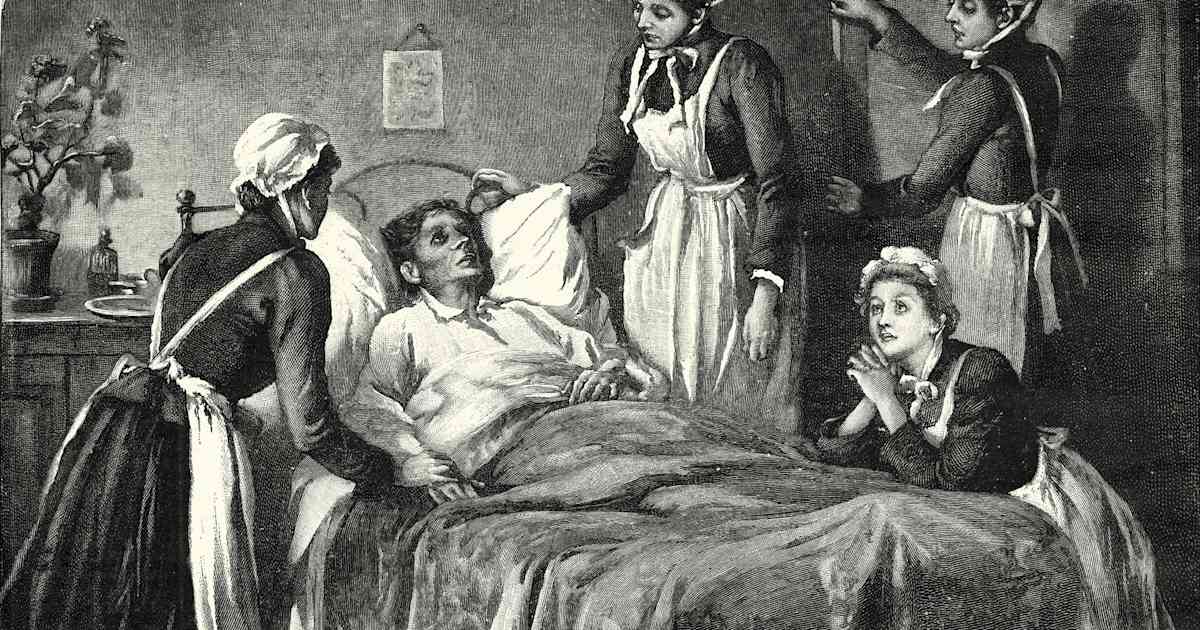
Before medical science identified bacteria, tuberculosis—popularly referred to as consumption—was the leading cause of death in the United States. In New England, between 1786 and 1800, consumption claimed an astonishing two percent of the entire population. The disease earned the nickname the ‘Great White Plague’ because of the way it literally consumed its victims, leaving them pale, hollow-cheeked, and weak.
Without a grasp of germ theory, families did not understand how a single airborne pathogen could systematically infect an entire household. Instead, as one family member died and others subsequently fell ill, a terrifying supernatural theory took root: the deceased relative was returning from the grave as a spiritual ‘vampire’ to slowly suck the life force from their surviving kin. The epicenter of this phenomenon was often Rhode Island, a colony originally established by Roger Williams, the founder of Rhode Island, which over the centuries developed a highly independent, sometimes insular rural culture.
Timeline of a Superstitious Hysteria
To understand how the New England Vampire Panic unfolded, we must examine the key dates and discoveries that defined this era:
- 1784: The earliest recorded vampire ritual in New England is noted in Willington, Connecticut, where a local town official complains of a ‘quack doctor’ encouraging families to exhume their children to cure consumption.
- 1786–1800: Public health officials begin systematically tracking mortality, revealing that tuberculosis is ravaging New England at unprecedented rates.
- 1830s: The burial of a 55-year-old farmer, later identified via DNA as John Barber (‘JB55’), in Griswold, Connecticut. His grave would later show signs of post-mortem desecration to ward off vampirism.
- 1859: Famed transcendentalist philosopher Henry David Thoreau records a vampire-like consumption ritual in his personal journal, criticizing the ‘savage’ superstition still lingering in Vermont.
- 1882: German physician Robert Koch discovers the Mycobacterium tuberculosis bacillus, proving that consumption is bacterial and infectious. However, this scientific breakthrough takes decades to filter down to isolated rural communities.
- March 1892: The climax of the panic occurs in Exeter, Rhode Island, with the highly publicized exhumation of Mercy Lena Brown.
- 1897: Bram Stoker publishes his masterpiece, Dracula. Stoker had collected newspaper clippings detailing Mercy Brown’s case, incorporating elements of the New England panic into his world-famous vampire lore.
This was not the first time fear of the supernatural gripped the region; indeed, earlier New England witch hunts had already proven how quickly communities could turn to desperate, spiritual explanations when confronted with things they did not understand.
The Tragic Case of Mercy Brown: The Last American Vampire
No figure is more central to the New England Vampire Panic than Mercy Lena Brown, a 19-year-old girl from Exeter, Rhode Island. In the late 1800s, the Brown household was systematically destroyed by consumption. First, the mother, Mary Eliza, succumbed to the disease in 1883. Next, the eldest daughter, Mary Olive, died in 1884. By 1891, both Mercy and her brother, Edwin, contracted the wasting illness. Mercy passed away in January 1892.
Desperate to save Edwin, who was rapidly failing, local villagers convinced the grieving father, George Brown, to authorize the exhumation of his deceased wife and daughters. On March 17, 1892, a crowd of townspeople, accompanied by a local physician named Dr. Harold Metcalf, gathered at the Chestnut Hill cemetery.
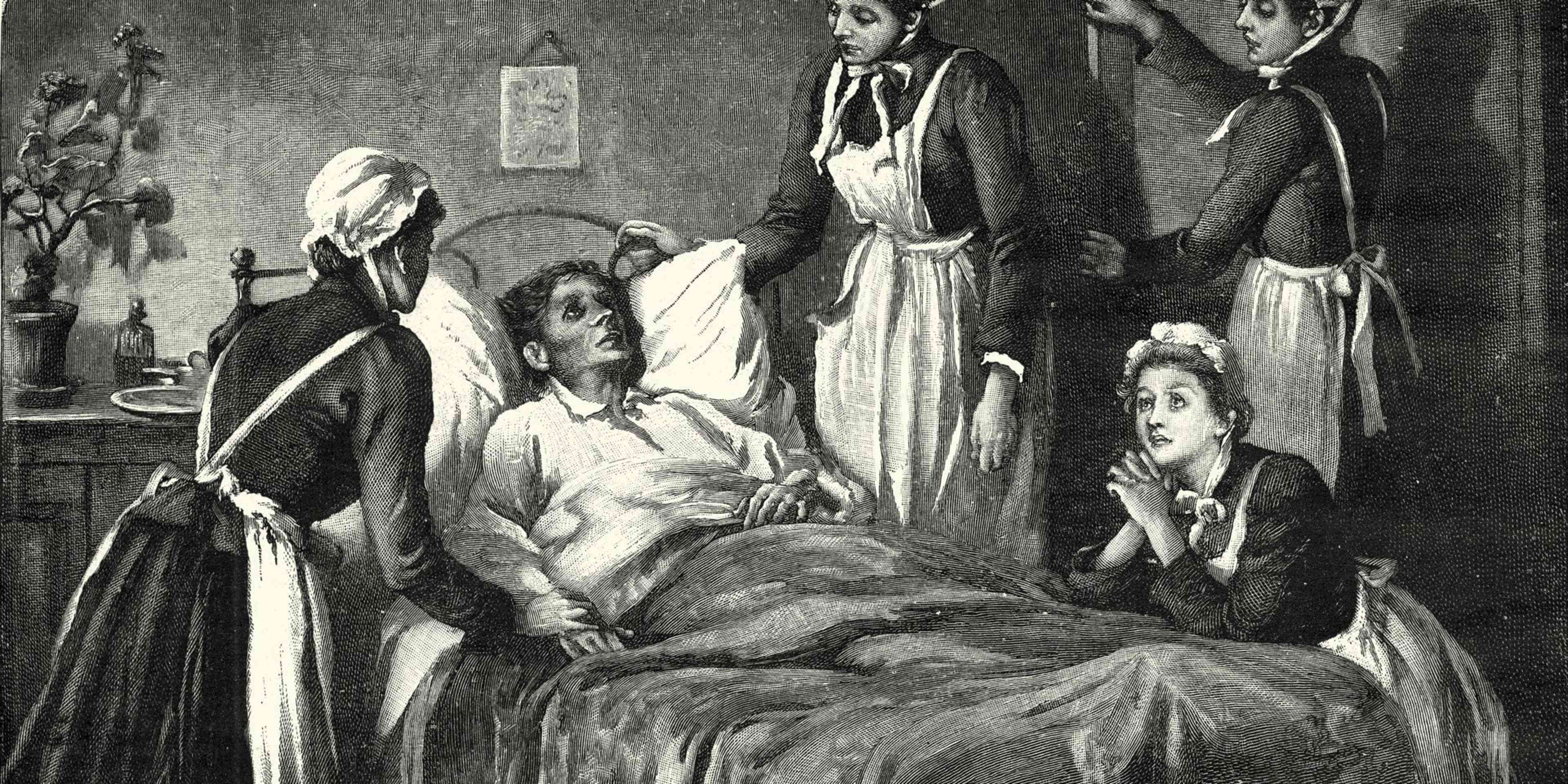
While the bodies of Mary and Mary Olive had decomposed naturally, Mercy’s body was remarkably well preserved. Because she had died in the dead of winter and had been kept in an above-ground stone crypt, the freezing temperatures had naturally mummified her remains. To the panicked onlookers, however, her lifelike appearance, seemingly grown hair and nails, and liquid blood in her heart were definitive proof. Dr. Metcalf explained the scientific reasons for her preservation, but the community chose folklore over facts. They carved out Mercy’s heart and liver, burned them to ashes on a nearby rock, and mixed the ashes into a medicinal draft for Edwin to drink. Tragically, the ritual failed; Edwin died a few months later.
The Rituals of the Undead: Science and Desperation
The exhumation of Mercy Brown was not an isolated incident. Folklorist Michael Bell has documented over 80 vampire-related exhumations across Rhode Island, Connecticut, Vermont, and Massachusetts. The rituals varied by geography but always reflected deep communal desperation.
In Massachusetts and Maine, bodies of suspected vampires were often simply flipped face down in their coffins to prevent them from clawing their way back to the surface. However, in Rhode Island and Connecticut, more invasive steps were taken. If soft tissue remained, the heart and lungs were burned.
But what happened if only bones were left? This was answered in the 1990s when state archaeologist Nicholas Bellantoni investigated a historic cemetery in Griswold, Connecticut. He discovered the skeletal remains of a man labeled JB55 (later identified as John Barber). To the researchers’ shock, JB55’s skull had been placed on his chest, and his femurs were arranged in a skull-and-crossbones pattern. Analysis revealed that JB55 had suffered from severe tuberculosis, and his bones were rearranged years after his death to prevent him from rising. This physical evidence proved that vampire rituals were widely accepted community events, often tolerated or even endorsed by local town leaders.
The Turning Point: Science Replaces Superstition
The vampire panic did not end overnight, but rather faded as the scientific community gained a foothold in rural America. The true turning point was Robert Koch’s 1882 discovery of the tuberculosis bacterium. Prior to this, consumption was seen as a hereditary curse or a spiritual attack.
As public health systems grew stronger, the transition from folklore to epidemiology took place. Sanitation campaigns, the establishment of tuberculosis sanatoriums, and the slow but steady education of the public eventually eradicated the belief in the ‘bacterium with fangs.’ Mercy Brown’s exhumation in 1892 remains the last documented vampire ritual in New England history.

Long-Term Impact on America and Culture
The New England Vampire Panic left an indelible mark on American culture and the legal landscape. Unlike the hysteria of the Salem witch trials, which resulted in state-sanctioned executions and shaped the early American legal system, the vampire panic was largely a private, medical-folkloric crisis. It did, however, deeply influence Western literature. Bram Stoker’s notes on Dracula showed he followed the Mercy Brown case closely, altering the traditional Eastern European vampire archetype to include the clinical, wasting traits of New England’s ‘vampires.’ Authors like H.P. Lovecraft also drew inspiration from these events, embedding the eerie, isolated atmosphere of rural Rhode Island into works like The Shunned House.
Lesser-Known Facts About the Vampire Panic
- The Ash Remedy: The practice of feeding the ashes of a burned heart to a sick relative was believed to transfer the vampire’s stolen life force back into the living. Despite its grotesque nature, it was considered a legitimate form of folk medicine.
- The Frozen Crypt: Mercy Brown’s legendary ‘vampiric’ preservation was entirely due to Rhode Island’s harsh winter. Had she died in the summer, her body would have decomposed, and she would have escaped historical infamy.
- The ‘JB55’ Mystery Solved: In 2019, advanced DNA testing by the Armed Forces DNA Identification Laboratory matched the DNA of the ‘Griswold Vampire’ (JB55) with the surname Barber, identifying him as a hard-working 19th-century farmer named John Barber.
Why It Still Matters Today
The New England Vampire Panic serves as a powerful case study in human psychology. It reminds us that when humanity is faced with an invisible, deadly threat and has no scientific explanation, we will naturally manufacture monsters to blame. The panic is a testament to the power of love and desperation; the people exhuming their children were not monsters, but terrified parents willing to cross any boundary to save their families. In an era of modern pandemics and public health skepticism, understanding how folklore fills the gaps left by science remains more relevant than ever.
People Also Ask
What was the New England Vampire Panic?
The New England Vampire Panic was a wave of hysteria in the 18th and 19th centuries across Rhode Island, Connecticut, and Vermont. Panicked communities, ravaged by tuberculosis (consumption), believed that deceased family members were rising from their graves to drain the life force of surviving relatives, leading them to exhume corpses and perform anti-vampire rituals.
Who was Mercy Brown?
Mercy Brown was a 19-year-old girl from Exeter, Rhode Island, who died of tuberculosis in 1892. She became famous as the ‘last American vampire’ after her body was exhumed and her heart was burned to ashes in a desperate attempt to cure her dying brother.
How did tuberculosis lead to vampire beliefs?
Because tuberculosis causes a slow, wasting death where the victim becomes pale, loses weight, and coughs up blood, it appeared as if something was ‘sucking the life’ out of them. Lacking knowledge of germ theory, families assumed the first person to die of the disease was returning to prey on the rest of the household.
Conclusion
Ultimately, the New England Vampire Panic represents a dark, heartbreaking chapter in early American history where love, terror, and scientific ignorance collided. Far from being a malicious hunt for evil, it was a desperate battle against a biological enemy that communities could neither see nor understand. Today, the graves of Mercy Brown and JB55 stand as silent monuments to an era when folklore was the only weapon available to fight the dark.


