The air off the coast of North Carolina’s Outer Banks carries a heavy, centuries-old silence, guarding one of the most haunting enigmas in global history: the Lost Colony of Roanoke. Long before the Pilgrims stepped onto Plymouth Rock or Captain John Smith built the palisades of Jamestown, a brave group of English men, women, and children attempted to carve out a new life in the untamed wilderness of the New World. In 1587, under the authorization of Queen Elizabeth I, these pioneering souls established a settlement that they hoped would become the crown jewel of the nascent English empire. Instead, within three short years, they vanished into thin air, leaving behind no bodies, no signs of struggle, and only a single, cryptic word carved into a wooden post: “CROATOAN.” This mystery at Roanoke has captivated historians, archaeologists, and novelists for over four centuries, standing as a pivotal, cautionary chapter in the grueling narrative of early American colonization.

Historical Background: The Ambition of Elizabethan England
The late 16th century was defined by a fierce global rivalry between Protestant England and Catholic Spain. Spain had already amassed unimaginable wealth from its conquests in Central and South America, while England watched from the sidelines, eager to assert its own geopolitical and economic dominance. Under the guidance of the legendary courtier and explorer Sir Walter Raleigh, England sought to establish a strategic military and economic base in North America. This base was intended not only to harvest rich local resources but also to serve as a convenient port for English privateers raiding treasure-laden Spanish galleons.
Raleigh received a royal charter from Queen Elizabeth I in 1584, granting him the right to explore, colonize, and govern any “remote, heathen and barbarous lands, countries and territories” not already possessed by any Christian prince. The location chosen was Roanoke Island, situated in the modern-day Outer Banks of North Carolina. It was protected from the open ocean by barrier islands, making it an ideal hideout for privateers, though its shallow waters would ultimately prove treacherous for heavy colonial supply ships.
Chronological Timeline of the Roanoke Expeditions
To fully grasp the tragedy of Roanoke, it is essential to understand that the “Lost Colony” of 1587 was actually the third English voyage to the area. Here is how the dramatic events unfolded:
- 1584: The Amadas-Barlowe Expedition – Sir Walter Raleigh sends Philip Amadas and Arthur Barlowe to scout the North American coast. They return to England with glowing reports of Roanoke Island and two cooperative Algonquin men, Manteo and Wanchese.
- 1585: The Ralph Lane Colony – An all-male military colony of over 100 men is established under Governor Ralph Lane. Relations with local indigenous tribes rapidly deteriorate due to food shortages and English hostility. In 1586, desperate and starving, the colonists abandon the settlement and sail back to England with Sir Francis Drake.
- 1587: The John White Colony – A new group of 115 civilian colonists, including women and children, arrives at Roanoke under Governor John White. Unlike the military garrison before them, this group intends to build a permanent agricultural community.
- August 18, 1587: Birth of Virginia Dare – Eleanor Dare, daughter of Governor John White, gives birth to Virginia Dare, the first English child born in the Americas.
- August 27, 1587: White Sails for England – Recognizing the colony’s dire need for supplies and food, John White reluctantly sails back to England, promising to return the following year.
- 1588–1589: The Spanish Armada Delay – White’s return is completely blocked by the outbreak of the Anglo-Spanish War. Queen Elizabeth commands all English ships to remain in European waters to defend against the massive Spanish Armada.
- August 18, 1590: The Return and Discovery – John White finally returns to Roanoke Island on his granddaughter’s third birthday, only to find the entire settlement deserted. The homes are dismantled, and the words “CRO” and “CROATOAN” are found carved into a tree and a fort post, respectively.
Important Figures of the Roanoke Mystery
The human drama of Roanoke is populated by diverse and fascinating historical figures whose decisions altered the course of early American history:
- Sir Walter Raleigh: The wealthy courtier who financed and organized the expeditions. Though he never personally set foot on Roanoke, his relentless pursuit of English colonization laid the intellectual and logistical groundwork for future successful endeavors.
- Governor John White: An artist, cartographer, and leader of the 1587 colony. White’s detailed watercolor paintings of the Algonquin people and local flora remain some of our most valuable primary visual records of pre-colonial North America. His personal tragedy was immense, as his daughter, son-in-law, and granddaughter were among the missing.
- Manteo and Wanchese: Two Native Americans who traveled to London in 1584. Manteo, of the Croatoan tribe, became a loyal ally and interpreter for the English, eventually becoming the first Native American baptized into the Church of England. Wanchese, conversely, grew deeply suspicious of English imperialistic ambitions and became a fierce opponent of the settlers.
- Virginia Dare: The infant granddaughter of John White. Though her ultimate fate is unknown, she quickly transformed into an enduring, mythic symbol of American pioneering spirit and folklore.
Causes, Context, and the Geopolitical Chessboard
The failure of the Roanoke colony cannot be separated from the global geopolitical context of the era. The primary catalyst for the abandonment of the colonists was the Anglo-Spanish War. When Spain launched its Armada in 1588, England was forced to mobilize every available seafaring vessel for national defense. This delayed John White’s return expedition by three agonizing years.
Furthermore, the colonists suffered from a severe lack of agricultural preparation. Most early English settlers expected to easily find gold and silver or trade effortlessly with Native populations for food, rather than focusing on farming the local land. When relationships with neighboring indigenous groups like the Secotan soured due to cultural misunderstandings and resource competition, the settlers were left completely isolated and vulnerable to starvation.
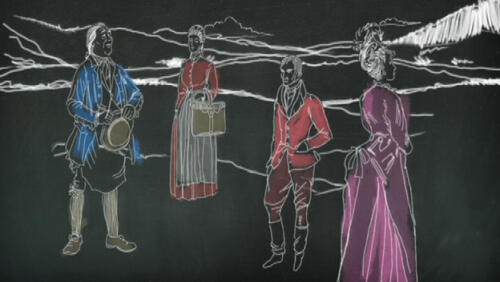
Major Turning Points and Theories of Disappearance
The ultimate turning point occurred when John White arrived at Roanoke in August 1590. The settlement was surrounded by a defensive palisade, but it was empty. Crucially, White noted that there was no cross carved into the wood—a prearranged distress signal they had agreed to use if they were forced to flee in danger.
Over the years, numerous theories have emerged regarding what happened to the Lost Colony of Roanoke. Did they face a hostile attack from neighboring tribes, or did they starve? A compelling body of research asks: did the Lost Colony of Roanoke disappear or just assimilate with the local Croatoan people? White himself believed they had simply relocated to Croatoan Island (modern-day Hatteras Island), home to Manteo’s friendly tribe. However, bad weather and a lost anchor forced White’s ships to return to England before he could investigate Hatteras Island, leaving the question permanently open.
Modern archaeological projects, such as the excavation of “Site X” in North Carolina, have uncovered English-style pottery, tools, and weapons mixed with Native American artifacts, suggesting that many of the colonists may indeed have split into smaller groups and integrated into indigenous communities to survive.
Long-Term Impact on American Colonization
While Roanoke is often remembered as a failure, its tragic end served as a vital masterclass for the British Empire. It demonstrated that private individuals, no matter how wealthy or influential like Sir Walter Raleigh, could not bear the astronomical financial risks of colonizing North America alone.
This harsh realization led directly to the creation of joint-stock companies, such as the Virginia Company of London. By pooling the capital of multiple investors, England was able to successfully finance and sustain the Jamestown Colony in 1607 and the Plymouth Colony in 1620. Roanoke remains a sobering reminder of the high human cost of early expansion, categorized among other historically significant but ultimately failed North American colonies that paved the way for the United States we know today.
Lesser-Known Facts About Roanoke
- The Cryptic Code: John White and the settlers had agreed that if they had to leave the island under duress, they would carve a Maltese cross above the name of their new destination. Because there was no cross found above the word “CROATOAN,” White was reasonably confident that the settlers had moved voluntarily and peacefully.
- A “Lost” Colony on Purpose?: Some historians suggest that the Spanish, who actively searched for the English colony to destroy it, may have captured or killed the settlers. Spanish records show they sent expeditions from St. Augustine, Florida, to find and eliminate the English threat, but they too arrived at Roanoke to find it completely empty.
- The “Dare Stones”: In the late 1930s, a series of carved stones were found across the American Southeast, purportedly written by Eleanor Dare, detailing the colonists’ travels and tragic deaths. While most of these stones were quickly exposed as elaborate hoaxes, the very first stone found is still considered by some researchers to be potentially authentic.
Why It Still Matters Today
The mystery of Roanoke endures because it touches on universal human themes: survival, hope, tragedy, and the unknown. In modern America, the story of Roanoke represents the fragile boundary between success and oblivion. It serves as an archaeological puzzle that continues to utilize cutting-edge technology, from ground-penetrating radar to DNA mapping of local Native American descendants, to find a definitive answer. Ultimately, Roanoke reminds us that the foundation of American history is built not just on victories, but on the enduring mysteries of those who dared to step into the unknown.
People Also Ask (FAQ)
What was carved into the tree at Roanoke?
The colonists carved the letters “CRO” into one tree near the shore, and the full word “CROATOAN” into a wooden post of the fort’s palisade. This pointed to Croatoan Island (now Hatteras Island), home to a friendly tribe of Native Americans led by Manteo.
Did any of the Roanoke settlers survive?
While there is no definitive proof, it is highly likely that many settlers survived by integrating with local indigenous tribes. Over the centuries, European explorers reported meeting Native Americans in the region with grey eyes, fair hair, and an unusual familiarity with the English language and customs.
Why did John White take so long to return to Roanoke?
John White was delayed in England for three years because of the outbreak of the Anglo-Spanish War. Every available English vessel was requisitioned by the Crown to defend the country against the Spanish Armada, preventing White from securing a ship to return to his family.
Conclusion: The Undying Legacy of Roanoke
The mystery at Roanoke remains one of the most compelling narratives of the colonial era. It is a story of grand imperial ambitions colliding with the brutal realities of survival in an unfamiliar land. While the physical structures of the colony have long since decayed and faded into the soil of North Carolina, the legacy of the Lost Colony of Roanoke continues to live on in our collective imagination, ensuring that those 115 souls who vanished into the mists of time will never truly be forgotten.


