The Boston Massacre of March 5, 1770, remains one of the most pivotal and explosive moments in early American history. On a freezing, snow-slicked night on King Street, a tense standoff between a hostile crowd of Bostonians and a small squad of British soldiers erupted into gunfire. Within minutes, five colonists lay dead or dying on the cobblestones. What began as a local street brawl quickly transformed into a powerful catalyst for the American Revolution, forever changing the relationship between Great Britain and its American colonies. This event was not just an isolated tragedy; it was the culmination of years of escalating frustration over military occupation, heavy-handed taxation, and a growing desire for self-determination. By examining the Boston Massacre, we uncover the fragile nature of peace in colonial America and the incredible power of political propaganda that successfully united a divided continent.
Historical Background: Tensions in Colonial Boston
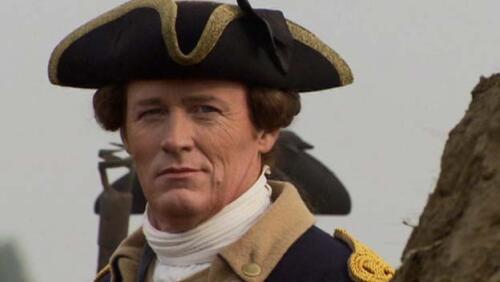
By the late 1760s, the city of Boston was a hotbed of radical patriotism and simmering discontent. Following the conclusion of the French and Indian War, the British Parliament sought to recoup its massive financial losses by levying a series of taxes on the American colonies. The passage of the Townshend Acts in 1767, which taxed imported goods like glass, lead, paint, paper, and tea, met with fierce resistance. Bostonians, led by passionate voices like Samuel Adams and the Sons of Liberty, organized boycotts and protested what they saw as taxation without representation.
To restore order and enforce customs laws, the British government dispatched approximately 4,000 troops to Boston in October 1768. For a city of only 16,000 residents, the sudden influx of heavily armed soldiers was an outrageous affront. Boston was one of the critical three colonial towns that drove the intellectual and physical resistance against British policies, making it a prime target for strict royal oversight. The daily presence of redcoats marching through the streets, commanding lodging in civilian quarters, and questioning locals created a highly volatile atmosphere. The city became a powder keg waiting for a single spark to ignite.
The Catalyst: Causes and Socioeconomic Context
While political grievances over taxation dominated the headlines, deep economic anxieties fueled the day-to-day hostility between Bostonians and British troops. British soldiers stationed in the colonies were poorly paid, and to supplement their meager income, many sought off-duty employment in Boston’s shipyards and ropewalks. This put them in direct competition with local working-class men who were already struggling under the weight of economic depression.
Fights frequently broke out in taverns and workplaces. Just days before the massacre, on March 2, 1770, a massive brawl occurred at Gray’s Ropewalk between local workers and soldiers. Angry exchanges and physical altercations left both sides bruised and seeking revenge. Additionally, the tragic shooting of Christopher Seider—an eleven-year-old boy killed by a loyalist customs official in late February—had already driven public anger to a fever pitch. By the night of March 5, the city was primed for violence.
Chronology of Chaos: Key Events Timeline
- 1767: Parliament passes the Townshend Acts, fueling widespread colonial anger and boycotts.
- October 1768: British troops arrive in Boston to maintain order and enforce tax collection, beginning an uncomfortable military occupation.
- February 22, 1770: Eleven-year-old Christopher Seider is shot and killed during a protest, turning him into a martyr for the patriot cause.
- March 2, 1770: A violent clash erupts between off-duty British soldiers and local ropewalk workers, deepening physical hostilities.
- March 5, 1770 (Early Evening): Private Hugh White, guarding the King’s Custom House, strikes a young colonial apprentice who was heckling a British officer over an unpaid bill.
- March 5, 1770 (9:00 PM): An angry mob of hundreds of colonists gathers, pelting Private White with snowballs, chunks of ice, oyster shells, and coal. Captain Thomas Preston leads seven reinforcements to protect White.
- The Shooting (approx. 9:15 PM): Amidst shouting and physical threats, a soldier is knocked down. He fires his musket, prompting other soldiers to open fire into the crowd. Five colonists are killed, and six are wounded.
- October–December 1770: Captain Preston and his soldiers are put on trial in Boston, defended by John Adams. Most are acquitted, while two are convicted of manslaughter.
Important Figures and Their Historical Impact
The events of March 5, 1770, catapulted several individuals into the annals of history, each playing a critical role in how the incident unfolded and how it was remembered:
- Crispus Attucks: A sailor and dockworker of African and Native American (Wampanoag/Nipmuc) heritage. Attucks was at the front of the crowd on King Street and was the first person killed. Today, he is widely celebrated as the first casualty of the American Revolution, symbolizing the diverse, multi-ethnic foundation of the struggle for American independence.
- Captain Thomas Preston: The British officer in command of the guard duty that night. Accused of ordering his men to fire on the unarmed crowd, Preston maintained that he never gave such a command and was standing in front of his men, making an order to fire suicidal for himself.
- John Adams: A brilliant colonial lawyer and future President of the United States. Despite being a passionate patriot who opposed British taxation, Adams agreed to defend Captain Preston and the soldiers in court. He believed that every individual deserved a fair trial and that the rule of law must triumph over mob justice.
- Paul Revere: A skilled Boston silversmith and member of the Sons of Liberty. Revere created a famous copper engraving titled “The Bloody Massacre perpetrated in King Street,” which depicted the British soldiers as organized, ruthless executioners firing on a peaceful crowd. This piece of brilliant propaganda shaped the historical narrative for generations.
- Samuel Adams: John’s cousin and a masterful political organizer. He coined the term “Boston Massacre” and used the event to orchestrate a massive anti-British campaign, organizing annual commemorations that kept revolutionary fervor alive.
The Trial of the Century: Justice and Propaganda
The aftermath of the shooting presented a massive challenge for the city of Boston. Patriot leaders wanted to demonstrate to the world that they were not lawless rebels, but a civilized society governed by the rule of law. John Adams took the defense of the British soldiers at great personal and professional risk. He argued that the soldiers were surrounded by a dangerous, armed mob and acted out of self-defense.
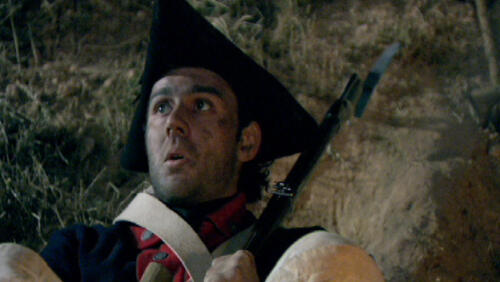
In a famous address to the jury, John Adams stated: “Facts are stubborn things; and whatever may be our wishes, our inclinations, or the dictates of our passion, they cannot alter the state of facts and evidence.” Thanks to his brilliant defense, Captain Preston and six of his soldiers were acquitted of murder. Two soldiers, Hugh Montgomery and Matthew Kilroy, were found guilty of manslaughter. They escaped the death penalty by claiming “benefit of clergy” and were branded on their thumbs with the letter “M” before being discharged.
While the courtroom prioritized facts, the public arena was dominated by propaganda. Paul Revere’s engraving was circulated far and wide through America’s first newspapers and broadsides, molding public opinion. Revere’s depiction was highly inaccurate; it showed a daytime scene (the event occurred at night), a clear sky, and British soldiers standing in a neat, coordinated firing line, systematically executing submissive colonists. This imagery successfully turned the tragedy into a unifying call for liberty across the 13 colonies.
Long-Term Impact: How It Galvanized a Revolution
The Boston Massacre marked a point of no return. It shattered any remaining illusions that the British military was in the colonies to protect the people; instead, they were seen as occupiers willing to shed American blood to enforce tyrannical laws. The immediate political pressure forced the royal governor to withdraw all British troops from the city of Boston to Castle William, an island fortress in the harbor.
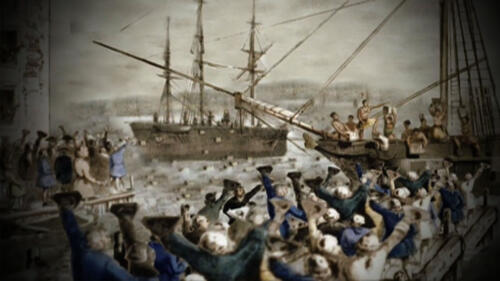
Furthermore, the event led to the establishment of the Committees of Correspondence, organized by Samuel Adams. This intercolonial network allowed patriots across the colonies to share news and coordinate resistance efforts, fostering a unified American identity. Although Parliament repealed most of the Townshend Acts shortly after the massacre (retaining only the tax on tea), the distrust ran too deep. The emotional scar of the Boston Massacre paved the way for the Boston Tea Party in 1773, the Intolerable Acts, and eventually, the outbreak of war at Lexington and Concord in 1775.
Lesser-Known Facts About the Boston Massacre
History is often messier than schoolbooks suggest. Here are a few fascinating and lesser-known facts about that fateful night on King Street:
- The “Snowballs” Were Deadly Projectiles: The crowd wasn’t just throwing soft snow. They were throwing hard-packed ice, rocks, oyster shells, and heavy chunks of firewood. Some colonists carried clubs and cutlasses, making the physical threat to the soldiers very real.
- A Dying Victim Forgave the Soldiers: Patrick Carr, an Irish immigrant who was shot during the confrontation, died of his wounds nine days later. Before he passed, he told his doctor that he did not blame the soldiers for firing, stating they had been severely provoked and had held their fire longer than he would have expected. This testimony was crucial in helping John Adams win the soldiers’ acquittal.
- John Adams Lost Significant Business: By defending the British redcoats, John Adams lost nearly half of his legal practice almost overnight, as local clients boycotted his services. However, his successful defense ultimately cemented his reputation as an honorable, principled, and fair-minded leader.
Why the Boston Massacre Still Matters Today
The Boston Massacre is not just a relic of the 18th century; it remains deeply relevant to modern discussions. It serves as a powerful case study in how media framing and political propaganda can shape public perception and historical memory. In an era of “fake news” and viral social media campaigns, Paul Revere’s engraving reminds us that the battle over public narrative is as old as the nation itself.
Additionally, the massacre raises important questions about civilian-military relations and the use of force. It highlights the dangers of using military personnel to perform civil law enforcement duties, a lesson that shaped the draft of the U.S. Constitution and the Third Amendment. Finally, John Adams’ defense of the soldiers stands as a timeless monument to the rule of law, proving that even in times of intense national crisis, justice and due process must be guaranteed to everyone, regardless of how unpopular they may be.
People Also Ask (FAQ)
Who was the first person killed in the Boston Massacre?
Crispus Attucks, a sailor and dockworker of mixed African and Native American descent, was the first person killed. He is celebrated as a hero and the first martyr of the American Revolution.
Why did John Adams defend the British soldiers?
John Adams defended the soldiers because he believed in the rule of law and the right to a fair trial. He wanted to prove that Boston was a civilized community where justice prevailed over anger and mob violence.
How many people actually died in the Boston Massacre?
Five people died as a result of the shooting. Three died instantly on King Street (Crispus Attucks, Samuel Gray, and James Caldwell), while two others (Samuel Maverick and Patrick Carr) died of their wounds in the days following the event.
Was the Boston Massacre really a “massacre”?
By modern definition, five casualties do not constitute a massive slaughter. The term “massacre” was a highly effective political label coined by Samuel Adams and other patriots to evoke outrage and mobilize public support against British occupation.
Conclusion
The Boston Massacre was a defining watershed moment that set the American colonies on an irreversible path toward independence. What began as an icy street confrontation ended in a tragic loss of life, but it also forced colonists to confront the true nature of British imperial rule. By choosing the path of justice in the courtroom and utilizing the power of the press in the public sphere, early Americans demonstrated a sophisticated grasp of both law and media. Ultimately, the lessons of King Street—concerning the dangers of military occupation, the power of media, and the sanctity of the rule of law—continue to guide and define the American experiment today.


