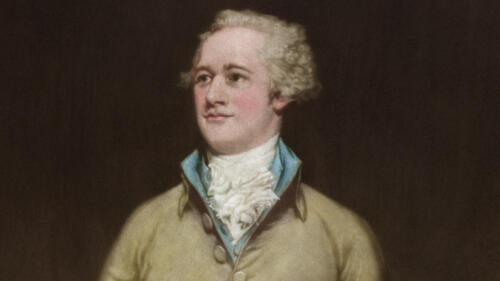
When the dust settled after the American Revolutionary War, the newly formed United States faced an existential crisis that had nothing to do with gunpowder and everything to do with gold, silver, and paper. The infant nation was drowning in a sea of financial chaos, lacking a unified monetary system to grease the wheels of commerce. It was during this fragile period of nation-building that Secretary of the Treasury Alexander Hamilton took on the monumental task of stabilizing the economy. The culmination of his visionary financial strategy occurred when Hamilton Builds the National Mint, a historic initiative that laid the foundation for the United States dollar as we know it today. This bold move rescued the country from monetary anarchy and established a tangible symbol of national sovereignty that commanded respect on the global stage.
The Chaotic Financial Background of a New Nation
To understand why the creation of a national mint was such a radical and necessary act, one must look at the economic landscape of the late 18th century. Following the declaration of independence, the economic and political systems of the young republic were highly fragmented. During the era of the original 13 colonies, there was no centralized monetary authority. Instead, colonists relied on a confusing patchwork of foreign currencies, including Spanish milled dollars (pieces of eight), British pounds, French silver crowns, and Portuguese gold coins. This chaotic reliance on foreign specie made everyday commerce incredibly difficult and prone to fraud.
To make matters worse, the Continental Congress had issued paper currency known as “Continentals” to fund the Revolutionary War. Because these notes were not backed by gold or silver, they suffered from runaway inflation, eventually becoming completely worthless—giving rise to the popular phrase, “not worth a Continental.” After the war, under the Articles of Confederation, individual states retained the right to coin their own money, leading to further currency depreciation and trade barriers between states. According to critical facts about the early American era, this lack of financial unity threatened to tear the fragile union apart before it could even begin to prosper.
In the absence of a reliable federal currency, many citizens resorted to bartering, using commodities like tobacco, whiskey, and various everyday objects of colonial America to conduct trade. This economic paralysis convinced Alexander Hamilton that a sovereign nation required a sovereign currency. When the U.S. Constitution was ratified in 1788, it explicitly granted Congress the power to coin money, regulate its value, and punish counterfeiting, while strictly prohibiting the states from coining their own money. The stage was set for a financial revolution.
Key Events Timeline: The Road to the Coinage Act of 1792
The journey toward a unified currency was a meticulous legislative and intellectual process. Here is the chronological breakdown of how the national mint became a reality:
- 1782: Robert Morris, the Superintendent of Finance, submits a proposal for a national mint, which is further refined by Thomas Jefferson, who advocates for a decimal-based system.
- September 17, 1787: The U.S. Constitution is signed, granting the federal government exclusive authority over coinage.
- September 11, 1789: President George Washington appoints Alexander Hamilton as the nation’s first Secretary of the Treasury.
- January 28, 1791: Hamilton submits his landmark Report on the Establishment of a Mint to Congress, outlining the mechanics of the proposed institution.
- March 3, 1791: Congress passes a resolution approving the creation of a national mint.
- April 2, 1792: Congress passes the historic Coinage Act of 1792, officially establishing the United States Mint.
- July 1792: Under the direction of David Rittenhouse, land is purchased in Philadelphia, and construction begins on the first mint building.
- March 1793: The United States Mint delivers its first circulating coins: 11,178 copper cents.
Prominent Figures in the Birth of the U.S. Mint
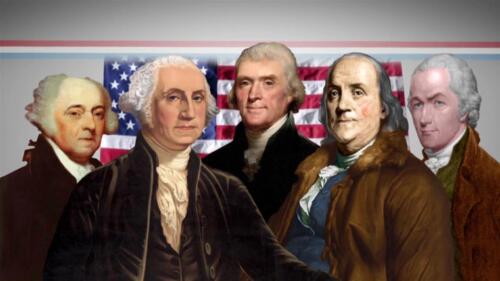
The creation of the U.S. Mint was not the work of a single man, but rather the result of a debate and collaboration among some of early America’s greatest minds:
- Alexander Hamilton: As Secretary of the Treasury, Hamilton was the chief architect of the financial system. His 1791 report provided the economic theory and practical framework for the mint, advocating for a bimetallic standard (using both gold and silver) to maximize the money supply and support national credit.
- Thomas Jefferson: While Jefferson and Hamilton were famous political rivals, they found common ground on currency. Jefferson strongly advocated for a decimal system (dividing the dollar into tenths and hundredths), which made the American currency system much simpler than the complex British system of pounds, shillings, and pence.
- David Rittenhouse: Appointed by President George Washington as the first Director of the Mint, Rittenhouse was a renowned astronomer, mathematician, and scientist. He personally oversaw the acquisition of the property in Philadelphia and designed the machinery that would stamp the nation’s very first official coins.
- George Washington: As President, Washington understood the symbolic and practical importance of a national currency. He signed the Coinage Act into law and took a personal interest in the construction of the mint, which was located near his presidential mansion in Philadelphia.
Causes, Context, and the Choice of Bimetallism
The primary catalyst for building the mint was the urgent need to establish a stable medium of exchange. Hamilton realized that relying on foreign coins, such as the Spanish milled dollar, left the American economy vulnerable to international market fluctuations. By creating a national mint, the United States could control its own money supply and project an image of strength to foreign creditors like France and Great Britain.
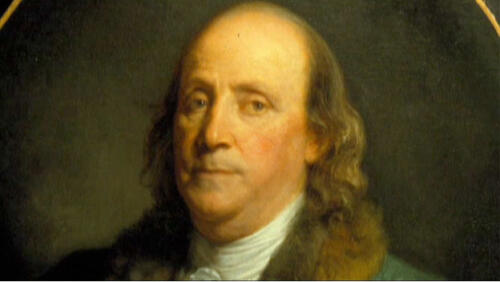
To achieve this, Hamilton proposed a bimetallic standard, which fixed the value of the U.S. dollar in relation to both gold and silver. Under the Coinage Act of 1792, the official exchange ratio was set at 15 to 1—meaning one ounce of gold was legally equal in value to 15 ounces of silver. This dual standard was designed to ensure that there was always enough precious metal in circulation to support commercial transactions. The dollar was officially pegged to the silver content of the widely trusted Spanish milled dollar (371.25 grains of pure silver), ensuring a smooth transition for merchants and citizens accustomed to foreign trade.
Major Turning Points and the First Federal Building
The establishment of the United States Mint marked several major turning points in the history of the early republic. Most notably, the first Mint building, constructed at 7th and Arch Streets in Philadelphia, was the first federal building erected under the United States Constitution. Prior to this, the federal government had operated out of rented or existing state-owned facilities. The construction of this three-story brick structure was a physical manifestation of the new federal government’s permanence and authority.
Another turning point was the introduction of free coinage. Anyone could bring raw gold or silver bullion to the Mint and have it refined and struck into coins free of charge, or exchange it immediately for an equal weight of coins for a small fee. This encouraged the public to bring foreign coins and raw metals to the Mint, gradually purging the American economy of foreign currency and replacing it with standard U.S. coinage.
Long-Term Impact on the American Economy
The long-term impact of Hamilton’s national mint cannot be overstated. It transformed a collection of newly independent states into a single, integrated economic powerhouse. By standardizing the currency, the Mint lowered transaction costs, stimulated domestic trade, and made it easier for the federal government to collect taxes and manage its national debt.
Although the bimetallic standard eventually faced challenges due to fluctuating global market prices for gold and silver—leading the U.S. to transition to a de facto silver standard, then a gold-only standard in 1900, and finally a fiat currency system in the 20th century—the foundational principles of a decimal-based, government-backed currency remain the bedrock of the global financial system. Today, the U.S. dollar serves as the world’s primary reserve currency, a status that traces its origins directly back to Hamilton’s tireless advocacy in the early 1790s.
Fascinating and Lesser-Known Facts About the Early Mint
History is filled with intriguing stories, and the creation of the U.S. Mint is no exception. Here are a few lesser-known anecdotes from the early days of American coinage:
- The Legend of Martha Washington’s Silverware: A persistent popular legend suggests that because the early Mint suffered from a severe shortage of silver bullion, President George Washington and First Lady Martha Washington donated some of their personal household silver—including silverware and tea sets—to be melted down to strike the very first silver half-dimes in 1792.
- The First Guard Dog: To protect the valuable gold and silver stored inside the Philadelphia facility, the Mint purchased a guard dog for three dollars. This dog, along with a watchman who patrolled the building at night, constituted the nation’s very first federal security force.
- The Unpopular Large Copper Cents: The first copper pennies struck by the Mint in 1793 were about the size of a modern half-dollar. They were heavy, cumbersome, and highly unpopular with the public. Many merchants refused to accept them, and people complained that handling the pure copper coins made their hands smell bad.
Why It Still Matters Today
In the modern era of credit cards, digital banking, and cryptocurrencies, the concept of a physical mint might seem outdated. However, the history of how Hamilton built the national mint remains deeply relevant today. The creation of the Mint was fundamentally about trust and sovereignty. Hamilton understood that a nation’s currency is a reflection of its political stability and economic health. When we look at modern debates surrounding inflation, monetary policy, and digital currency, we are still wrestling with the same core questions that Hamilton, Jefferson, and Washington debated in the 1790s: Who should control the money supply, how do we maintain public trust in currency, and how does financial stability secure national freedom?
People Also Ask
Why did Alexander Hamilton want a national mint?
Alexander Hamilton wanted a national mint to create a uniform, stable, and sovereign currency for the United States. He believed that replacing the chaotic mix of depreciated state paper money and foreign coins with a reliable national dollar was essential to stimulate trade, build public credit, and unify the newly formed states into a single economic system.
What was the Coinage Act of 1792?
Passed by Congress on April 2, 1792, the Coinage Act established the United States Mint, defined the U.S. dollar as the country’s official unit of money, adopted a decimal-based currency system, and authorized the production of gold, silver, and copper coins under a bimetallic standard.
Where was the first U.S. Mint located?
The first U.S. Mint was built in Philadelphia, Pennsylvania, which was the nation’s capital at the time. Completed in 1792, the three-story building was the first federal building constructed under the United States Constitution.
Conclusion: Alexander Hamilton’s Monetary Legacy
Alexander Hamilton’s brilliant financial mind gave the United States more than just a treasury and a national bank; it gave the nation its very identity in the form of the U.S. dollar. By establishing the National Mint, Hamilton ensured that the young republic possessed the economic tools necessary to grow, trade, and eventually become a global superpower. The next time you hold a coin or a dollar bill, you are holding a piece of history—a direct legacy of the revolutionary system forged by Hamilton in the crucible of early American history.


