The history of the United States is frequently told through the lens of its military victories and global interventions, yet an equally powerful narrative has run parallel to every major conflict: the rich, complex legacy of American anti-war movements. From the very inception of the republic, citizens from all walks of life—including religious pacifists, political pragmatists, constitutional purists, and civil rights leaders—have stood up to challenge the state’s recourse to violence. This deep-seated tradition of internal dissent is not merely a modern phenomenon born in the turbulent 1960s; it is an enduring democratic exercise that is as old as the nation itself. By examining the history of anti-war activism, we gain profound insights into how Americans have continually debated the limits of executive power, the moral boundaries of foreign policy, and the true meaning of patriotic duty.
Historical Background and the Roots of American Dissent
To understand the history of American anti-war movements, one must recognize that opposition to war has never been a monolithic crusade. Instead, it has historically emerged from a mosaic of motivations. For some, the objection was deeply spiritual, rooted in the pacifist theologies of religious groups like the Society of Friends (Quakers), Mennonites, and Brethren. For others, the opposition was grounded in constitutional principles, arguing that foreign entanglements or presidential military deployments bypassed the democratic checks and balances established by the framers. Economic considerations have also played a significant role, with merchants, laborers, and business leaders protesting conflicts that disrupted global trade or disproportionately placed the tax and human burden on the working class. Historically, these diverse threads of dissent have catalyzed major political realignments, tested the resilience of the First Amendment, and repeatedly forced the federal government to justify its military objectives to an often skeptical public.
A Chronological Timeline of U.S. Anti-War Movements
The Revolutionary War (1775–1783): A Nation Divided at Birth
Although modern mythology often paints the American Revolution as a unanimous struggle for liberty, the reality was far more fractured. Historians estimate that a significant minority of the colonial population—roughly 500,000 people—remained loyal to the British Crown, with thousands taking up arms against the continental patriots. Concurrently, deeply religious pacifists, most notably the Quakers, refused to participate in the conflict. Many Quakers declined to pay taxes that funded local militias or to use the paper currency issued by the Second Continental Congress, enduring severe social persecution and confiscation of property for their adherence to nonviolence. This internal friction meant that even during the birth of the nation, leaders had to navigate deep domestic divisions. In fact, understanding how George Washington used spies to win the American Revolution highlights how critical managing internal dissent and securing domestic intelligence was during this highly volatile period.
The War of 1812: “Mr. Madison’s War” and New England’s Defiance
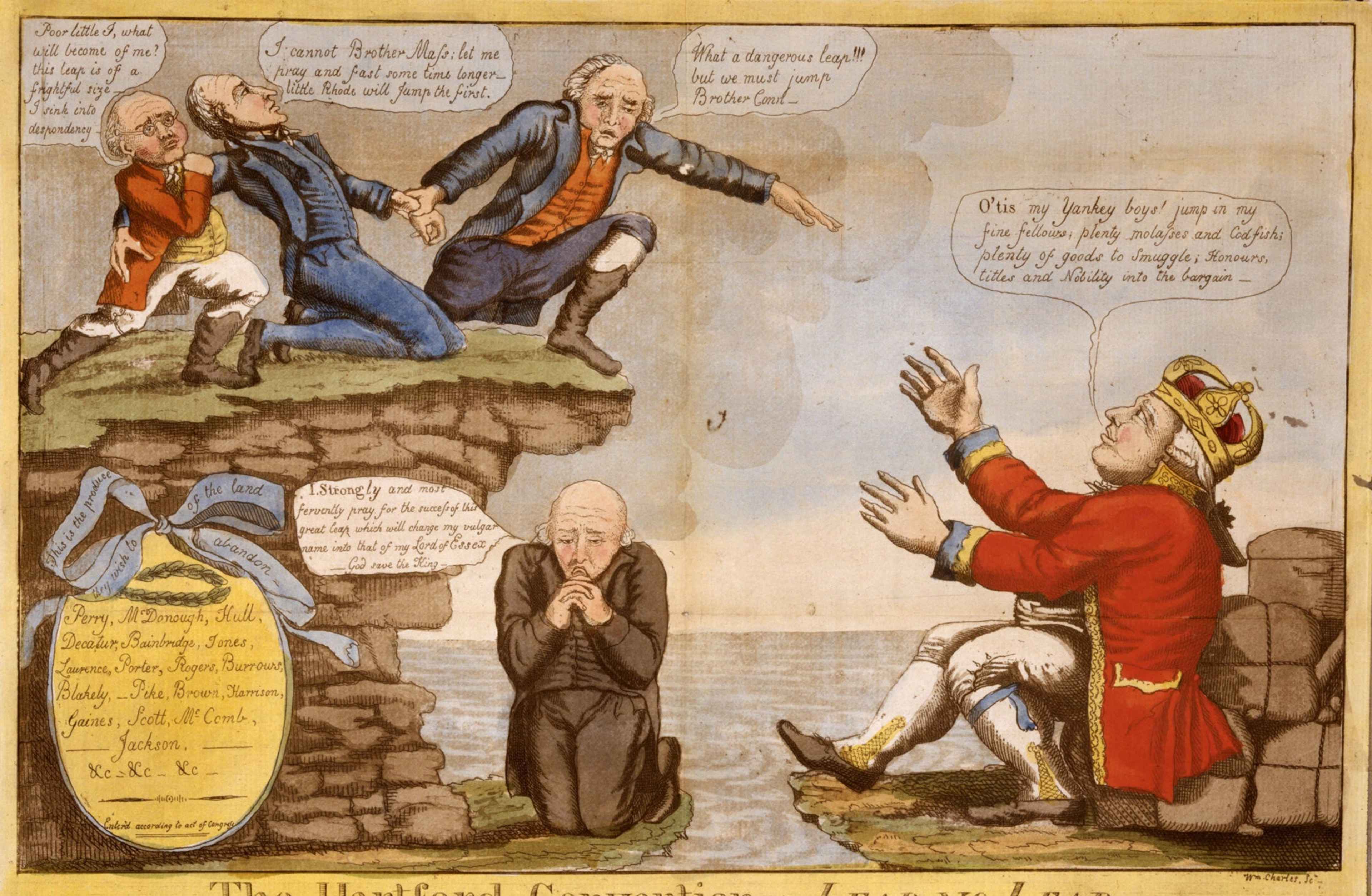
The first official war declared by the United States Congress triggered one of the most intense anti-war backlashes in domestic history. Centered in the Federalist strongholds of New England, opposition to the War of 1812 was driven by severe economic disruption to local shipping and fishing industries, as well as political animosity toward Democratic-Republican President James Madison. The governors of Massachusetts and Connecticut went so far as to deny the federal government the use of their state militias, secretly contemplating separate peace deals with Great Britain. This dramatic resistance culminated in the infamous Hartford Convention of December 1814, where New England delegates convened to propose constitutional amendments to limit executive war powers and even threatened secession. This historical episode remains a textbook study in federalism and illustrates how the Founding Fathers divided power between states and federal governments, leaving unresolved questions about state sovereignty during times of national crisis.
The Mexican-American War (1846–1848): Abolitionism and Civil Disobedience
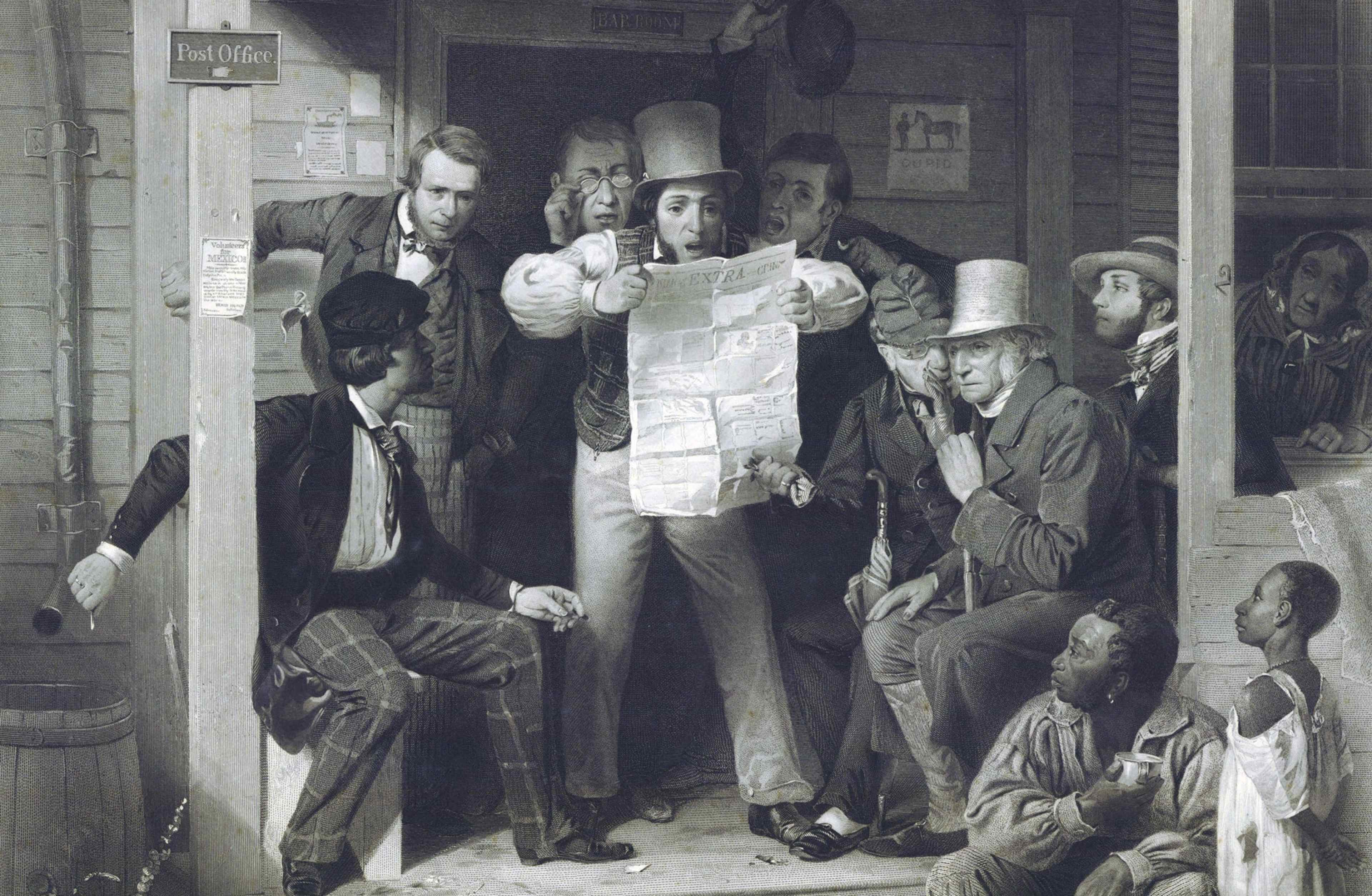
By the mid-19th century, anti-war sentiment shifted from economic protectionism to deep moral condemnation. The Mexican-American War was widely viewed by northern Whigs and abolitionists as an unprovoked imperial land grab designed to expand slave-holding territories following the annexation of Texas. Intellectuals and activists took a public stand; Frederick Douglass denounced the conflict in his speeches, and William Lloyd Garrison published scathing anti-war letters in his abolitionist newspaper, The Liberator. The war also inspired a landmark moment in American philosophy. Author Henry David Thoreau was jailed in Massachusetts for refusing to pay his poll taxes, arguing that he could not conscientiously support a government that waged an unjust war to expand slavery. His subsequent essay, Civil Disobedience, popularized the idea that individuals are morally obligated to resist unjust state actions, later serving as a foundational blueprint for global nonviolent resistance movements led by figures like Mahatma Gandhi and Martin Luther King Jr.
The American Civil War (1861–1865): Copperheads and Conscription Riots
Even a war fought to preserve the Union faced massive internal opposition. In the North, anti-war Democrats, disparagingly dubbed “Copperheads” by their opponents, accused President Abraham Lincoln of constitutional tyranny and demanded an immediate, negotiated peace with the Confederacy. Led by Ohio Congressman Clement Vallandigham, the Copperheads capitalized on public exhaustion over the staggering casualties and Lincoln’s suspension of habeas corpus. The implementation of the Union’s first federal military draft in 1863—which allowed wealthy men to buy their way out of service for three hundred dollars—sparked explosive resentment among working-class immigrant communities. This class anger culminated in the catastrophic New York Draft Riots, a four-day wave of violence that highlighted the deep racial and economic divides tearing at the fabric of the northern home front.
The Spanish-American War and the Birth of the Anti-Imperialist League (1898)
As the United States emerged as a global empire at the turn of the 20th century, a new wave of anti-war activism arose to challenge the nation’s overseas expansion. Following the Spanish-American War, the United States moved to annex the Philippines, sparking a brutal three-year counterinsurgency campaign. In response, prominent writers, politicians, and business titans established the Anti-Imperialist League in June 1898. Boasting over half a million members, including literary giant Mark Twain, industrialist Andrew Carnegie, and former President Grover Cleveland, the League argued that ruling over foreign populations without their consent violated the fundamental democratic principles enshrined in the Declaration of Independence. Although they ultimately failed to prevent the annexation, the League successfully brought the moral dilemmas of American imperialism to the forefront of national discourse.
World War I (1914–1918): Suffragists, Socialists, and Government Crackdowns
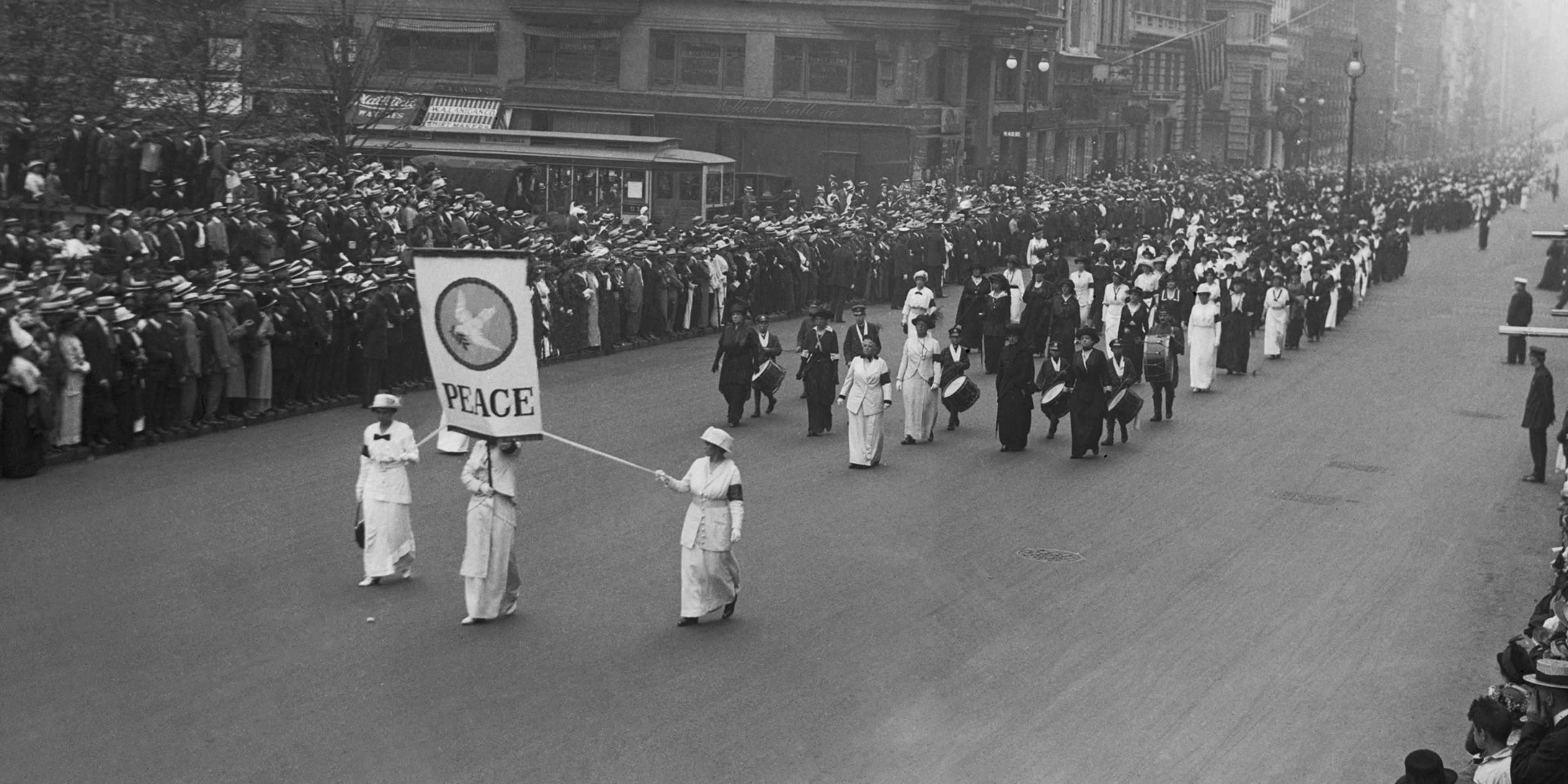
The outbreak of World War I in Europe catalyzed a powerful domestic peace coalition led primarily by American women. In August 1914, fifteen hundred women dressed in black marched down New York City’s Fifth Avenue in the historic Women’s Peace Parade, followed by the creation of the Woman’s Peace Party by legendary social reformer Jane Addams in 1915. However, when the United States officially entered the war in 1917, the federal government responded to anti-war dissent with unprecedented legal crackdowns. Under the Espionage and Sedition Acts, the Woodrow Wilson administration systematically criminalized anti-draft speech. High-profile activists, including anarchist Emma Goldman and Socialist Party leader Eugene V. Debs, were arrested and imprisoned, marking one of the darkest eras for civil liberties in American history.
World War II (1939–1945): Isolationism and the Turning Point of Pearl Harbor
During the late 1930s, the memory of World War I’s heavy toll fueled a massive isolationist movement aimed at keeping the United States out of the escalating European conflict. The vanguard of this movement was the America First Committee (AFC), which held massive rallies and counted future political figures and cultural icons among its members. Isolationist sentiment was incredibly strong, with polls showing that the vast majority of Americans opposed entering the war. However, this powerful anti-war consensus vanished virtually overnight on December 7, 1941, following the surprise Japanese military attack on Pearl Harbor. Public support for the war effort became nearly unanimous, leaving Representative Jeannette Rankin of Montana as the sole member of Congress to cast a dissenting vote against the declaration of war.
The Korean War (1950–1953): Political Critiques in the Cold War Era
Amidst the ideological battle of the early Cold War, overt opposition to the Korean War was relatively muted due to widespread domestic anti-communist sentiment. Instead of massive street demonstrations, the anti-war discourse was primarily political and constitutional. Critics focused on President Harry S. Truman’s controversial decision to commit American troops to combat under the banner of a United Nations “police action” without seeking a formal declaration of war from Congress. This bypass of constitutional authority, coupled with Truman’s high-profile firing of General Douglas MacArthur over tactical disagreements, generated deep political rancor and set a lasting precedent for future undeclared executive military operations.
The Vietnam War (1965–1973): The Golden Age of Anti-War Activism
The Vietnam War catalyzed the largest, most organized, and most culturally transformative anti-war movement in United States history. Beginning as modest “teach-ins” on elite college campuses in 1965, the movement rapidly evolved into a nationwide mass phenomenon. By 1967, hundreds of thousands of protestors were marching in major cities, utilizing popular music, draft-card burning, and civil disobedience to voice their opposition. The movement drew strength from its intersection with the Civil Rights Movement, as prominent leaders like Martin Luther King Jr. publicly condemned the war’s moral and economic toll on poor and minority communities. High-profile figures like boxing champion Muhammad Ali risked their careers and freedom by declaring themselves conscientious objectors. The crisis reached a tragic climax in May 1970 when the Ohio National Guard shot and killed four student protestors at Kent State University, sparking a massive nationwide strike that shut down hundreds of colleges and forced the Nixon administration to accelerate the withdrawal of American forces.
The 2003 Iraq War: Globalized Protests in the Digital Age
Following the geopolitical shifts of the late 20th century, the post-9/11 era witnessed a dramatic revival of anti-war activism. While the initial invasion of Afghanistan received broad support, the Bush administration’s push to invade Iraq in 2003 on the premise of locating weapons of mass destruction sparked immediate domestic and international backlash. On February 15, 2003, millions of people in hundreds of cities worldwide—including massive turnouts across the United States—participated in the largest coordinated single-day protest in human history. Utilizing early digital tools and internet organizing, modern anti-war coalitions questioned the strategic and moral justification of preemptive war, establishing a new template for globalized activist networks.
Important Figures of Dissent and Their Impact
Throughout American history, several key individuals have defined the philosophical and tactical landscape of anti-war dissent:
- Henry David Thoreau: Formulated the intellectual foundation of civil disobedience by refusing to fund a war he deemed unjust. His writings permanently altered the global approach to peaceful political resistance.
- Jane Addams: Pioneered the intersection of feminism and pacifism, co-founding the Woman’s Peace Party and earning the Nobel Peace Prize for her tireless international mediation efforts during World War I.
- Eugene V. Debs: A charismatic socialist leader whose imprisonment for speaking out against the World War I draft became a landmark symbol of the struggle for free speech during times of national crisis.
- Muhammad Ali: Leveraged his global athletic fame to resist the Vietnam draft on religious and moral grounds, demonstrating how personal sacrifice could amplify the anti-war message on a global scale.
Key Turning Points That Altered History
The trajectory of American anti-war movements has been dramatically altered by several key turning points:
- The Sedition Act of 1918: Legally solidified the government’s power to suppress anti-war speech, creating a legal battleground over the First Amendment that would persist for decades.
- The Tet Offensive (1968): Shattered the U.S. government’s optimistic narrative surrounding the Vietnam War, turning mainstream public opinion decisively against the conflict and fueling massive protest growth.
- The Kent State Shootings (1970): Brought the violence of the war directly onto domestic soil, demonstrating the extreme polarization of American society and permanently changing the dynamic between student activists and state authorities.
The Long-Term Impact on America
The legacy of anti-war movements has fundamentally restructured American society, law, and military organization. First, these protests catalyzed the abolition of the military draft in 1973, leading to the creation of the modern, all-volunteer military force. Second, the political activism of young adults during the Vietnam era directly spurred the passage of the 26th Amendment, which lowered the national voting age from 21 to 18, arguing that those old enough to be sent to war should have the right to vote. Furthermore, the legal challenges mounted by anti-war protestors resulted in landmark Supreme Court decisions that expanded and protected the scope of free speech, student expression, and civil liberties under the First Amendment.
Lesser-Known Historical Facts
While major demonstrations often dominate the history books, several fascinating, lesser-known details highlight the diverse nature of historical dissent:
- Henry Ford’s Peace Ship: In December 1915, industrial tycoon Henry Ford chartered a vessel named the Oscar II (popularly called the “Peace Ship”) to sail to Europe. His goal was to bring together prominent peace activists to negotiate an end to World War I through neutral mediation. Though the mission ultimately failed, it represented an extraordinary private effort to halt global conflict.
- Presidents in the Isolationist Ranks: Before they occupied the Oval Office, both Gerald Ford and John F. Kennedy were active supporters of the isolationist America First Committee during their university years, reflecting how widespread anti-war sentiment was among elite academic circles prior to World War II.
- Jeannette Rankin’s Dual Dissent: Representative Jeannette Rankin of Montana, the first woman ever elected to the United States Congress, holds the unique distinction of being the only federal lawmaker to vote against American entry into both World War I (in 1917) and World War II (in 1941), standing firm in her lifelong pacifist convictions despite immense public backlash.
Why U.S. Anti-War History Matters Today
The history of U.S. anti-war movements remains deeply relevant in contemporary geopolitical and constitutional discussions. Today, debates over executive war-making powers, the use of military drones, and the deployment of special forces without formal congressional approval echo the arguments first made during the War of 1812 and the Korean War. Furthermore, the rise of digital and social media activism allows modern movements to mobilize globally in real-time, continuing the legacy of public scrutiny over foreign policy. Understanding this history reminds us that questioning military engagement is not an act of betrayal, but rather a vital component of a healthy, functioning democracy that strives to balance national security with moral integrity and human rights.
People Also Ask (FAQ)
What was the largest anti-war protest in U.S. history?
The largest coordinated anti-war protests occurred during the Vietnam War, notably the Moratorium to End the War in Vietnam on October 15, 1969, which drew millions of participants across the country. In the modern era, the global protests against the Iraq War on February 15, 2003, set records as the largest single-day protest event in global history, with millions of Americans marching in major metropolitan areas.
How did the U.S. government suppress anti-war movements?
Historically, the federal government has used various legal and covert means to suppress dissent. This includes the passage of the Espionage and Sedition Acts during World War I to criminalize anti-draft speech, and the FBI’s covert COINTELPRO operations during the 1960s and 1970s, which aimed to spy on, infiltrate, and disrupt anti-war and civil rights organizations.
Did anti-war protests actually help end the Vietnam War?
Yes, historians widely agree that the anti-war movement placed immense political pressure on both the Johnson and Nixon administrations. It restricted their military options, made prolonged escalation politically unsustainable, influenced the transition to an all-volunteer military, and ultimately accelerated the withdrawal of American troops from Southeast Asia.
Conclusion
Ultimately, the timeline of U.S. anti-war movements reveals a country in continuous conversation with its own conscience. From the quiet resistance of Quaker pacifists to the massive street demonstrations of the 20th and 21st centuries, the voice of dissent has served as an essential democratic counterweight to military expansion. By challenging the state’s authority to wage war, these movements have not only reshaped American foreign policy but have also expanded the boundaries of civil liberties, leaving an indelible mark on the nation’s democratic legacy.


