When we picture the birth of the United States, we often envision grand battlefields, fiery speeches in wood-paneled assembly halls, and elegant revolutionary documents. Yet, much of the intellectual and practical foundation of the American spirit was actually forged in ink, paper, and the everyday wisdom of a humble Philadelphia printer. Among the legendary figures who shaped this nation, none captured the practical, industrious, and self-reliant character of the American identity quite like Benjamin Franklin. His iconic publications, particularly Poor Richard’s Almanac and its highly influential spin-off essay, The Way to Wealth, served as a roadmap for personal success, civic virtue, and economic independence. This timeless advice not only helped guide colonists through turbulent economic times but also laid the cultural bedrock for what we now celebrate as the classic American Dream.

The Historical Background: From Printer’s Apprentice to Global Sage
To understand the profound impact of Benjamin Franklin’s advice, one must look at the shifting landscape of eighteenth-century colonial America. During the mid-1700s, the American colonies were undergoing a period of rapid demographic and economic expansion. However, they remained deeply dependent on Great Britain, lacking a unified cultural identity or financial independence. Born in Boston in 1706, Franklin escaped a grueling apprenticeship under his brother and arrived in Philadelphia as a runaway youth with virtually nothing to his name. Through sheer grit, intelligence, and an unparalleled work ethic, he established his own printing house, turning his business into a hub of colonial communication.
In 1732, Franklin began publishing Poor Richard’s Almanac under the pseudonym ‘Richard Saunders.’ Running annually until 1758, the almanac was much more than a collection of weather forecasts, astronomical data, and calendar dates; it was a vehicle for Franklin’s dry wit and moral philosophy. In the final 1758 edition, Franklin wove together the best of his annual proverbs into a cohesive essay titled The Way to Wealth. This text became an instant international bestseller, offering advice that transcended colonial borders and spoke to the universal human desire for self-improvement.
A Chronological Timeline of Franklin’s Wisdom and Achievements
- 1706: Benjamin Franklin is born in Boston, Massachusetts, entering a world governed by strict Puritan values.
- 1728: After moving to Philadelphia, Franklin establishes his independent printing business, laying the groundwork for his literary and public career.
- 1732: The first edition of Poor Richard’s Almanac is published, instantly capturing the imagination of colonial readers with its practical humor.
- 1754: As colonial tensions with France and indigenous populations escalate, Franklin drafts the Albany Plan of Union and designs the famous ‘Join, or Die’ cartoon. Discover how Benjamin Franklin’s viral political cartoon united the 13 colonies during these early years of division.
- 1758: Franklin publishes the final edition of the almanac, prefaced by the iconic essay The Way to Wealth.
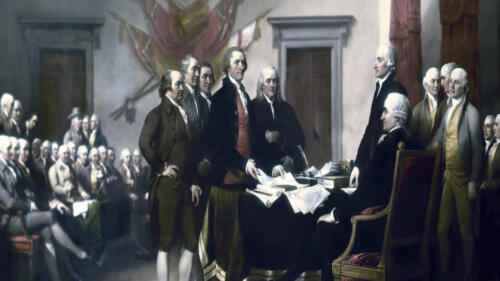
- 1776: Franklin assists in drafting and signs the Declaration of Independence, officially committing the nation to the ideals of liberty and self-governance.
- 1790: Franklin passes away in Philadelphia, leaving behind a legacy as a global symbol of American ingenuity and pragmatic wisdom.
Key Figures and Their Lasting Impact
While Benjamin Franklin is the central figure of this narrative, his ideas did not develop in a vacuum. He operated within a vibrant circle of colonial thinkers, merchants, and politicians who were actively debating the future of the American colonies. Among his contemporaries were other prominent founding fathers whose finances shaped the American Revolution, including Alexander Hamilton and Robert Morris, who recognized that a nation could not achieve political liberty without first establishing financial stability and personal industriousness.
Franklin’s role was unique; he was the diplomat who secured the French alliance during the Revolutionary War, the scientist who tamed lightning, and the civic planner who established America’s first public lending library, volunteer fire department, and hospital. His lasting historical impact lies in his ability to bridge high-minded Enlightenment philosophy with the practical everyday realities of the working class.
The Causes and Context: Why Franklin’s Advice Resonated
The immense popularity of Franklin’s writings was rooted in the socio-political and economic realities of the British colonies. During the colonial era, hard currency (gold and silver coin) was incredibly scarce. British mercantile policies restricted the colonies from printing their own stable paper money, forcing colonists to rely on credit, barter, and heavy debt. Under these oppressive economic conditions, financial ruin was a constant threat.

Franklin understood that to survive and thrive, early Americans needed a blueprint for personal economic sovereignty. His advice on frugality, hard work, and avoiding unnecessary debt was not merely moralizing; it was a survival guide. By encouraging his readers to master their own finances, Franklin was quietly preparing a generation of colonists to seek political self-determination. He famously argued that ‘debt is a prolific mother of folly and crime,’ suggesting that a dependent, indebted populace could never truly be free.
Major Turning Points in Franklin’s Career
The evolution of Franklin’s writings mirrors his personal transformation from a loyal British subject into a revolutionary leader. For decades, Franklin believed the American colonies could flourish within the British Empire. However, a major turning point occurred in the 1760s and 1770s as Parliament imposed a series of unpopular taxes, such as the Stamp Act and the Townshend Acts. When Franklin’s diplomatic efforts in London to ease these tensions failed, he realized that peaceful reconciliation was no longer possible.
Armed with the very printing presses he had championed, Franklin turned his focus entirely to the cause of revolution. The pragmatic, hard-working character he had promoted in Poor Richard’s Almanac became the standard template for the revolutionary citizen—frugal enough to withstand British trade boycotts and industrious enough to manufacture their own goods locally.
The Long-Term Impact of Franklin’s Philosophy on America
The advice Benjamin Franklin disseminated through his pamphlets and essays fundamentally shaped the cultural DNA of the United States. It established the cultural archetype of the ‘self-made man,’ the belief that any individual, regardless of their humble origins, could achieve success through dedication, intelligence, and moral rectitude. This concept remains one of the defining characteristics of American society today.
Furthermore, Franklin’s focus on compromise, civic duty, and scientific pragmatism deeply influenced the structural setup of American governance. His philosophical approach to problem-solving helped guide early debates on constitutional power and represented a major stepping stone toward understanding how the founding fathers divided power between states and federal governments. Franklin believed that a successful republic required citizens who were financially independent and actively engaged in their communities, a principle that continues to underpin American democracy.
Lesser-Known Facts About Benjamin Franklin
- The Pen Names of a Genius: Long before he wrote as Richard Saunders, a teenage Franklin secretly wrote letters to his brother’s newspaper under the name ‘Silence Dogood,’ a middle-aged widow who offered sharp, humorous critiques of Boston society.
- Rejecting Patents for the Public Good: Despite inventing the lightning rod, bifocal glasses, and the highly efficient Franklin stove, Franklin refused to patent any of his creations. He believed that since we enjoy the inventions of others, we should be proud to serve others by our own inventions freely.
- A Family Divided by Revolution: While Franklin was a champion of the patriot cause, his son, William Franklin, remained a steadfast Loyalist and served as the royal governor of New Jersey, leading to a permanent estrangement between father and son.
Why Franklin’s Advice Still Matters Today
In our modern, fast-paced digital age filled with consumerism and instant gratification, the core messages of The Way to Wealth are more relevant than ever. Franklin’s warnings against living beyond one’s means, his praise of steady daily effort, and his emphasis on lifelong learning serve as a timeless antidote to contemporary anxieties. Today’s personal finance movements, productivity strategies, and civic initiatives still echo the very principles published in a small Philadelphia print shop nearly three centuries ago.
People Also Ask
What is the main message of “The Way to Wealth”?
The core message of The Way to Wealth is that personal financial independence and success are achieved through the twin virtues of industry (hard work) and frugality (mindful spending). Franklin argues that individuals should rely on their own labor rather than luck or the charity of others.
Why did Benjamin Franklin use a pseudonym to write the Almanac?
Franklin used the pen name ‘Richard Saunders’ to give the almanac a distinct, relatable, and entertaining voice. It allowed him to present valuable moral and financial lessons with a sense of humor and humility that readers would readily accept.
How did Franklin view public service?
Franklin viewed public service as a natural extension of personal virtue. He believed that true success was not measured solely by personal wealth, but by how much one contributed to the improvement and well-being of their community and country.
Conclusion: The Enduring Legacy of a Founding Thinker
Benjamin Franklin’s advice remains a towering testament to the power of practical wisdom, individual agency, and civic dedication. Through his simple proverbs and profound personal example, he showed a developing nation that the path to true freedom—both personal and political—is built from the ground up through daily discipline and community cooperation. As we continue to navigate the complexities of the modern world, the timeless lessons of Poor Richard continue to shine as a guiding light for future generations.


