In the early morning mist of April 19, 1775, the tense silence hanging over a small Massachusetts town green was shattered by a single, anonymous gunshot. This fateful moment marked the beginning of the Battles of Lexington and Concord, the opening military engagements of the American Revolutionary War. For years, economic pressures, heavy taxation, and an overbearing military occupation in Boston had pushed the American colonists to the brink of open rebellion. When the British army attempted to seize colonial munitions stored in Concord, they expected a routine sweep; instead, they ignited a massive, grassroots defense that would permanently sever the ties between Great Britain and her thirteen North American colonies. This is the story of how an untrained, passionate militia stood up to the world’s most formidable empire, forever changing the course of global history.
Historical Background and the Spark of Rebellion
For over a decade leading up to 1775, the relationship between Great Britain and its American colonies deteriorated rapidly. Following the French and Indian War, Parliament sought to recoup its heavy financial losses by taxing the colonies directly through acts like the Stamp Act, Townshend Acts, and the Tea Act. Outraged by what they saw as “taxation without representation,” colonial patriots engaged in acts of civil disobedience, most notably the Boston Tea Party. The British Crown responded with the Coercive Acts (known in America as the Intolerable Acts), which effectively suspended colonial self-government in Massachusetts and placed the colony under strict military rule.
Tensions had already reached a boiling point in the streets of Boston during prior years. If you want to understand how deep the hostility ran between the colonists and the occupying Redcoats, look no further than the events surrounding the Boston Massacre, a tragedy that prompted future President John Adams to defend British soldiers in court to prove the colonies remained committed to the rule of law. By early 1775, King George III had declared Massachusetts to be in an official state of rebellion, setting the stage for an inevitable armed clash.
The Espionage and the Midnight Ride
By April 1775, the British military commander in Boston, General Thomas Gage, received secret orders to disarm the rebellious colonists and arrest their key leaders, specifically Samuel Adams and John Hancock. Gage planned a surprise, pre-emptive strike: British troops would march under the cover of darkness to Concord, a small town roughly 20 miles northwest of Boston, where patriots had been stockpiling gunpowder, cannons, and military provisions.
However, the colonists’ spy network, operating largely out of Boston taverns, quickly caught wind of the British plans. To warn the countryside and ensure Adams and Hancock could escape, colonial couriers prepared to ride. The most famous of these riders was Paul Revere. While popular legend portrays him as a lone hero shouting through the night, the reality is much more complex, structured, and fascinating. You can discover more about the myths and realities of that fateful night by reading about 9 things you may not know about Paul Revere and his sophisticated warning system. Alongside William Dawes and Dr. Samuel Prescott, Revere successfully alerted local minutemen, who immediately began preparing for battle. This elaborate alarm network demonstrated the incredible coordination of the colonial resistance, which relied heavily on highly organized revolutionary spy networks that would later define the Continental Army’s strategic advantages.
Chronological Timeline of April 19, 1775
To fully comprehend the chaos and drama of that historic day, it is helpful to look at the events as they unfolded hour by hour:
- 10:00 PM (April 18): British Regulars, numbering around 700 men under the command of Lieutenant Colonel Francis Smith, begin crossing the Charles River from Boston in small boats to start their march toward Concord.
- Midnight (April 19): Paul Revere and William Dawes arrive in Lexington, warning Samuel Adams and John Hancock, who quickly flee to safety. The town bell rings, summoning the local militia.
- 4:30 AM: The British vanguard, led by Major John Pitcairn, approaches Lexington Green. Approximately 77 local militiamen, led by Captain John Parker, stand assembled on the common.
- 5:00 AM: Pitcairn orders the militia to disperse. As they begin to move, a shot rings out from an unknown source. The British troops open fire, leaving eight colonists dead and ten wounded on Lexington Green.
- 7:00 AM: The British arrive in Concord. While some soldiers search the town and Barrett’s Farm for hidden munitions, others guard the strategic North Bridge.
- 9:30 AM: Colonists gathered on the hills near Concord see smoke rising from the town (as British troops burn seized wooden gun carriages). Believing their homes are being put to the torch, the militia advances on the North Bridge. A brief, deadly exchange of gunfire occurs, marking the first time colonists are ordered to fire directly on the King’s troops.
- 12:00 PM: Having completed their search, the British begin their 18-mile march back to Boston. By this time, thousands of minutemen from surrounding towns have flooded the area.
- 12:30 PM – 7:00 PM: The British retreat turns into a bloody gauntlet along “Battle Road.” Utilizing guerrilla-style tactics, hiding behind stone walls, trees, and buildings, the colonists inflict heavy casualties on the retreating Redcoats until they reach the safety of Charlestown.
Key Historical Figures and Their Roles
Several critical individuals shaped the outcome and lasting legacy of the Battles of Lexington and Concord:
Captain John Parker
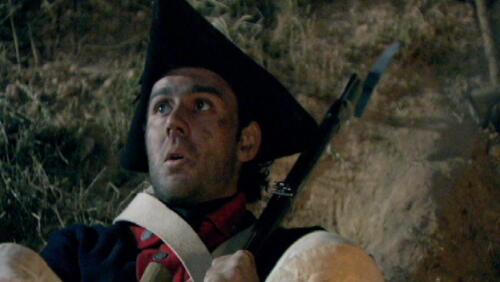
A veteran of the French and Indian War, Captain John Parker commanded the Lexington militia. Facing a vastly superior force on Lexington Green, Parker gave the famous instruction: “Stand your ground. Don’t fire unless fired upon, but if they mean to have a war, let it begin here.” Though his men suffered the first casualties, Parker’s leadership laid the groundwork for the determined resistance that followed later that day.
Major John Pitcairn
Major Pitcairn was the British officer who led the advance guard into Lexington. Known generally as a reasonable and respected officer, Pitcairn pleaded with the colonists to lay down their arms and disperse. When the mysterious first shot was fired, Pitcairn lost control of his excited, exhausted troops, who broke ranks and charged the fleeing militia.
Major John Buttrick
At Concord’s North Bridge, Major John Buttrick commanded the local militia. When British troops fired upon his men, killing two, Buttrick issued the historic command that altered the course of history: “Fire, fellow soldiers, for God’s sake, fire!” This was the first time colonial forces fired offensively upon the Crown’s military regulars.
The Turning Point: The Stand at the North Bridge
The skirmish at Lexington Green was a tragedy, but the confrontation at Concord’s North Bridge was the true ideological and military turning point. On Lexington Green, the colonists were essentially dispersing when they were shot in the back. At Concord, however, the provincial militia chose to march down the hill, meet the British face-to-face, and actively engage them. By ordering his men to fire on the King’s troops, Major Buttrick crossed a line of no return. It transformed a local colonial protest into an armed revolution. The British, realizing they were heavily outnumbered and facing an aggressive, organized foe, were forced to retreat, relinquishing the battlefield to the colonists.
Long-Term Impact on America
The military victory at Lexington and Concord was a massive boost to colonial confidence. The realization that an untrained, ragtag civilian militia could defeat the highly disciplined British Regulars energized the colonies. Within days, thousands of militia members from across New England surrounded Boston, trapping the British army inside the city in what became the Siege of Boston.
This confrontation also catalyzed political unity. The Second Continental Congress quickly convened, realizing that war was no longer an abstract possibility but a present reality. They voted to form the Continental Army and appointed George Washington as its Commander-in-Chief. The blood spilled on April 19, 1775, shattered any remaining hopes of peaceful reconciliation with King George III, paving the direct path to the signing of the Declaration of Independence in July 1776.
Fascinating and Lesser-Known Facts
Revere’s Famous Warning was Quiet and Discreet
Contrary to the famous poem by Henry Wadsworth Longfellow, Paul Revere never rode through the streets shouting, “The British are coming!” Doing so would have instantly alerted the numerous British patrols stationed throughout the countryside. Instead, his mission was highly confidential; he quietly knocked on doors and spoke to trusted patriot contacts, using the phrase, “The Regulars are coming out.”
The Mysterious “First Shot” Remains a Mystery
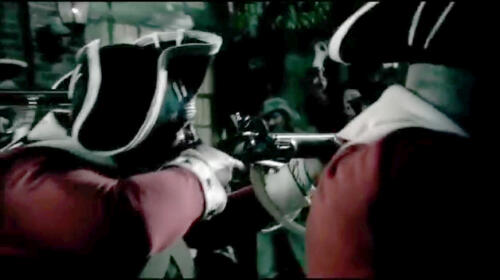
To this day, historians do not know who fired the “shot heard ’round the world” on Lexington Green. Both the British soldiers and the American militiamen were strictly ordered not to fire. Eyewitness accounts from both sides contradict one another, with each blaming the other. Some modern historians suggest the shot may have been an accidental discharge from a spectator standing near a tavern, or a sniper hiding behind a stone wall.
A Surprising Amount of Supplies Survived
Despite the British march being designed to destroy the colonial military stockpiles in Concord, the colonists managed to save almost all of their munitions. Forewarned by the midnight riders, Concord citizens spent the hours before the British arrival frantically moving gunpowder, cannons, and food supplies to nearby towns or burying them under freshly plowed fields.
Why the Battles of Lexington and Concord Still Matter Today
The legacy of Lexington and Concord resonates deeply in modern American culture, institutions, and political philosophy. It serves as the ultimate historical symbol of grassroots citizen action against perceived tyranny. The image of the “Minuteman”—the ordinary citizen-soldier ready to defend his community at a minute’s notice—remains a cornerstone of the American national identity. Furthermore, the battles are frequently cited in contemporary constitutional debates regarding the Second Amendment and the right of citizens to bear arms. Understanding Lexington and Concord is essential to understanding the American spirit of independence, skepticism of unchecked governmental power, and the profound belief in self-determination.
People Also Ask (FAQ)
Who actually won the Battles of Lexington and Concord?
The Battles of Lexington and Concord resulted in a decisive victory for the American colonists. While the British successfully dispersed the militia at Lexington and destroyed a small amount of colonial supplies in Concord, they suffered heavy casualties during their chaotic retreat to Boston and were effectively besieged by the colonial militia once they arrived.
What does “the shot heard ’round the world” mean?
This famous phrase, coined by poet Ralph Waldo Emerson in his 1837 poem “Concord Hymn,” refers to the immense global impact of the first shot fired at Lexington. It symbolizes how a local skirmish between ordinary farmers and a global empire would go on to spark the American Revolution, inspiring democratic movements and revolutions across the world, including the French Revolution.
How many casualties occurred at Lexington and Concord?
On April 19, 1775, the colonists suffered approximately 93 casualties (49 killed, 39 wounded, and 5 missing). The British suffered significantly heavier losses, with approximately 273 casualties (73 killed, 174 wounded, and 26 missing), primarily during their retreat along Battle Road.
Conclusion
The Battles of Lexington and Concord were far more than a minor military skirmish; they were the crucible in which the United States of America was forged. What began as a tense standoff on a damp Massachusetts common rapidly transformed into a defining struggle for liberty, self-governance, and human rights. By standing their ground against overwhelming odds, the brave men and women of Massachusetts proved that the desire for freedom could overcome even the most formidable military might. The echoes of those first gunshots still reverberate today, reminding us of the immense sacrifices made to secure the democratic liberties we enjoy.


