While military giants like George Washington led the Continental Army to victory on the battlefield, the intellectual and rebellious spark of the American Revolution was ignited in the meeting halls and tavern rooms of Boston by a master of political agitation: Samuel Adams. As a passionate political activist, state legislator, and draft-writer of fundamental American texts, Adams was a constant thorn in the side of the British Crown in the decades leading up to the war. By coordinating boycotts, penning scathing propaganda, and leading the radical Sons of Liberty, he successfully converted regional economic grievances into a unified, philosophical quest for individual liberty. Understanding the life of Samuel Adams is essential for grasping how thirteen disparate, often uncooperative British colonies rallied together to challenge the greatest military empire on earth.
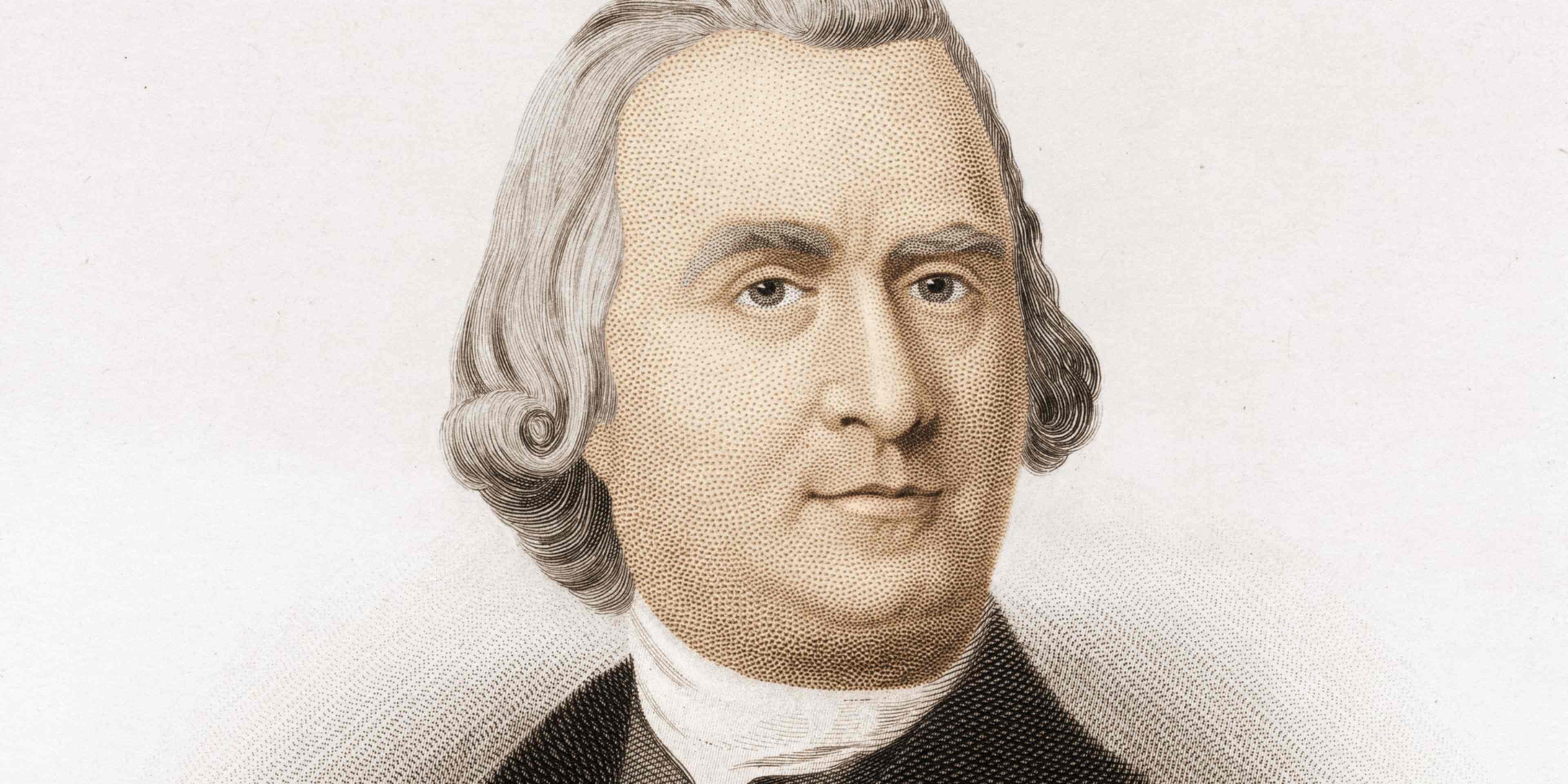
The Historical Background: Colonial Boston and the Roots of Rebel Intellect
Samuel Adams was born in Boston, Massachusetts, on September 27, 1722. Raised in a wealthy, deeply religious Puritan household, his father, Samuel Adams Sr., was a prosperous merchant, church deacon, and influential local politician. His mother, Mary Adams, instilled in him a strict moral compass and a deep appreciation for civic duty. From an early age, Adams was groomed for a life of intellectual pursuit, attending the prestigious Boston Latin School before enrolling at Harvard College at the age of fourteen.
It was during his time at Harvard that Adams developed the political philosophy that would define his entire life. He became captivated by the works of European Enlightenment thinkers, most notably John Locke. Locke’s theories—which argued that all individuals possess natural, inalienable rights to life, liberty, and property, and that governments only hold legitimate power through the consent of the governed—deeply resonated with the young student. In 1743, Adams presented his master’s degree thesis, which boldly questioned the legality of resisting British authority if the commonwealth could not otherwise be preserved. Even as a young graduate, Adams was already laying the intellectual groundwork for revolution.
A Failed Businessman but a Master Propagandist
Despite his brilliant mind for political theory, Samuel Adams possessed almost no talent for business or finance. After his father’s death in 1748, he inherited a family malt-making business, which supplied barley to local brewers. Through mismanagement, the venture quickly floundered, eventually driving him to bankruptcy. Later, Adams secured a position as a Boston tax collector, but his financial ineptitude continued; his ledgers were routinely short by thousands of pounds due to his leniency with cash-strapped citizens and poor bookkeeping.
While his pockets remained empty, his mind was rich with ideas. Recognizing the power of the printed word, Adams and a circle of close friends launched a short-lived publication called The Public Advertiser in 1748. He used this platform to preach the virtues of liberty and warn Bostonians of the dangers of political apathy, contributing to the legacy of early colonial media, which you can learn about in the history of America’s first newspapers. This early venture proved that even if Adams could not manage money, he could masterfully manage public opinion.
Chronological Timeline of Agitation and Revolution
The journey from loyal British subject to radical revolutionary did not happen overnight. For Adams, it was a structured escalation fueled by a series of provocative British policies:
- 1764: The British Parliament passes the Sugar Act to pay off debts from the Seven Years’ War. Adams drafts a protest arguing that taxing colonists without representation violates their basic rights.
- 1765: The Stamp Act is enacted. Adams denounces the tax and helps organize the Sons of Liberty, leading to widespread boycotts and protests. He is also elected to the Massachusetts House of Representatives.
- 1768: British troops occupy Boston to restore order. Adams responds by writing countless anti-British articles under various pen names, keeping local outrage simmering.
- 1773: The Tea Act is passed. Adams coordinates the blockade of British tea ships, culminating in the famous Boston Tea Party on December 16, where colonists dump tea into the harbor.
- 1775: British General Thomas Gage marches troops to Lexington to arrest Adams and John Hancock, sparking the Battles of Lexington and Concord on April 19.
- 1776: Adams serves in the Continental Congress, vigorously advocating for independence, and proudly signs the Declaration of Independence on July 4.
- 1781: Adams helps draft the Articles of Confederation and returns to Massachusetts to focus on state politics, later serving as Governor.
Key Historical Figures and Their Roles
The success of the revolutionary movement relied on a network of distinct personalities who balanced Adams’ radicalism. Throughout the 13 colonies history, various leaders emerged, but in Boston, the alliance between Samuel Adams and John Hancock was particularly crucial. While Adams provided the philosophical fire and organizational skills, Hancock—one of the wealthiest merchants in New England—provided the essential financial backing and moderate credibility that attracted upper-class colonists to the cause.

On the opposing side stood figures like General Thomas Gage, the military commander of British forces in North America and Governor of Massachusetts. Gage viewed Adams as a dangerous demagogue who poisoned the minds of colonial subjects. When Gage attempted to arrest Adams and Hancock in 1775, it triggered the first armed conflict of the war, leading to the creation of the Continental Army under George Washington. To understand this transition, it is helpful to look at who commanded the Continental Army and the local militias before Washington took formal charge.
Major Turning Points in Adams’ Crusade
Two primary events solidified Samuel Adams’ legacy as the ultimate provocateur. The first was the Boston Tea Party of 1773. When the East India Company was granted a monopoly on tea sales in the colonies, Adams mobilized the local population. Disguised as Mohawk warriors, a group of activists boarded three British vessels and threw 342 chests of tea into Boston Harbor. While British authorities were horrified, Adams publicly praised the action as a principled defense of constitutional liberty.
The second major turning point occurred on the morning of April 19, 1775. Forewarned by colonial express riders like Paul Revere, Adams and Hancock successfully evaded British troops marching toward Lexington. The resulting skirmish on Lexington Common, known as “the shot heard ’round the world,” marked the formal transition from political protest to armed revolution. Adams reportedly remarked to Hancock upon hearing the gunfire, “What a glorious morning for America!”
Long-Term Impact on America
Samuel Adams’ contributions extended far beyond merely starting a war; he helped build the political foundations of the new nation. As a member of the Continental Congress, he played a central role in drafting the Articles of Confederation, which served as the United States’ first constitution. He championed the preservation of individual liberties and state sovereignty, arguing passionately against concentrated federal power—a debate that would shape the drafting of the U.S. Constitution and the Bill of Rights.
Furthermore, his state-level work in Massachusetts, where he helped draft the 1780 Massachusetts Constitution, set a precedent for republican governance. His political legacy ensured that the newly formed nation prioritized personal freedoms, local representation, and the right to petition the government, transforming theoretical Enlightenment ideals into concrete American institutions.
Lesser-Known Facts about Samuel Adams
- He wasn’t actually a brewer: Despite the modern-day fame of the Samuel Adams beer brand, Adams was a maltster, not a brewer. He produced the malted barley used to make beer, but his personal attempts at running the family business ended in financial disaster.
- A highly lenient tax collector: During his time as Boston’s tax collector, Adams routinely failed to collect taxes from struggling families, earning him the love of the working class but the fury of British-aligned officials who accused him of gross negligence.
- He used dozens of pseudonyms: To bypass British censorship and make the anti-Crown movement appear larger than it was, Adams wrote letters and essays for local newspapers using more than 25 different pen names, including “Vindex” and “Candidus.”
Why Samuel Adams Matters Today
In the modern era, the legacy of Samuel Adams serves as a vital reminder of the power of grassroots organizing and political writing. He demonstrated that a dedicated group of citizens, armed with clear ideas and effective communication, could challenge and dismantle entrenched power structures. Today, debates surrounding civil liberties, the limits of taxation, and the right to protest peacefully trace their origins back to the fierce intellectual arguments championed by Adams. He remains the ultimate symbol of the American tradition of challenging authority to protect fundamental human rights.
People Also Ask
Did Samuel Adams support the U.S. Constitution?
Initially, Samuel Adams was skeptical of the U.S. Constitution because he feared a strong central government might trample individual liberties and state sovereignty. However, he eventually supported its ratification in Massachusetts after securing a promise that a Bill of Rights would be added to protect citizens’ fundamental freedoms.
What role did Samuel Adams play in the Boston Massacre?
While Samuel Adams did not participate in the 1770 Boston Massacre, he masterfully utilized the tragic event as a propaganda tool. He labeled the confrontation a “massacre” in local newspapers and pressured the Royal Governor to withdraw British troops from the city, successfully escalating anti-Crown sentiment.
Was Samuel Adams related to John Adams?
Yes, Samuel Adams and John Adams (the second President of the United States) were second cousins. While John was a meticulous legal scholar and diplomat, Samuel was the passionate, hands-on political organizer, making them a highly effective duo in the push for American independence.
Conclusion
Samuel Adams was far more than a simple rabble-rouser; he was the primary architect of the American revolutionary spirit. By applying John Locke’s philosophy to the practical realities of colonial taxation, he transformed local anger into a structured, unified crusade for self-governance. From the docks of the Boston Tea Party to the halls of the Continental Congress, Adams dedicated his life to the pursuit of liberty. His enduring legacy is written not only in the text of the Declaration of Independence but also in the very fabric of American democracy, proving that the pen and the voice are indeed mightier than the sword.


