When exploring the origins of American independence, the names of wealthy landowners, military commanders, and intellectual elites often dominate the narrative. However, the most explosive and democratizing voice of the era belonged to Thomas Paine, an English-born working-class immigrant whose powerful rhetoric transformed a localized colonial rebellion into a global crusade for human liberty. Through his seminal 1776 pamphlet, Common Sense, Paine did not merely debate the nuances of British taxation; he shattered the ancient, sacred myth of the divine right of kings and demanded immediate, unconditional independence. His raw, unapologetic style of political philosophy bypassed the academic elites and spoke directly to the common citizen, permanently shifting the collective American consciousness. Without his brilliant, provocative prose, the ideological spark that ignited the American Revolution might have remained a quiet, unresolved grievance.
Historical Background: From Norfolk to Philadelphia
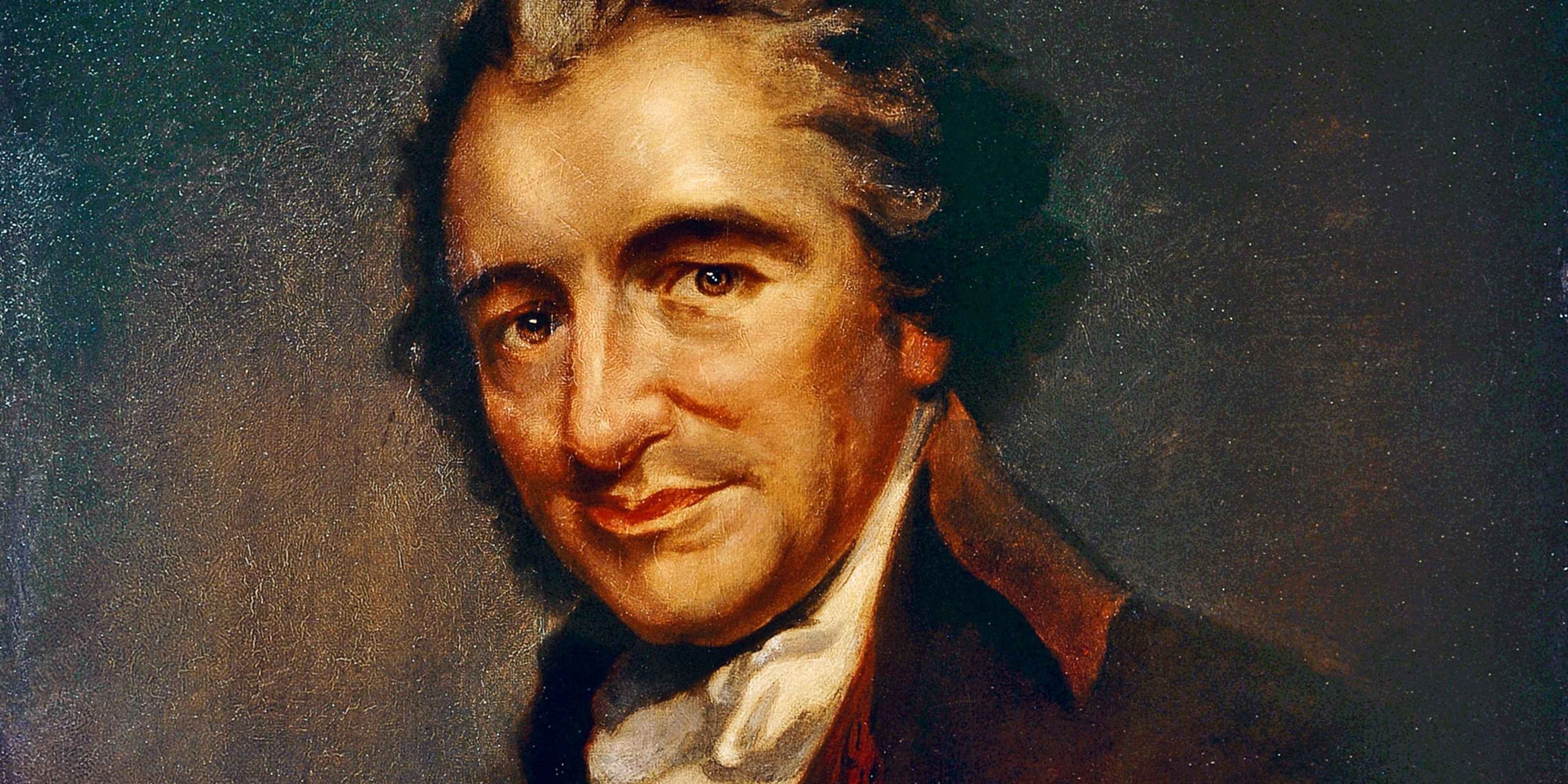
Thomas Paine was born on January 29, 1737, in the quiet town of Thetford in Norfolk, England. The son of a Quaker corset maker and an Anglican mother, Paine’s early life was marked by economic hardship and professional instability. He apprenticed under his father, briefly attempted to escape to a life at sea, and worked as an excise officer. During his time as an excise officer on the Sussex coast, Paine witnessed firsthand the deep corruption embedded within the British administrative state. This prompted him to write his very first political tract in 1772, advocating for better working conditions and fairer wages for his fellow officers.
Though the pamphlet failed to move Parliament, it introduced Paine to the radical political circles of London. It was here, in 1774, that a chance meeting with Benjamin Franklin altered the course of history. Recognizing Paine’s sharp intellect and passion for justice, Franklin persuaded him to seek his fortune in the colonies and provided him with a crucial letter of introduction. In late 1774, after surviving a brutal ocean voyage plagued by scurvy, Paine stepped ashore in Philadelphia. At a time when understanding the geographical and social structure of the 13 colonies was crucial to recognizing colonial discontent, Paine quickly integrated himself into the local print culture, securing a job as the managing editor of the Pennsylvania Magazine.
Key Events Timeline of Thomas Paine’s Life
- 1737: Born in Norfolk, England, to a modest Quaker and Anglican household.
- 1774: Meets Benjamin Franklin in London and immigrates to Philadelphia, Pennsylvania.
- January 10, 1776: Publishes Common Sense, which rapidly sells hundreds of thousands of copies across the colonies.
- December 1776: Publishes the first of The American Crisis essays to boost the morale of George Washington’s struggling troops.
- 1777–1779: Serves as Secretary to the Congressional Committee for Foreign Affairs.
- 1791–1792: Publishes Rights of Man in London and Paris, defending the French Revolution.
- 1793: Arrested by the Jacobins during the Reign of Terror for opposing the execution of King Louis XVI.
- 1794–1795: Publishes his highly controversial theological critique, The Age of Reason.
- 1802: Returns to the United States under the invitation of President Thomas Jefferson.
- 1809: Dies in relative poverty and obscurity in New York City.
Important Figures in Paine’s Revolutionary Circle
Paine’s life intersected with some of the most influential political actors of the late 18th century, though his uncompromising radicalism eventually alienated many of them:
Benjamin Franklin
Franklin acted as Paine’s initial patron, recognizing his potential as a political writer. Without Franklin’s letter of introduction, Paine may have never gained the editorial footing required to publish his revolutionary thoughts in Philadelphia.
George Washington
Initially a close ally, Washington recognized the immense power of Paine’s writing. Knowing who commanded the Continental Army before Washington provides context on how critical inspired leadership and morale-boosting propaganda were during the bleakest winters of the war. However, Paine later accused Washington of conspiring with French authorities to keep him imprisoned, publishing an incredibly bitter open letter that ruined their friendship and severely damaged Paine’s reputation.
Thomas Jefferson
Jefferson shared many of Paine’s deist views and democratic ideals. Following Paine’s fall from grace in Europe and America, Jefferson was one of the few prominent leaders who welcomed Paine back to the United States in 1802, even hosting him at the White House.
Causes and Context: The Spark of a Revolution
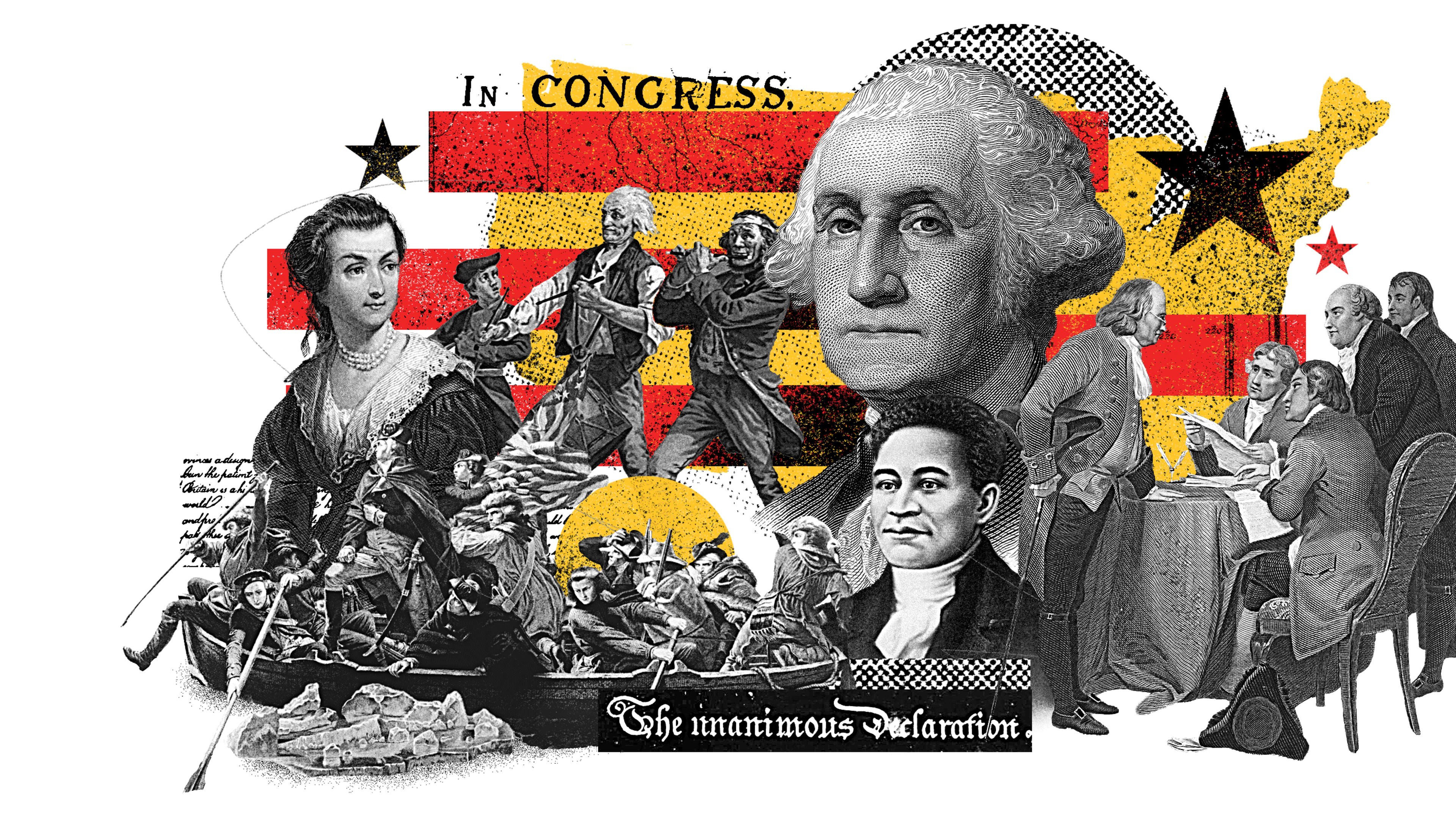
By late 1775, the American colonies were in a state of ideological paralysis. While armed clashes had already occurred at Lexington, Concord, and Bunker Hill, the vast majority of colonists and members of the Continental Congress still hoped for reconciliation with King George III. They viewed themselves as aggrieved British subjects fighting for their traditional constitutional rights, not as an independent nation. The prevailing sentiment was that the British Parliament was corrupt, but the King himself was a benevolent figure who could eventually resolve the crisis.
Paine saw the fallacy in this logic. He realized that as long as the colonists clung to the illusion of British reconciliation, they could never secure foreign military alliances with nations like France or Spain, nor could they establish a stable, self-governing republic. Paine designed Common Sense to systematically dismantle this emotional and political dependency. Written in plain, urgent language, he used biblical references to appeal to Protestant colonists while forcefully arguing that monarchy was an unnatural, corrupt form of government that insulted human dignity.
Major Turning Points: From Colonial Hero to French Prisoner
The publication of Common Sense on January 10, 1776, was a massive turning point. Within months, over 150,000 copies were printed and distributed, reaching nearly every household in the colonies. It acted as an intellectual solvent, dissolving the colonists’ loyalty to the British Crown. John Adams famously reflected on Paine’s influence, noting that “without the pen of the author of ‘Common Sense,’ the sword of Washington would have been raised in vain.”
Later that year, with the Continental Army on the brink of collapse during the freezing winter of 1776, Paine published the first installment of The American Crisis. Opening with the legendary words, “These are the times that try men’s souls,” the essay was read aloud to Washington’s soldiers before their historic crossing of the Delaware River, reviving their fighting spirit.
However, Paine’s passion for global liberty took him back to Europe, where he defended the French Revolution in his 1791 masterpiece, Rights of Man. This work argued that popular political revolution is permissible when a government fails to protect the natural rights of its people. His radical views made him an outlaw in Great Britain and eventually landed him in a French prison. As the Jacobins took power under Maximilien de Robespierre, Paine opposed the execution of Louis XVI on moral grounds, leading to his arrest for treason. It was during this dark period of confinement that he began writing The Age of Reason, a text that would ultimately destroy his American credibility by challenging institutionalized religion and advocating for deism.
Long-Term Impact on America
Thomas Paine’s contribution to the United States is profound and structural. By advocating for a completely representative government, he helped lay the ideological groundwork for the United States Constitution. He was one of the earliest prominent figures to advocate for progressive social policies, including public education, state-funded pension plans for the elderly, and an early conceptualization of Social Security.
Furthermore, Paine’s writing style permanently changed political communication. By rejecting the elitist, Latinate academic prose of his contemporaries, he proved that political discourse belongs to the public, fostering a highly democratic print culture that persisted long after his death.
Lesser-Known Facts About Thomas Paine
- He Didn’t Make a Dime from His Bestsellers: Despite Common Sense being one of the most widely printed books in American history relative to the population, Paine refused to accept any royalties, donating all proceeds to purchase mittens and supplies for the Continental Army.
- His Bones Went Missing: Ten years after his lonely death in 1809, British radical William Cobbett dug up Paine’s bones from his New Rochelle estate and shipped them to England, intending to build a grand monument. The plans failed, and the bones were stored in a cellar, eventually lost to history. Fragmentary remains and hair locks are all that have been recovered.
- He Wrote the Preamble to America’s First Abolition Act: In 1780, while serving as the clerk for the Pennsylvania Assembly, Paine authored the preamble to the state’s historic Act for the Gradual Abolition of Slavery, which freed approximately 6,000 enslaved individuals.
Why Thomas Paine Still Matters Today
In an era defined by media polarization, social movements, and debates over the limits of executive power, Thomas Paine’s legacy remains incredibly modern. He represents the archetype of the public intellectual—someone who uses the written word not for academic prestige, but to mobilize everyday citizens toward institutional reform. His core message—that governments derive their legitimacy solely from the consent of the governed, and that citizens have a moral duty to challenge systemic injustice—continues to serve as the bedrock of modern democratic thought.
People Also Ask
What is Thomas Paine’s most famous quote?
His most famous quote is the opening line of The American Crisis: “These are the times that try men’s souls. The summer soldier and the sunshine patriot will, in this crisis, shrink from the service of their country; but he that stands by it now, deserves the love and thanks of man and woman.”
Was Thomas Paine an atheist?
No, Thomas Paine was not an atheist, though his detractors often accused him of being one. He was a devout deist, meaning he believed in a supreme creator who established the natural laws of the universe but did not actively intervene in human affairs. His book The Age of Reason was actually written to counter atheism while criticizing organized religion.
Why did Thomas Paine become unpopular in America?
Paine lost his popularity due to two primary publications: his highly controversial critique of Christianity in The Age of Reason, which outraged the deeply religious American public, and his bitter public letter to George Washington, in which he accused the beloved president of military incompetence and personal betrayal.
Conclusion: The Pen That Shaped a Nation
Thomas Paine was a visionary whose words served as the true catalyst for American self-determination. He did not possess wealth, military rank, or political office, yet his ideas proved more powerful than the armies of empires. While his uncompromising principles eventually led to his social exile, history has vindicated Paine as an indispensable founding father—a tireless advocate for human dignity, whose fiery pen transformed colonies into a republic and reshaped the modern democratic world.


