The birth of the United States is one of the most thoroughly analyzed and fiercely debated eras in global history. Yet, beneath the polished marble monuments and the romanticized paintings of the founding fathers lies a highly complex, gritty, and deeply human struggle. For generations, national mythologies have painted the American War of Independence as a simple, unified uprising of plucky colonists against a tyrannical empire. In truth, it was a bloody civil war, a global conflict, and a complex social revolution that fractured families, tested alliances, and redefined global politics. To truly appreciate this multifaceted era, readers must dive past high-school textbook summaries. Fortunately, a stellar collection of contemporary scholarship has dismantled these long-held legends. The best books on the American Revolution offer a richer, more complicated portrait of America’s founding conflict, recovering overlooked voices and presenting concrete historical evidence that challenges everything we thought we knew about the nation’s birth.
Historical Background & Causes of the Revolutionary Conflict
The roots of the American Revolution run far deeper than a sudden protest over tea taxes. Following the end of the French and Indian War in 1763, Great Britain found itself victorious but severely indebted. To offset the crushing costs of maintaining an empire, the British Parliament enacted a series of unprecedented direct taxes on the American colonies, starting with the Stamp Act of 1765. The colonists, who had enjoyed a long period of “salutary neglect” and self-governance, vehemently resisted, famously rallying under the cry of “no taxation without representation.” This political friction exposed deep cultural and socioeconomic divides. To understand the underlying structure that shaped this resistance, one must examine the diverse histories and structures of the 13 colonies, each of which possessed unique economic interests, religious groups, and levels of loyalty to the British Crown.
A Chronological Timeline of the Revolutionary Struggle
The march toward independence and the subsequent war did not happen overnight. Below is a chronological breakdown of the pivotal moments that defined the era:
- 1765: The passage of the Stamp Act sparks widespread colonial protests and boycotts.
- March 5, 1770: The Boston Massacre leaves five colonists dead, escalating local anti-British sentiment.
- December 16, 1773: The Boston Tea Party occurs as colonists dump 46 tons of British East India Company tea into the harbor.
- April 19, 1775: The Battles of Lexington and Concord mark the first military engagements of the war.
- July 4, 1776: The Second Continental Congress formally adopts the Declaration of Independence.
- December 25-26, 1776: George Washington leads a daring crossing of the Delaware River to surprise Hessian forces at Trenton.
- October 17, 1777: The American victory at the Battle of Saratoga convinces France to formally enter the war as an ally.
- October 19, 1781: General Cornwallis surrenders his army at Yorktown, Virginia, effectively ending major combat operations.
- September 3, 1783: The signing of the Treaty of Paris officially recognizes the sovereignty of the United States.
Important Figures and Unsung Heroes
While legends like George Washington, Thomas Jefferson, and Benjamin Franklin dominate history textbooks, the revolution was driven by a vast cast of characters whose lives were upended by the war. George Washington’s military leadership was crucial, but his ability to manage the delicate political egos of the Continental Congress was perhaps even more impressive. On the opposing side, King George III and his ministers were not simply two-dimensional villains; they were imperial administrators trying to maintain global order. Beyond these leaders, political and social life in colonial America was a vibrant, often chaotic sphere where everyday citizens negotiated power. This dynamic was evident in how political and social life in colonial America was conducted, reflecting a society undergoing rapid democratization even before the first shots were fired.
Furthermore, the war relied heavily on unsung heroes. Native nations, particularly the Oneida Indian Nation, faced existential choices as they navigated survival and sovereignty. African American soldiers also played an indispensable role. Thousands of Black Americans—both free and enslaved—signed up to fight for the Patriot cause, seeking to claim their own freedom in a revolution that asserted the natural rights of mankind, yet tragically preserved the institution of slavery.
Major Turning Points of the War
The war was won not through a series of effortless triumphs, but rather through survival, tactical retreats, and sheer endurance. Looking closely at the original thirteen colonies, the conflict moved geographically from the urban centers of New England down into the dense forests and swamps of the American South. The primary turning point occurred at Saratoga in 1777, where the surrender of British General John Burgoyne’s army proved to the European superpowers that the Americans could win a conventional battle. This victory secured the formal military alliances with France and Spain, transforming a localized rebellion into a global war. Another key turning point was the grueling winter of 1777-1778 at Valley Forge, which, despite massive suffering, forged the Continental Army into a disciplined, professional fighting force capable of standing toe-to-toe with Great Britain’s finest regiments.
10 Best Books on the American Revolution
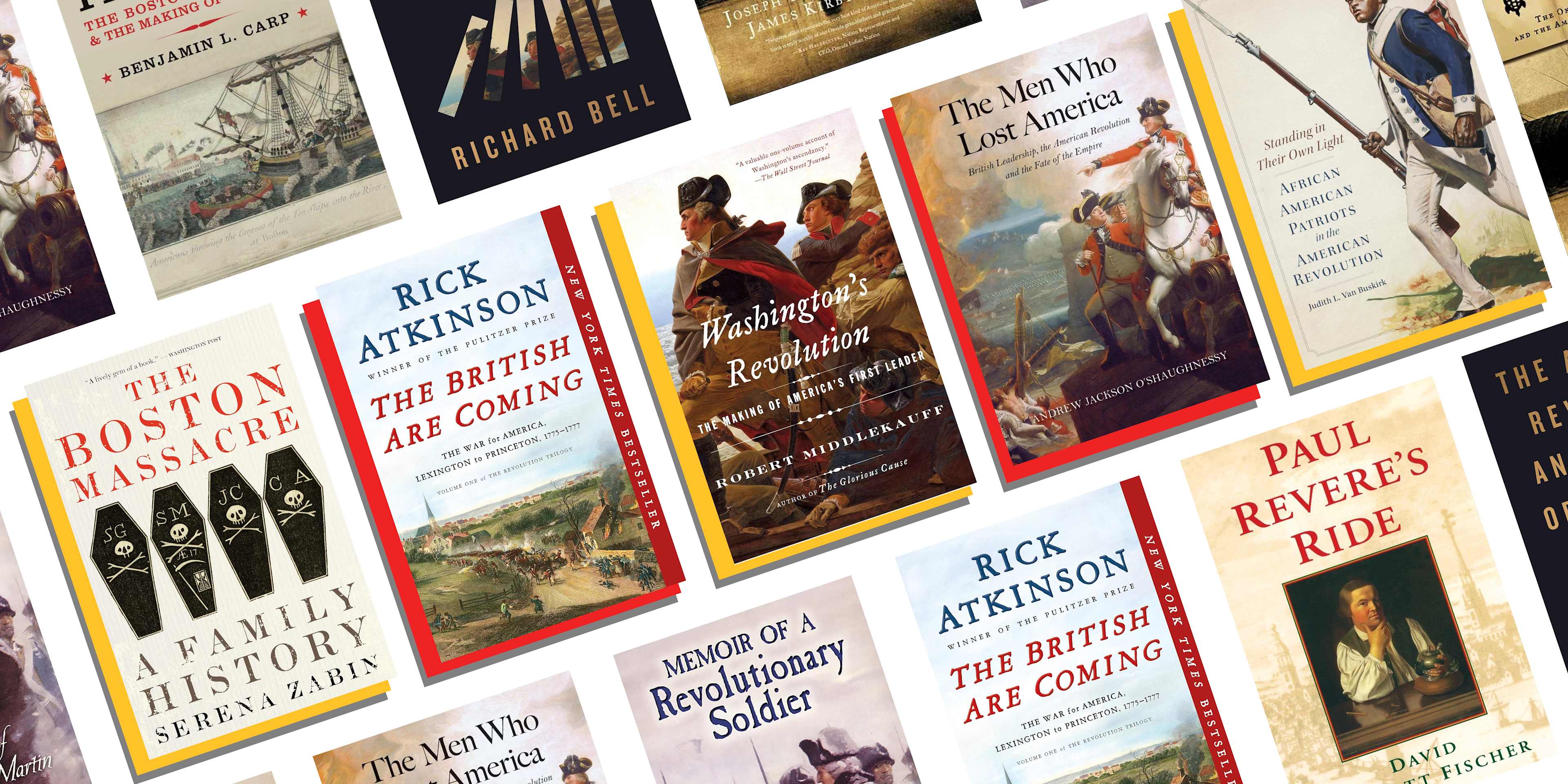
To truly understand the multifaceted realities of this war, historians recommend digging into these ten groundbreaking volumes. Each book approaches the revolution from a distinct angle, peeling back layers of national myth to reveal a deeply authentic and humanized history.
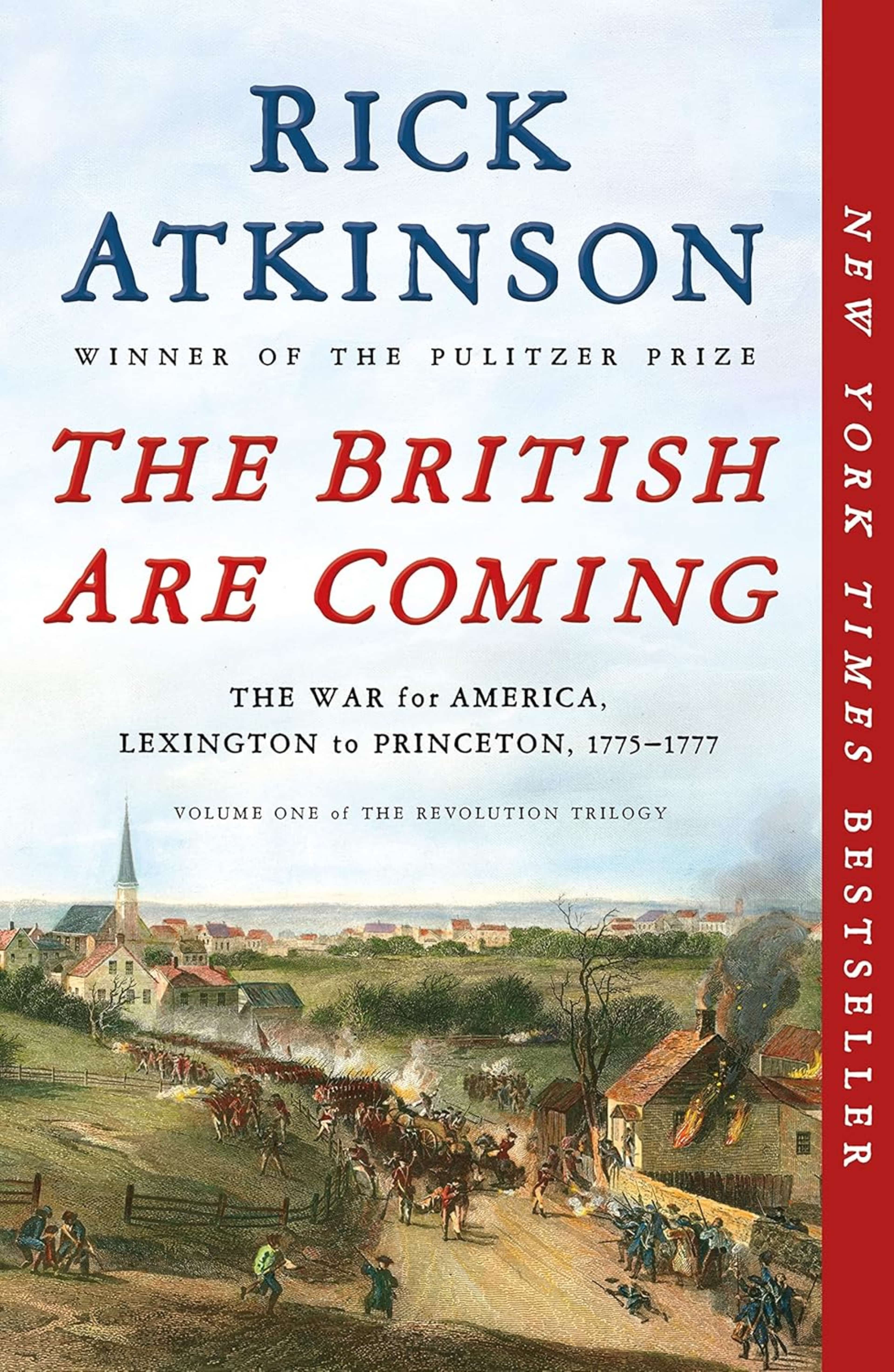
1. “The British Are Coming: The War for America, Lexington to Princeton, 1775-1777” by Rick Atkinson
Pulitzer Prize-winner Rick Atkinson begins his planned Revolution Trilogy with a masterful, deeply researched narrative of the war’s opening chapters. Atkinson places the reader on the front lines, juxtaposing George Washington’s desperate maneuvers with the grim experiences of ordinary British soldiers and Hessian mercenaries. The book is celebrated for its rich, evocative prose and its ability to capture the terrifying realities of 18th-century combat.
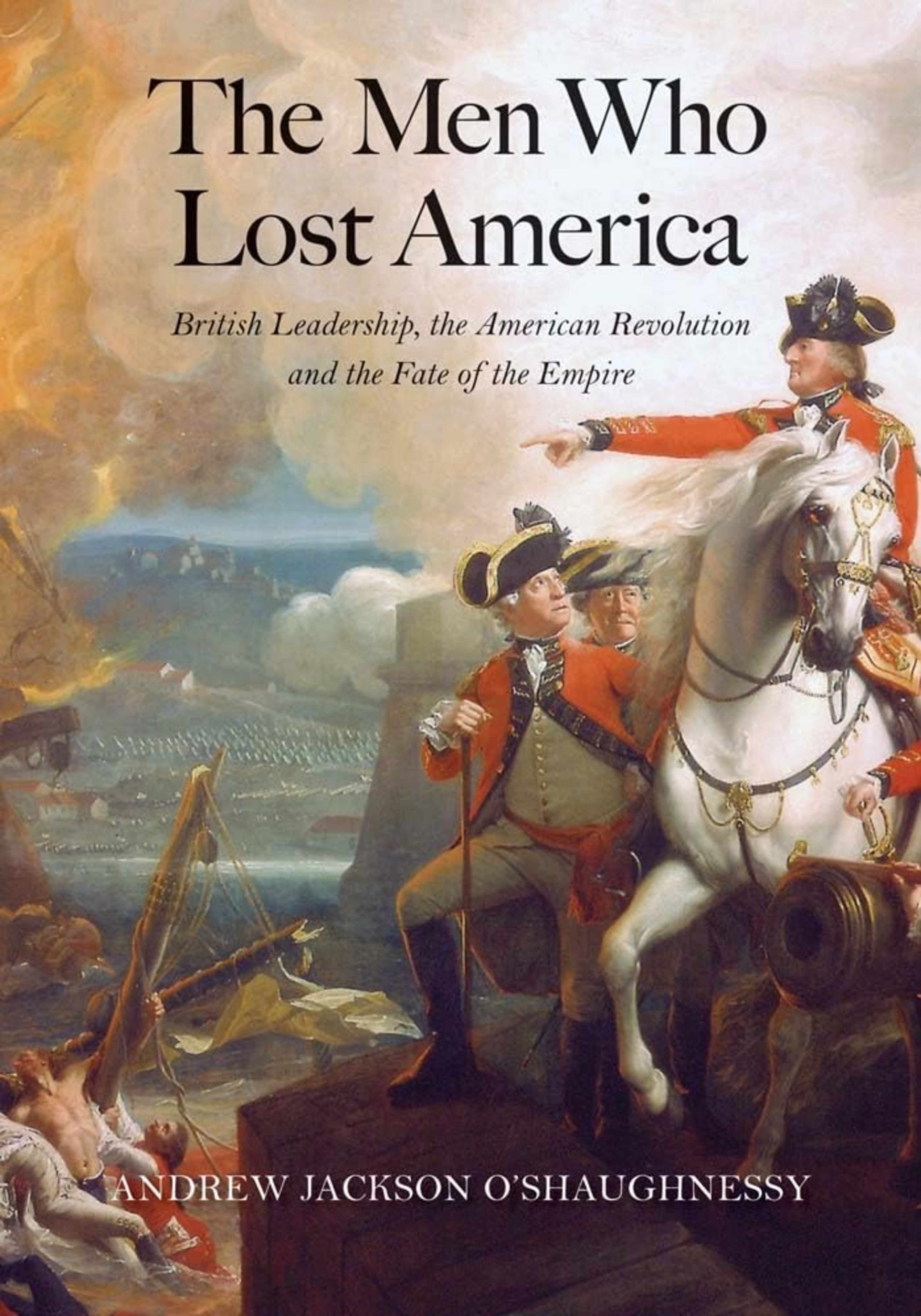
2. “The Men Who Lost America: British Leadership, the Revolutionary War, and the Fate of the Empire” by Andrew Jackson O’Shaughnessy
For centuries, British leadership during the revolution has been dismissed as incompetent and out of touch. History professor Andrew Jackson O’Shaughnessy dismantles these caricatures by offering a highly nuanced, sympathetic look at King George III, Lord North, and the generals who commanded the British war effort. O’Shaughnessy demonstrates that these men were highly capable leaders dealing with an impossible logistical nightmare: supplying an army across 3,000 miles of ocean against an elusive, decentralized foe.
3. “The Glorious Cause: The American Revolution, 1763-1789” by Robert Middlekauff
As a classic volume in the prestigious Oxford History of the United States, Robert Middlekauff’s work is the definitive single-volume narrative of the era. The book brilliantly tracks the transformation of local colonial militias into a cohesive national army. Middlekauff combines political, intellectual, and military history to showcase how George Washington successfully united a fractured coalition of colonies into a sovereign nation.
4. “Forgotten Allies: The Oneida Indians and the American Revolution” by Joseph T. Glatthaar and James Kirby Martin
The native peoples of North America were deeply entangled in the conflict, a fact that is often omitted from popular accounts. This book shines a light on the Oneida Indian Nation, who broke with the Iroquois Confederacy to support the Patriot cause. Despite their crucial contributions—including providing food to starving troops at Valley Forge—the Oneidas faced devastating consequences and the loss of their lands after the war, illustrating the tragic, unfulfilled promises of the revolution.
5. “A Narrative of a Revolutionary Soldier” by Joseph Plumb Martin
Originally published in 1830, this memoir is the most famous and vivid first-person account of an ordinary soldier in the Continental Army. Enlisting as a teenager, Joseph Plumb Martin served for eight long years. His honest, witty, and heartbreaking record details the daily misery of military life—punishing marches, freezing temperatures, and severe hunger—offering a stark contrast to the glorifying legends of the war.
6. “Defiance of the Patriots: The Boston Tea Party and the Making of America” by Benjamin L. Carp
Benjamin L. Carp provides a global perspective on one of the most famous acts of protest in history. He places the Boston Tea Party within an international network of trade, connecting Chinese tea fields, Caribbean sugar plantations, and British imperial policies. Carp also analyzes the psychological and cultural aspects of the protest, including why the participants disguised themselves as Native Americans, showing the event as a calculated but highly volatile demonstration of mob power.
7. “The Boston Massacre” by Serena Zabin
Serena Zabin’s intimate narrative reframes the Boston Massacre not as a sudden spark of violence, but as a tragic domestic dispute. Zabin reveals that in the eighteen months leading up to the shooting, over 2,000 British soldiers lived side-by-side with Bostonians. Soldiers married local women, rented rooms, and became active members of the community. This domestic closeness made the ultimate violence of March 5, 1770, both more understandable and far more shocking.
8. “Standing in Their Own Light: African American Patriots in the American Revolution” by Judith L. Van Buskirk
Drawing on thousands of veterans’ pension records, Judith L. Van Buskirk reconstructs the lives of the estimated 5,000 Black soldiers who fought in the Continental Army. The book exposes the deep paradox of the American Revolution: a fight for liberty waged by a nation that actively enslaved hundreds of thousands of people. Van Buskirk highlights how Black veterans used their military service to claim an American identity and push for their civil rights in the post-war era.
9. “The American Revolution and the Fate of the World” by Richard Bell
Historian Richard Bell shifts our focus from the local battlefields of North America to the global stage. Bell argues that the Revolutionary War was, in reality, a world war that pulled in France, Spain, the Netherlands, and participants across India, Africa, and the Caribbean. This sweeping account reveals how the conflict restructured penal systems, sparked famine, disrupted international trade, and created a massive global refugee crisis, forever altering the world order.
10. “Paul Revere’s Ride” by David Hackett Fischer
David Hackett Fischer strips away the legendary mythology of Henry Wadsworth Longfellow’s famous poem to deliver a historically precise and thrilling account of Paul Revere’s legendary midnight ride. Fischer paints Revere not as a solitary hero, but as a master organizer and working-class craftsman who was part of a highly sophisticated intelligence network of over sixty riders. The book also provides a remarkably fair and humanizing portrait of Thomas Gage, the last royal governor of Massachusetts.
Lesser-Known Facts of the Revolutionary Era
- A Neighborhood War: Long before the Boston Massacre became a symbol of British tyranny, British soldiers and Boston locals were intimately integrated. Dozens of marriages took place between soldiers and local women, meaning that when shots were fired, neighbors were literally shooting at their own in-laws.
- Extreme Survival Tactics: During the brutal winter campaigns, Continental soldiers faced such extreme starvation that some resorted to boiling and eating their own leather shoes and boots just to put something in their stomachs.
- The Oneida “Saviors”: The Oneida nation literally saved George Washington’s starving army at Valley Forge by carrying bushels of corn over hundreds of miles of frozen terrain to feed the troops. Without their intervention, the army might have dissolved entirely.
Why the American Revolution Still Matters Today
The American Revolution is not merely a collection of dusty dates and names; it is the living foundation of modern democratic governance. The core debate of the revolution—how to balance individual liberty with collective security, and how to ensure that government remains accountable to the people—remains the central conversation of American political life today. Furthermore, the contradictions of the revolution, particularly the unresolved conflict between the promise of “all men are created equal” and the reality of racial inequality, continue to drive civil rights struggles. By reading the best books on the American Revolution, we gain the necessary context to navigate our modern institutions and understand that the “experiment” of American democracy is an ongoing, unfinished project.
People Also Ask (FAQ)
Who won the American Revolution?
The American colonists, allied with France and Spain, won the American Revolution. The war officially concluded with the signing of the Treaty of Paris in 1783, which forced Great Britain to recognize the independence of the United States.
What were the main causes of the American Revolution?
The main causes included “taxation without representation” (such as the Stamp Act and Townshend Acts), the Coercive (Intolerable) Acts, military occupation of colonial cities like Boston, and a growing desire for self-governance and economic independence from British imperial control.
How many colonies rebelled against Great Britain?
Thirteen colonies rebelled: New Hampshire, Massachusetts, Rhode Island, Connecticut, New York, New Jersey, Pennsylvania, Delaware, Maryland, Virginia, North Carolina, South Carolina, and Georgia.
Why did France help the Americans?
France sought to weaken its global rival, Great Britain, and avenge its defeat in the Seven Years’ War. The American victory at the Battle of Saratoga in 1777 convinced French King Louis XVI that the colonists had a realistic chance of winning, leading to a formal military alliance.
Conclusion
The American Revolution was a monumental historical event that fundamentally reshaped the global landscape. By looking beyond the simple myths of heroic triumph, we discover a story of immense sacrifice, messy political struggles, and diverse human experiences. From the battle-tested leadership of George Washington to the overlooked contributions of Black patriots and Native American allies, the revolution was forged by many hands. Reading the best books on the American Revolution allows us to honor this complex history, offering us a clearer window into the past and a better map for navigating our shared democratic future.


