When the Founding Fathers declared independence in 1776, they faced the Herculean task of not only building a functional government but also designing an entirely new national identity from scratch. Desperate to sever their cultural ties with the British Empire, the early American revolutionaries searched for visual representations that could unify a diverse, fragmented population. They turned to the classical world of Greece and Rome, biblical narratives of liberation, and the wild, untamed flora and fauna of the North American continent. This search was a chaotic, creative, and highly experimental process, resulting in a rich array of emblems that captured the spirit of the era. However, as the young republic matured, many of these initial concepts were abandoned, replaced, or swept into the margins of history. These rejected symbols of Revolutionary America offer a unique window into the anxieties, contradictions, and ideals of a nation in its infancy.
The Visual Landscape of Early America: Historical Background
To understand why the Founding Fathers were so obsessed with iconography, one must understand the visual world of the late eighteenth century. The American colonists lived in a society saturated with royal emblems. From tavern signs adorned with the face of King George III to coins stamped with the royal “GR” (Georgius Rex) monogram, British authority was physically woven into the fabric of daily life. When the Revolution began, this shared visual culture had to be dismantled. Colonists engaged in a form of iconoclasm, tearing down statues of the King, shooting at royal tavern signs, and melting down lead monuments to cast musket balls.
But tearing down the old symbols was only half the battle; the new republic needed its own visual vocabulary. This was an era of intense symbolism where even the everyday objects of colonial America, from commemorative plates to pocket watches, carried deep political meaning. Sailors tattooed stars and the number “76” on their arms, while farmers painted hex signs on their barns. The symbols chosen to represent the United States would signal to European empires that this new nation was a legitimate, virtuous, and formidable power on the global stage.
Chronology of the Struggle for an American Iconography (1754–1782)
- 1754: Benjamin Franklin publishes the “Join, or Die” timber rattlesnake cartoon, establishing one of the earliest native American political symbols.
- 1775: The Continental Navy raises the Grand Union Flag, combining the British Union Jack with thirteen alternating red and white stripes.
- July 1776: The Continental Congress appoints Thomas Jefferson, Benjamin Franklin, and John Adams to a committee to design the Great Seal of the United States.
- June 1777: Congress passes the Flag Resolution, officially replacing the Union Jack on the national flag with a “new constellation” of thirteen stars.
- 1782: After three separate committees fail to deliver a satisfying design, Secretary of Congress Charles Thomson steps in to create the final Great Seal, placing the American bald eagle at its center.
5 Lost and Rejected Symbols of Revolutionary America
1. The Chain of States: Unity and Its Ironies
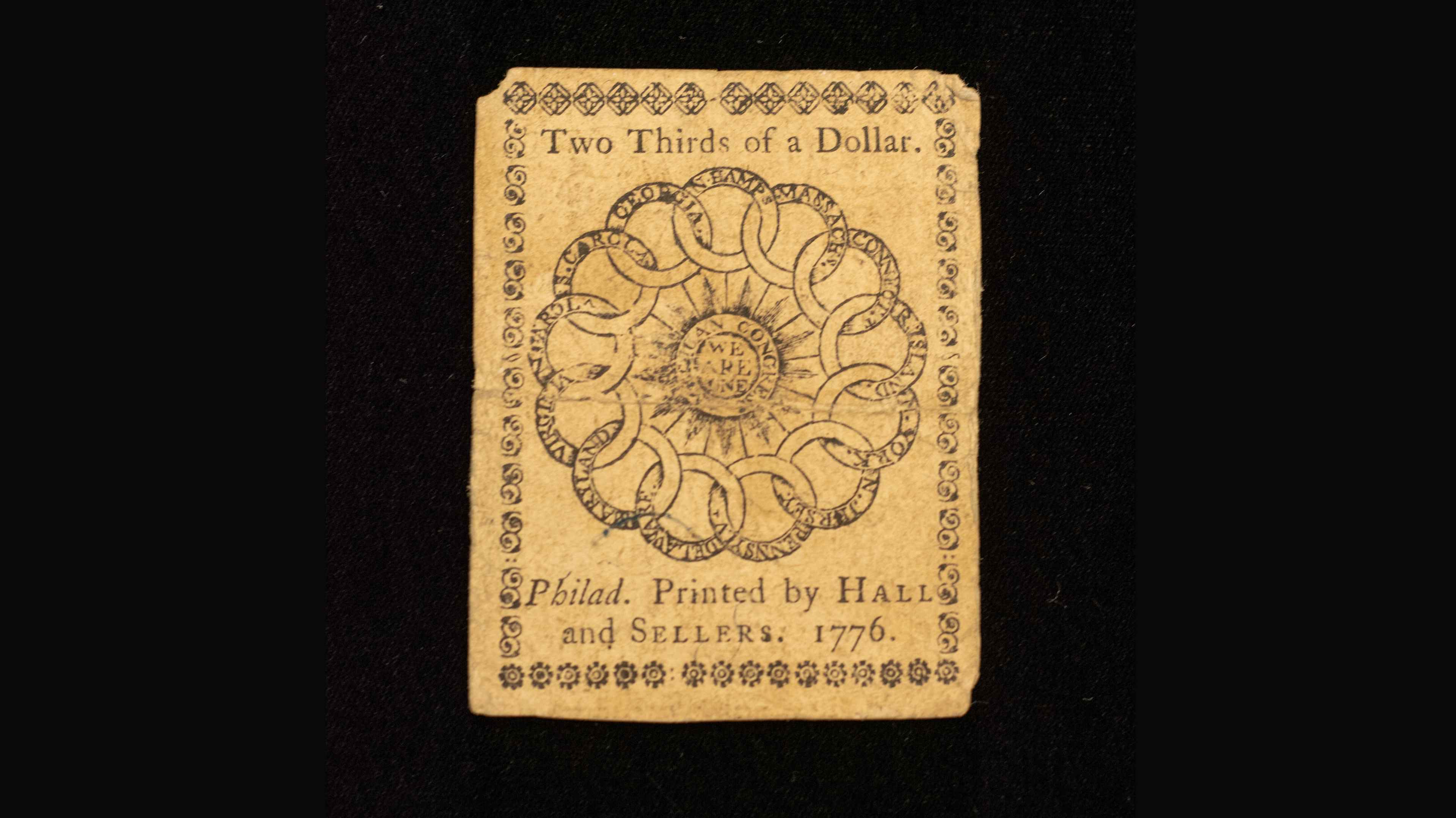
One of the earliest attempts to visualize the union of the colonies was the Chain of States. This symbol consisted of an interlocking circle of thirteen rings, with each link bearing the name of one of the colonies. It was a brilliant representation of the motto E Pluribus Unum (“Out of Many, One”), showcasing that the strength of the union relied on the unbroken connection of its parts. The Chain of States appeared on early paper currency designed by Benjamin Franklin and on pewter commemorative plates.
However, as the nation began to expand, the symbol became highly impractical. Adding new links for every new state admitted to the Union would make the design cluttered and cumbersome. Yet, there was a far more profound, ideological reason for its retirement. Newspaper editorialists and foreign observers quickly pointed out the glaring, tragic hypocrisy of a self-proclaimed “land of the free” using a chain as its national emblem while holding hundreds of thousands of African Americans in chattel slavery. The symbol of the chain, meant to represent unity, carried too dark a connotation of bondage and was quietly phased out.
2. New England’s Pine Trees and Liberty Poles
Long before the war broke out, the towering white pines of New England were highly prized. Under British colonial rule, the finest and tallest of these trees were claimed by the King’s Broad Arrow policy to serve as masts for the Royal Navy. Because of this, the pine tree became a potent symbol of American natural abundance and, eventually, colonial resistance. The famous “Appeal to Heaven” flag, commissioned by George Washington for his naval cruisers in 1775, featured a simple, tall pine tree on a white field.
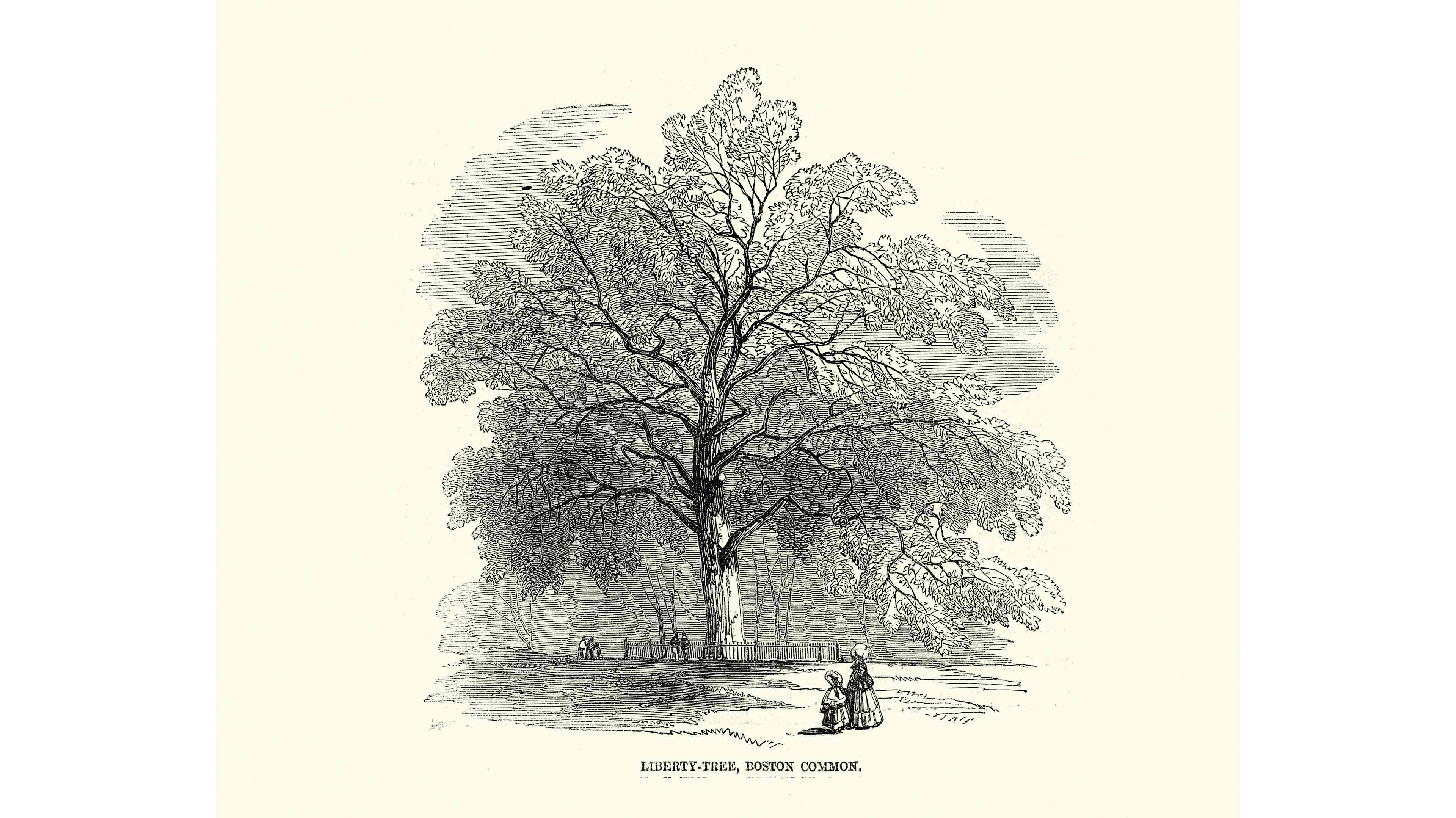
In urban areas where massive protests were held, colonists gathered around designated “Liberty Trees.” When the British forces cut these trees down in acts of defiance, the colonists erected “Liberty Poles”—long ship masts crowned with liberty caps—in their place. These poles served as early rallying points for civil protest. While pine trees and liberty poles dominated early revolutionary currency and flags, they fell out of favor by the early 1800s. As constitutional systems matured, the physical tools of colonial protest were replaced by formal civic participation, such as voting and signing petitions, causing the liberty pole to fade into historical memory.
3. The Rattlesnake and the Buck’s Tail
While the bald eagle eventually became the supreme avian mascot of the United States, early Americans frequently looked to ground-dwelling fauna to represent their character. Chief among these was the timber rattlesnake, a creature unique to North America. Unlike the European lion, the rattlesnake did not attack unless provoked, but once aroused, its bite was deadly. This imagery was popularized by the Gadsden Flag, featuring the warning “Don’t Tread on Me.”
Similarly, localized militias sought to showcase their connection to the American wilderness. The Pennsylvania Associators, for instance, adorned their caps with buck’s tails. Fighting alongside Native American allies, these soldiers used the deer tail to signify that they were “true-born sons of the woods.” However, choosing a serpent—a creature deeply associated with the devil and temptation in the Judeo-Christian tradition—presented a major public relations challenge for a deeply religious nation. As the country sought to project a highly civilized, classical image to European allies, the serpent and the buck’s tail yielded to the soaring, majestic bald eagle.
4. Moses Parting the Red Sea and Hercules
In 1776, the heavyweights of the American Enlightenment—Thomas Jefferson, Benjamin Franklin, and John Adams—were tasked with designing the Great Seal. Their proposals reflected their personal philosophies and the cultural currents of the time. Franklin proposed a dramatic biblical scene: Moses standing on the shore, extending his wand to divide the Red Sea, while Pharaoh’s chariots are overwhelmed by the waves. The motto he chose was “Rebellion to Tyrants is Obedience to God.” Jefferson favored a similar biblical theme, proposing an image of the children of Israel led through the wilderness by a cloud by day and a pillar of fire by night.
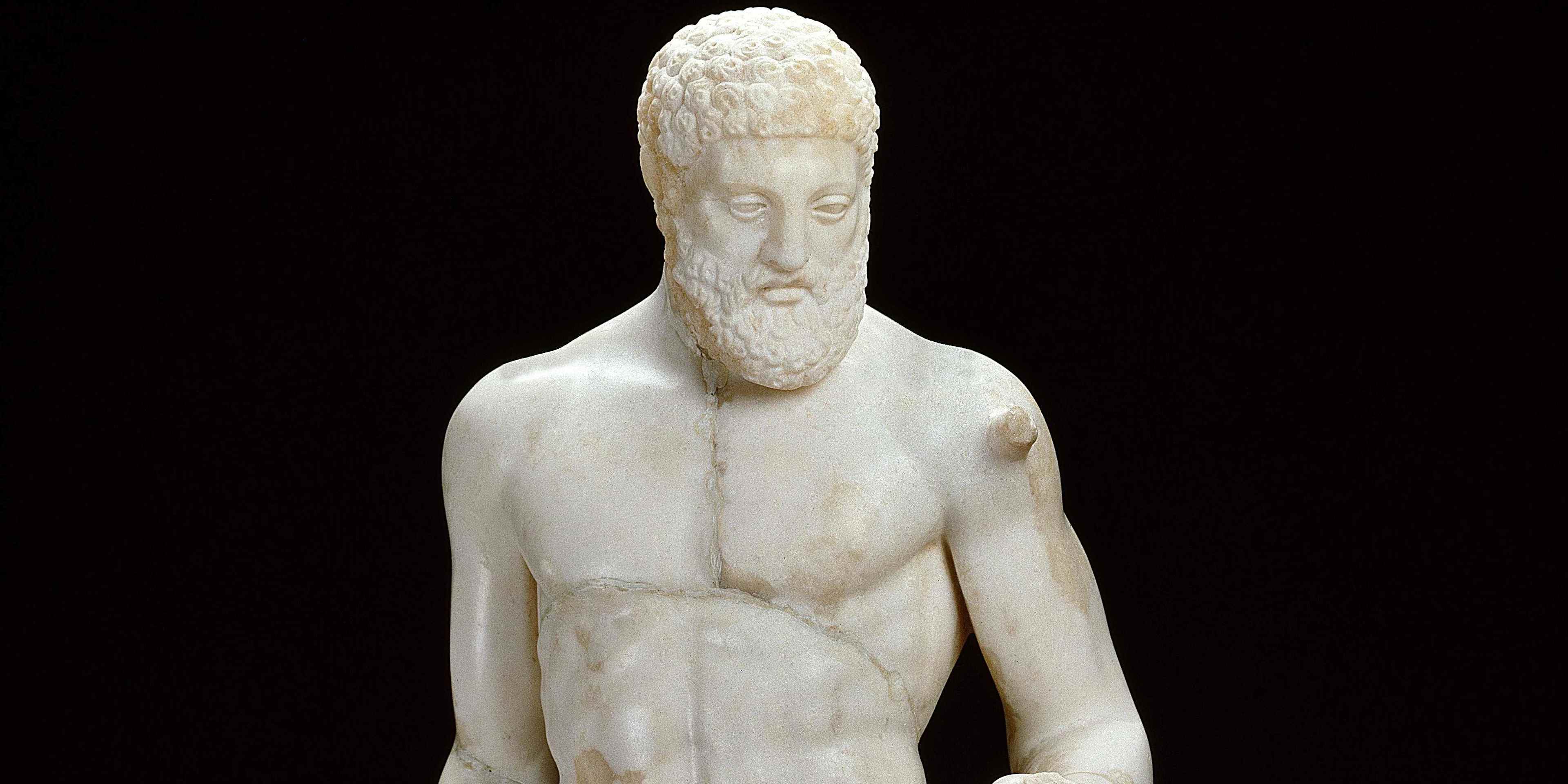
John Adams, conversely, looked to classical antiquity, proposing “The Choice of Hercules.” In Adams’ vision, the Greek hero stood at a crossroads, choosing the rugged, steep path of Virtue and duty over the easy, flowered path of Sloth and pleasure. These designs were ultimately rejected by Congress for being overly complex, cluttered, and difficult to engrave. However, the debate revealed how the Founders used the Bible and classical mythology as universal reference points to communicate their political struggles to a highly literate public.
5. The Grand Union Flag (The Continental Colors)
The first official flag of the united colonies was not the Stars and Stripes, but the Grand Union Flag. Raised by George Washington’s forces at Prospect Hill in 1776, this flag featured thirteen red and white stripes representing the original thirteen colonies map boundaries. Crucially, however, it still featured the British Union Jack in the canton (the upper left corner).
This hybrid flag captured a delicate historical moment. Before the Declaration of Independence was signed, many colonists did not see themselves as fighting to establish a completely separate nation. Instead, they believed they were British subjects fighting to defend their constitutional rights against a corrupt Parliament. This complex Anglo identity was baked into the very fabric of early American iconography. To explore how these initial communities were organized, one can look at the 13 facts about the 13 colonies that define this transitional era. Once independence was declared, keeping the Union Jack on the flag became politically untenable, leading to the creation of the Stars and Stripes in 1777.
Turning Points: How the Eagle Surpassed the Rest
The turning point for American national symbolism occurred in 1782. After six years of delays and rejected committee drafts, the Secretary of the Continental Congress, Charles Thomson, took matters into his own hands. Thomson synthesized elements from the previous designs, including the olive branch, arrows, and the pyramid. However, his most significant intervention was replacing the small, generic eagle used in earlier drafts with the native American bald eagle. Thomson placed the eagle at the center of the Great Seal, grasping an olive branch (representing peace) in its right talon and thirteen arrows (representing war) in its left. This bold, clean, and easily reproducible emblem instantly became the definitive symbol of the rising nation.
Long-Term Impact on American Culture and Identity
The rejection and evolution of these symbols reflect the deep-seated ideological debates that have shaped American history. By choosing the bald eagle and classical imagery over the biblical scenes of Moses or the radical protest symbols of liberty trees, the early United States signalized its desire to be viewed as a stable, orderly republic rather than a nation of perpetual revolution. The abandonment of the Chain of States also highlighted the early republic’s struggle to reconcile its high-minded ideals of liberty with the harsh, devastating reality of slavery.
Lesser-Known Historical Anecdotes
- The Royal Statue Meltdown: On July 9, 1776, after the Declaration of Independence was read to Washington’s troops in New York, a crowd of soldiers and citizens tore down a massive gilded lead equestrian statue of King George III. The lead was shipped to Litchfield, Connecticut, where patriotic women melted it down to manufacture 42,088 musket balls to use against the British army.
- Tattooed Patriots: During the war, American sailors frequently tattooed stars, anchors, and patriotic slogans on their skin. This was done not just for personal expression, but as a practical measure; if captured by the British, these tattoos could serve as proof of their American identity, preventing them from being forcefully impressed into the Royal Navy.
Why It Still Matters Today
The debates surrounding early American symbols are not merely historical trivia; they remain highly relevant in contemporary society. Modern discussions about the removal of monuments, the redesign of state flags, and the political reclamation of historical symbols like the Gadsden Flag or the “Appeal to Heaven” pine tree flag show that the battle over American identity is ongoing. Just as the Founding Fathers struggled to design symbols that truly represented their values, modern Americans continue to debate what visual icons best reflect the diverse, evolving character of the United States.
People Also Ask (FAQ)
Why did Benjamin Franklin prefer the turkey over the bald eagle?
While the popular story suggests Benjamin Franklin wanted the turkey to be the national bird, this is a slight exaggeration. Franklin did not officially propose the turkey to Congress. However, in a private letter to his daughter, he criticized the bald eagle as a “bird of bad moral character” because it steals food from other birds. In contrast, he praised the turkey as a “much more respectable bird” and a “true original Native of America.”
What does the Gadsden Flag represent?
The Gadsden Flag, featuring a coiled rattlesnake and the words “Don’t Tread on Me,” was designed by Christopher Gadsden in 1775. It represented the colonies’ warning to Great Britain that they would defend their liberties aggressively if provoked. In modern times, the flag has been adopted by various political movements to symbolize individual liberty and government skepticism.
What was the purpose of Liberty Trees?
Liberty Trees were active gathering places for colonists to protest British colonial policies. Since early American cities lacked large public meeting halls, these massive trees became natural, open-air assembly spaces where patriots could share news, organize boycotts, and hang effigies of British tax collectors.
Conclusion: The Ever-Evolving American Brand
The symbols of a nation are never static; they are living representations of its history, struggles, and aspirations. The journey from the raw, radical imagery of rattlesnakes, liberty poles, and chains to the polished, classical majesty of the Great Seal reflects a young country trying to find its footing on the world stage. By studying these lost and rejected symbols of Revolutionary America, we gain a deeper appreciation for the creative, complex, and often contradictory process of inventing the United States.


