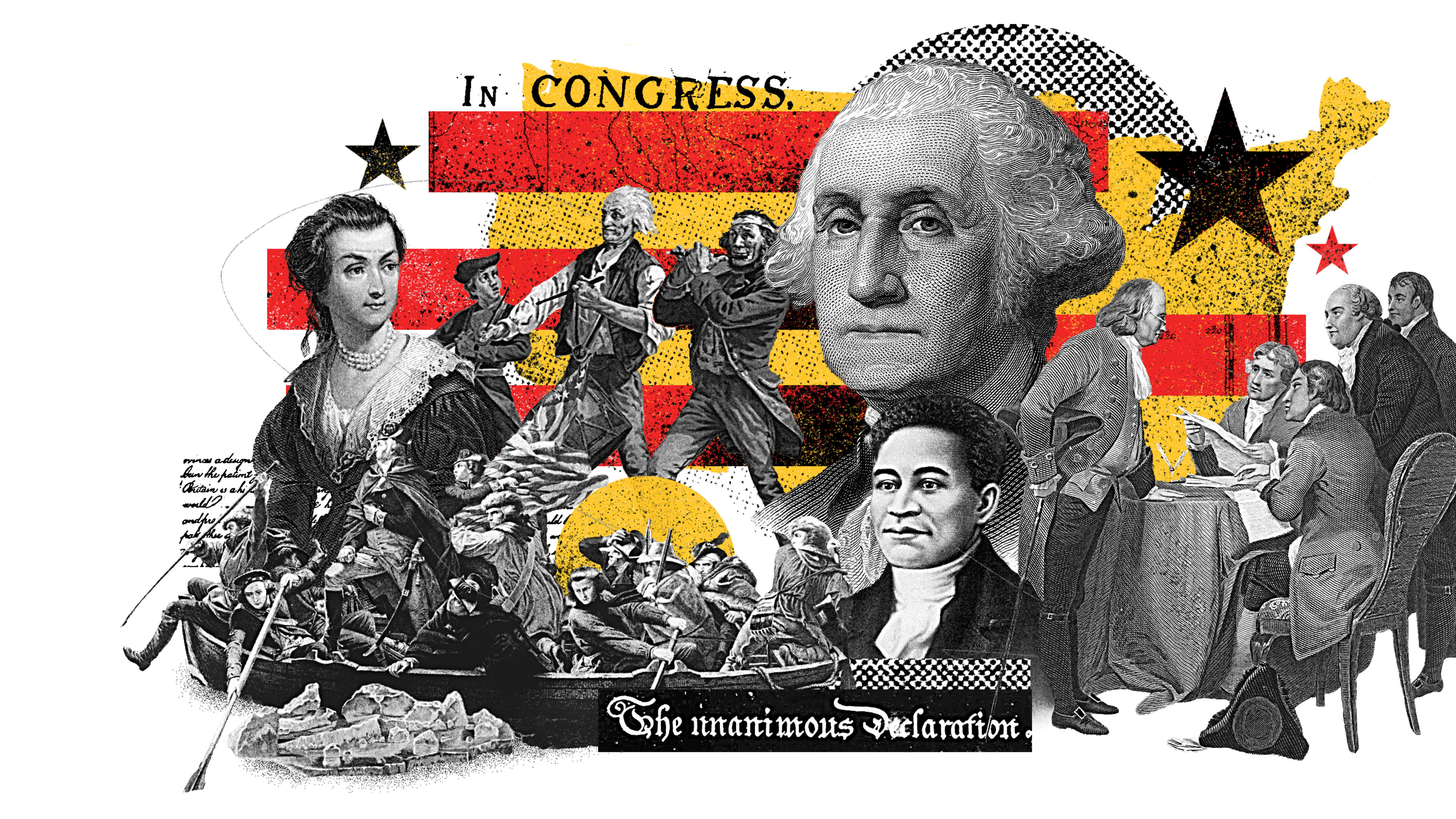
The Battle of Long Island, fought on August 27, 1776, stands as one of the most dramatic, harrowing, and strategically pivotal chapters of the American Revolutionary War. Also known as the Battle of Brooklyn, this massive clash was the very first major engagement to occur after the Continental Congress boldly signed the Declaration of Independence. Facing the overwhelming military might of the British Empire, General George Washington and his newly formed Continental Army were pushed to the absolute brink of annihilation. What followed was a masterclass in tactical retreat, survival against impossible odds, and a testament to the resilient spirit that would ultimately define the American quest for self-governance. Understanding this battle is essential to grasping how the revolutionary spark was kept alive when all hope seemed lost.
Historical Background: A Nation on the Brink
In the summer of 1776, the revolutionary fervor in America was at an all-time high, but the military reality was incredibly grim. Following the humiliating British evacuation of Boston in March 1776, General George Washington correctly anticipated that the British would seek a decisive, crushing blow against the 13 colonies. New York City, with its strategic harbor and access to the Hudson River, was the obvious target. If the British could seize control of New York, they could effectively split the colonies in half, isolating New England—the hotbed of rebellion—from the southern states.
By July, a massive British armada began assembling in New York Harbor, landing troops on Staten Island. This force, commanded by General William Howe and his brother, Admiral Lord Richard Howe, was the largest expeditionary force Great Britain had ever sent abroad, consisting of over 32,000 professional soldiers, including highly disciplined Hessian mercenaries. In contrast, Washington’s forces numbered fewer than 20,000 poorly trained, ill-equipped volunteers, many of whom were suffering from disease and lacked basic military discipline.
The Strategic Pivot: Key Timeline of the Brooklyn Campaign
To understand the progression of this massive conflict, it is helpful to look at the chronological sequence of events that unfolded in late August of 1776:
- August 22, 1776: The British stage a massive landing at Gravesend Bay in southern Long Island, quickly deploying over 15,000 troops. Washington, unsure if this is a diversion, splits his forces between Manhattan and the fortified Brooklyn Heights.
- August 26, 1776: British General Henry Clinton discovers an unguarded mountain pass—the Jamaica Pass—far to the east of the American defensive line, setting the stage for a devastating flanking maneuver.
- August 27, 1776 (The Battle): The British launch a coordinated, multi-pronged attack. While a diversionary force engages the American right wing, Howe’s main force sweeps through the Jamaica Pass, completely catching the Americans by surprise and routing their defenses.
- August 28, 1776: The battered remains of the Continental Army retreat to the fortified lines at Brooklyn Heights, with their backs to the East River. Howe halts his advance, opting to lay siege rather than launch a direct assault.
- August 29-30, 1776 (The Escape): Under cover of a sudden, torrential rainstorm and a miraculously thick fog, Washington orchestrates a silent night evacuation across the East River to Manhattan, successfully saving his entire army.
Key Historical Figures and Their Roles
The Battle of Long Island brought face-to-face some of the most prominent military minds of the 18th century, each playing a critical role in the outcome of the campaign:
General George Washington
Though Washington made significant tactical errors—most notably failing to properly scout and secure the Jamaica Pass—his leadership during the retreat showed unmatched ingenuity. Recognizing that the survival of the revolution depended on the preservation of the army rather than the defense of a specific piece of land, Washington remained on the field until the very last soldier was evacuated.
General William Howe
As the commander-in-chief of the British land forces, Howe executed a brilliant flanking strategy that utterly dismantled the American defenses. However, remembering the staggering British casualties suffered at the Battle of Bunker Hill, Howe chose caution over aggression at Brooklyn Heights, a decision that allowed the Continental Army to slip through his fingers.
Major General Israel Putnam and General John Sullivan
Tasked with defending the outer ridges of Brooklyn, these American officers failed to adequately coordinate their defenses. Sullivan was captured during the battle, while Putnam was forced to command a chaotic, desperate retreat toward the inner fortifications.
Lord Stirling (William Alexander)
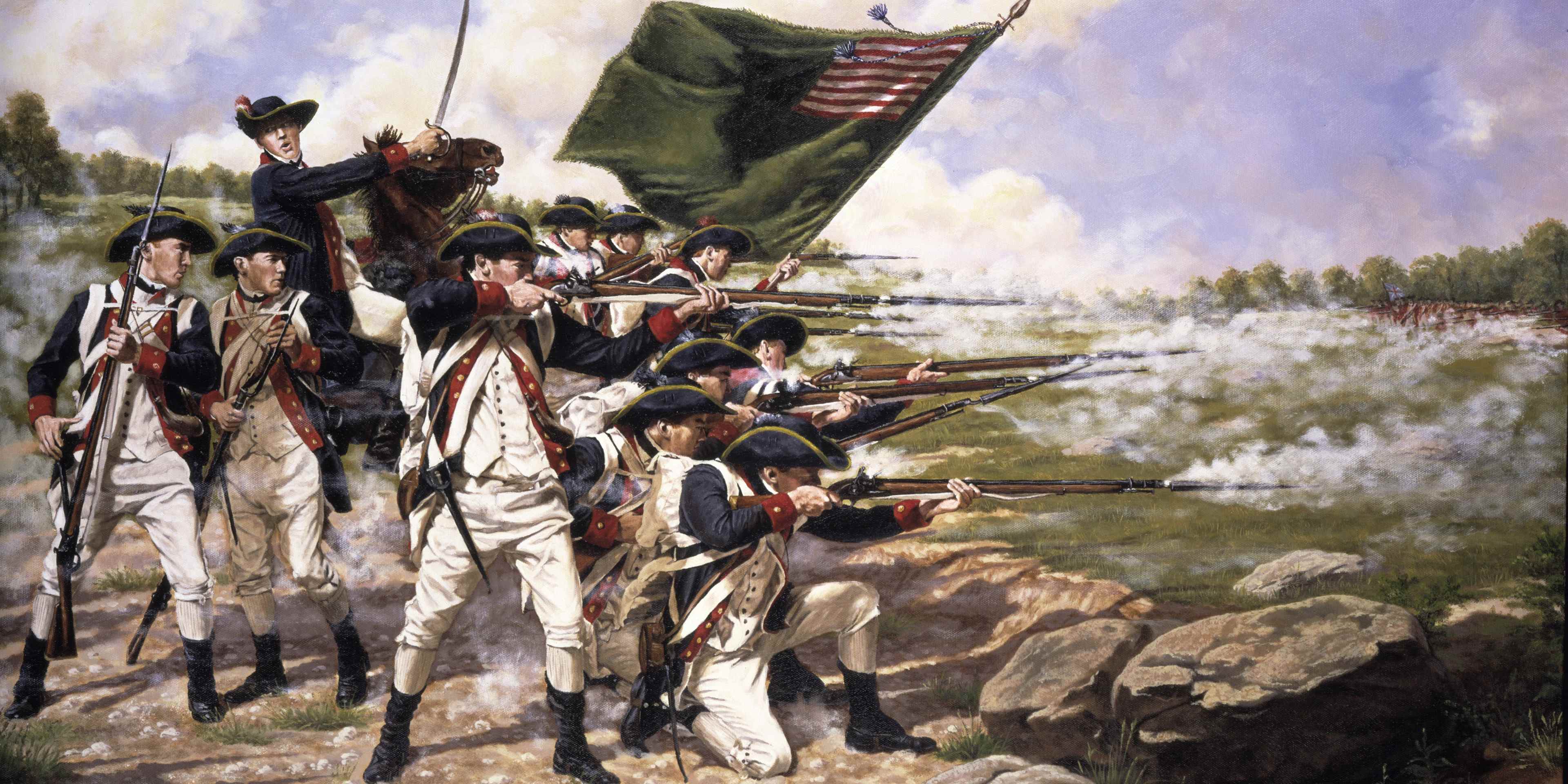
An American brigadier general who claimed a Scottish earldom, Stirling led a heroic rear-guard action with the Maryland Brigade. His self-sacrificing stand against overwhelming British forces bought critical time for hundreds of fleeing Continental soldiers to escape to safety.
Turning Points: Jamaica Pass and the Stand of the Maryland 400
Two distinct turning points defined the course of this historical clash. The first was the catastrophic failure of the American scouts to monitor the Jamaica Pass. Washington’s commanders had focused almost entirely on the three main roads cutting through the Guan Heights, leaving the easternmost pass guarded by only five mounted militia officers. When Clinton’s flanking column captured these officers without a shot being fired, the path was cleared for the British to slip behind the American lines, sealing the fate of the outer defenses.
The second turning point was a display of sheer, unyielding bravery. As the American lines collapsed, Lord Stirling took command of approximately 400 soldiers from the 1st Maryland Regiment. Outnumbered ten to one, Stirling and his men launched repeated, desperate charges against the British forces stationed at the Cortelyou House (now known as the Old Stone House). While nearly 250 of these brave Marylanders were killed or captured, their sacrifice allowed the majority of the retreating American army to reach the safety of the Brooklyn Heights fortifications. Watching from a nearby redoubt, a devastated Washington reportedly exclaimed, “Good God, what brave fellows I must this day lose!”
Long-Term Impact on America and the Revolutionary War
The immediate aftermath of the Battle of Long Island was a crushing blow. The British successfully seized control of New York City, turning it into their primary military stronghold and naval base for the remainder of the war. For the citizens residing in the original states, the defeat was a sobering reminder of the immense challenges they faced. However, the long-term strategic consequences actually favored the American cause in several profound ways:
- The Strategy of Attrition: Washington realized he could not defeat the professional British Army in traditional, set-piece European battles. He shifted his approach to a “Fabian strategy”—focusing on quick skirmishes, retreats, and wearing down the enemy’s will to fight over time.
- Espionage and Intelligence: The stinging defeat prompted Washington to revolutionize his intelligence networks, eventually leading to the creation of the famous Culper Spy Ring, which successfully operated out of British-occupied New York.
- Army Survival: Because the Continental Army survived to fight another day, the British victory remained incomplete. The revolution lived on, setting the stage for future American victories at Trenton, Princeton, and eventually Yorktown.
Lesser-Known Facts and Historical Anecdotes
Beyond the troop movements and casualty numbers, the Battle of Long Island is rich with fascinating, lesser-known stories that highlight the human element of the conflict:
A Miraculous Fog: The successful evacuation of 9,000 soldiers on the night of August 29-30 is often described by historians as a near-miracle. Just as dawn was breaking, threatening to reveal the American retreat to the British fleet, a dense, unseasonable fog rolled in over the East River. This heavy mist completely concealed the final stages of the evacuation, allowing the last boats—including the one carrying George Washington—to cross unseen.
The Marblehead Mariners: The evacuation was made possible by the incredible efforts of Colonel John Glover’s 14th Continental Regiment. Composed of skilled sailors, fishermen, and mariners from Marblehead, Massachusetts, these men rowed continuously for nine hours in intense wind and rain, transporting thousands of troops, horses, and heavy artillery pieces across the treacherous currents of the East River without losing a single life. For more context on the early struggles of these early American settlements and colonial assemblies, exploring 13 colonies facts provides an excellent overview of the regional differences that shaped these soldiers.

Why the Battle of Long Island Matters Today
The legacy of the Battle of Long Island extends far beyond the borders of modern-day Brooklyn. It serves as an enduring lesson in resilience, strategic adaptation, and the importance of leadership under immense pressure. In modern military strategy and corporate leadership, the battle is studied as a classic example of how a well-executed tactical retreat can prevent total failure and lay the groundwork for long-term victory. Furthermore, monuments scattered across Brooklyn, such as the Prison Ship Martyrs’ Monument and the Old Stone House, serve as quiet reminders of the sacrifices made by ordinary citizens who fought to establish the democratic institutions we enjoy today.
People Also Ask (FAQ)
Who officially won the Battle of Long Island?
The British Army, under the command of General William Howe, won a decisive tactical victory. They successfully routed the Continental Army, captured key American officers, and seized control of strategically vital New York territory.
Why did George Washington lose the Battle of Long Island?
Washington’s defeat was primarily due to a lack of military intelligence, poor scouting of the Jamaica Pass, and the superior training and numerical advantage of the British forces. However, his decision to retreat saved his army from total surrender.
How many casualties were suffered during the battle?
The Continental Army suffered heavily, with estimates of 300 to 1,000 killed or wounded, and over 1,000 captured. The British and Hessian forces suffered significantly fewer casualties, with approximately 350 killed or wounded.
Conclusion: Out of Defeat, a Resilient Nation
In the grand tapestry of American history, the Battle of Long Island stands as a stark reminder that the birth of the United States was far from inevitable. It was a moment of profound crisis, where a single misstep or a shift in the wind could have ended the American experiment before it truly began. Yet, through the bravery of the Maryland 400, the skill of the Marblehead mariners, and the resolute leadership of George Washington, the Continental Army survived its darkest hour. This legendary struggle proved that while the Americans could be defeated on the battlefield, their resolve to secure liberty could never be conquered.


