Throughout human history, our desire to communicate with the future has driven us to create extraordinary vaults of memory. These intentional archives, known as time capsules, are far more than just metal boxes buried in the dirt; they are profound, tangible bridges connecting different generations across the chasm of centuries. From the revolutionary fervor of early America to the technological anxieties of the mid-20th century, time capsules encapsulate the values, dreams, fears, and daily realities of their creators. They offer historians a rare, unvarnished glimpse of a specific moment in time, frozen in amber. By examining these fascinating deposits of culture, we can understand not only how our ancestors lived, but how they wished to be remembered by their descendants. In the broader tapestry of American and global history, these capsules serve as crucial touchstones, reminding us of the enduring human urge to leave a lasting footprint on the sands of time.
The Deep Origins and Historical Evolution of Time Capsules
While the modern term “time capsule” was not coined until the late 1930s, the human impulse to preserve artifacts for future generations is ancient. For millennia, civilizations have placed foundation deposits beneath temples, palaces, and public monuments. In ancient Mesopotamia, kings buried clay tablets detailing their reigns inside the walls of cities, hoping that future rulers would discover them and remember their greatness. In the context of American history, this practice evolved from ancient royal traditions into a highly democratic civic ritual. During the founding era of the original thirteen colonies, early leaders utilized cornerstones to secure historical continuity, transforming physical architecture into a vehicle for political legacy.
The Sociopolitical Context of Preservation
As the United States transitioned from a cluster of colonies to an independent republic, the act of burying historical documents and relics became a deliberate statement of political stability. Early Americans were deeply aware that they were participating in a grand democratic experiment. By placing physical records inside the foundations of their newly constructed legislative buildings, they sought to project their newly won liberty into an indefinite future. This was not merely about storage; it was a performance of cultural confidence, proving to themselves and to posterity that the institutions they built were meant to endure.
A Chronological Timeline of Landmark Time Capsules
To understand the sheer scope of these preservation projects, it is helpful to look at how they evolved chronologically from the founding of the United States to the globalized modern era:
- 1795: Revolutionary leaders Samuel Adams and Paul Revere place a brass time capsule in the cornerstone of the Massachusetts State House in Boston.
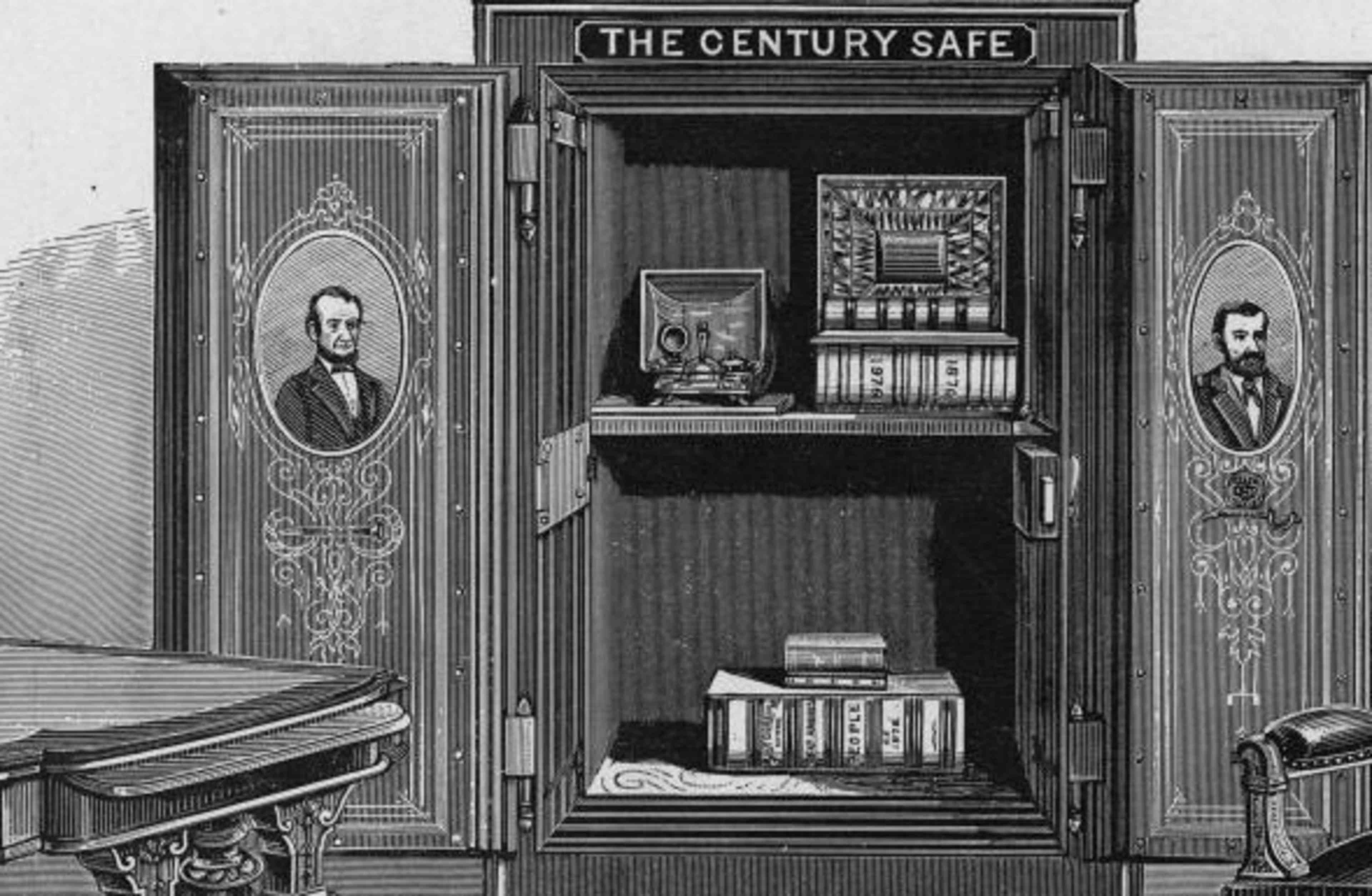
- 1876: New York publisher Anna Deihm assembles the “Century Safe” at the U.S. Centennial Exposition in Philadelphia, marking the first planned 100-year capsule.
- 1901: Mayor William C. Maybury seals the “Century Box” copper capsule at Detroit’s Old City Hall, scheduled for a 100-year opening.
- 1937–1940: Dr. Thornwell Jacobs designs and seals the monumental “Crypt of Civilization” at Oglethorpe University in Georgia, slated to open in 8113 A.D.
- 1938–1939: Westinghouse Electric buries its famous torpedo-shaped cylinder at the New York World’s Fair, coining the term “time capsule” and setting an opening date for 6939 A.D.
- 1970: Japanese electronics giant Panasonic constructs the Expo ’70 capsule in Osaka, filled with 2,098 cultural items and scheduled for a 5,000-year journey.
- 1994: Juneau, Alaska, installs a room-sized time capsule with a glass viewing window in its Federal Building, scheduled to be opened on New Year’s Eve in 2094.
- 2014: Artist Katie Paterson launches the “Future Library” in Oslo, Norway, a literary time capsule that will collect one manuscript annually for a century before publication in 2114.
Key Figures Who Shaped the Legacy of Time Capsules
The history of time capsules is populated by visionary, eccentric, and deeply committed individuals who recognized the value of historical memory. Their contributions have left a permanent mark on how we study the past today.
Samuel Adams and Paul Revere
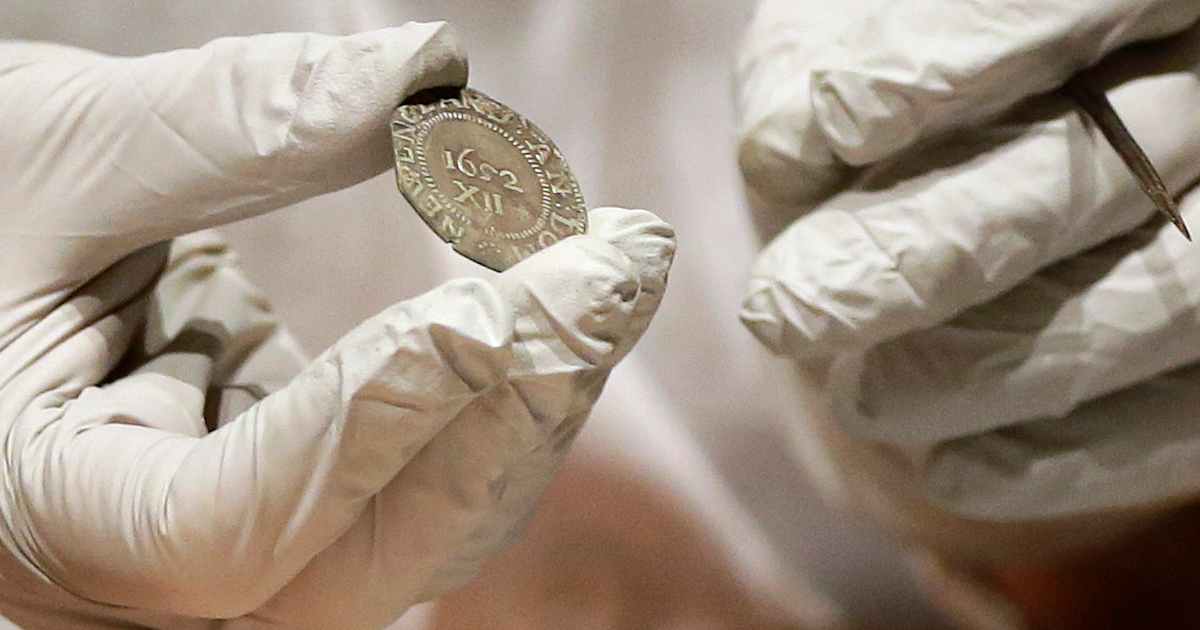
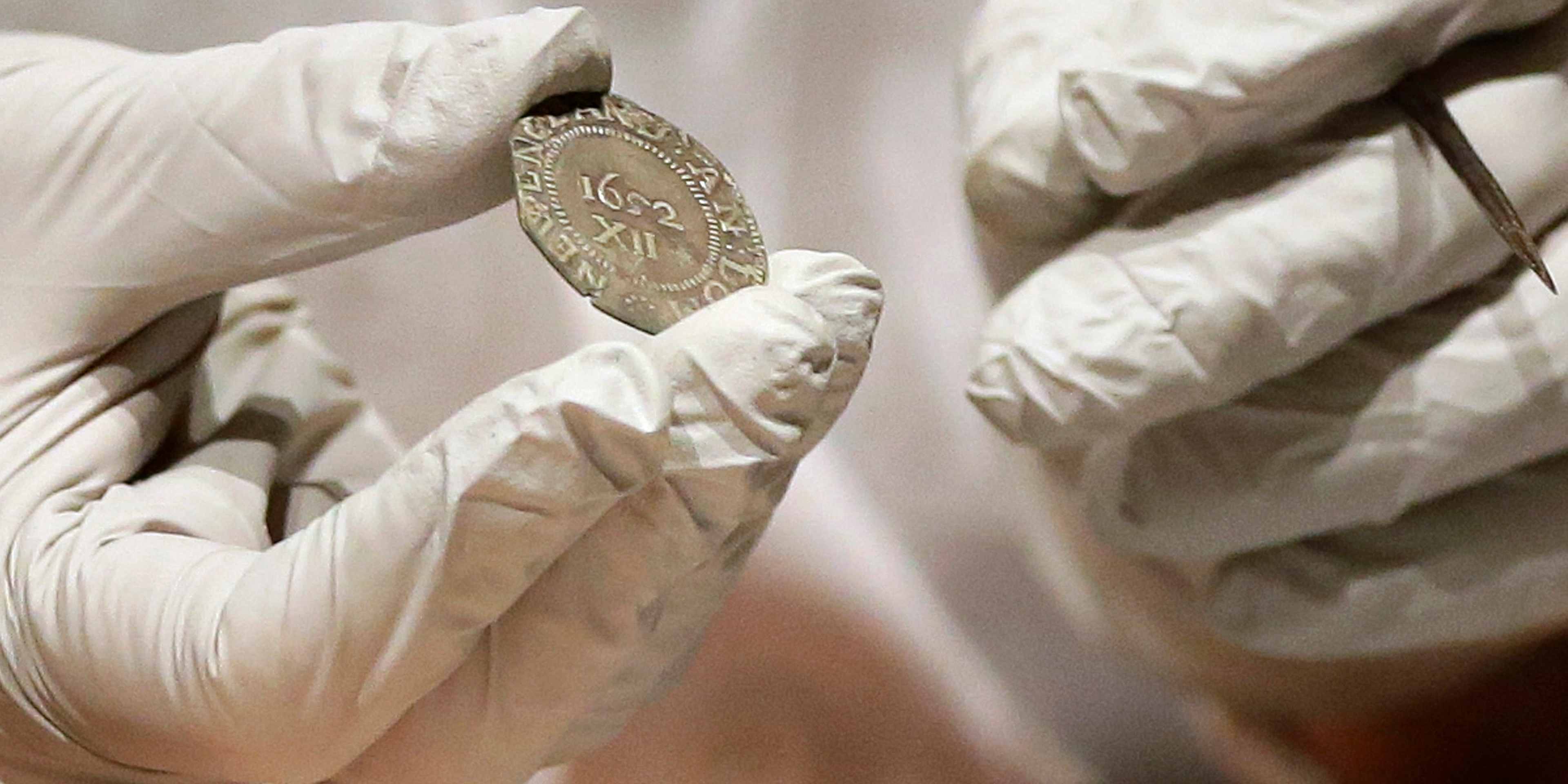
In 1795, Massachusetts Governor Samuel Adams and famed silversmith Paul Revere collaborated to lay the cornerstone of the Massachusetts State House. Inside, they deposited a brass container filled with newspapers, commonwealth records, and coins dating back to the 1600s. Crucially, the capsule included some of the everyday objects of colonial America, illustrating the material culture of a fledgling nation. Paul Revere himself is believed to have engraved the beautiful silver plaque commemorating the event. Their act of preservation was a testament to their belief in the longevity of the American democratic experiment.
Anna Deihm and the “Century Safe”
Anna Deihm, a prominent New York publisher, was the driving force behind the “Century Safe” of 1876. Created during the U.S. Centennial Exposition, this iron safe was filled with photographs by Mathew Brady, a book on temperance, and the signatures of everyday citizens. Deihm’s effort was highly unusual for its time, representing one of the earliest instances of a woman organizing a major national commemorative archive. Her determination ensured that the voices of the Gilded Age spoke directly to the Americans of the Bicentennial era in 1976.
Dr. Thornwell Jacobs: The Father of Modern Preservation
In the late 1930s, Dr. Thornwell Jacobs, the president of Oglethorpe University, observed a gaping hole in our understanding of ancient history. He realized that modern archaeologists had to piece together ancient Egyptian and Roman life from fragmented ruins because those societies had never systematically archived their daily lives. Resolving not to let future historians suffer the same fate, Jacobs conceived the “Crypt of Civilization”—a massive, airtight underground chamber containing microfilmed books, early technologies, and even children’s toys like Lincoln Logs. His audacious project established the scientific standards for modern time capsule preservation.
Turning Points: How Lost Capsules Were Recovered
Not all time capsules sleep undisturbed until their scheduled openings. Many have been lost, forgotten, or discovered entirely by accident, leading to dramatic historical revelations.
The Century Safe, after being sealed in 1879, was moved to the U.S. Capitol, where it spent decades languishing in obscurity under the East Portico. Over time, the heavy iron safe was forgotten by lawmakers and Capitol staff alike. It was only through a meticulous search and historical rediscovery that the safe was located, restored, and opened on schedule in July 1976. This event, held during the height of the American Bicentennial, stands as one of the most extraordinary historical coincidences of civic memory, aligning a century-old promise with a massive national milestone under the watchful eye of President Gerald Ford.
Similarly, the 1795 Adams-Revere capsule was buried so deeply within the State House foundation that its exact condition remained a mystery for generations. In late 2014, workers repairing a water leak at the Massachusetts State House stumbled upon the brass box. The discovery triggered an intense, delicate archeological extraction process. When researchers at the Boston Museum of Fine Arts finally unsealed it in 2015, they were thrilled to find its contents perfectly preserved, providing an invaluable, direct connection to the founders of the nation.
Societal Context: Fears of War and Technological Progress
The mid-20th century saw a massive surge in time capsule creation, driven by a profound duality: unprecedented technological optimism and intense global anxiety. The 1939 New York World’s Fair, which adopted the theme “The World of Tomorrow,” was the perfect stage for the Westinghouse Electric and Manufacturing Company to bury its famous cylinder. Originally dubbed a “time bomb,” the name was quickly changed to “time capsule” to avoid associations with the looming threat of World War II.
This capsule included a poignant letter from physicist Albert Einstein. While Einstein praised the incredible scientific and technological achievements of his era, he also warned future readers of the persistent human tendency toward conflict, noting that people lived in constant fear of war. This juxtaposition of scientific progress and existential dread perfectly captured the zeitgeist of the late 1930s, showing that time capsules are often born from a desire to rescue human achievement from the brink of potential self-destruction.
Lesser-Known and Fascinating Capsule Facts
- The Hiroshima Relic: The Expo ’70 capsule in Osaka, Japan, contains an incredibly somber artifact—the blackened fingernail of a survivor of the 1945 Hiroshima atomic bombing. It serves as a physical, indelible warning to future generations about the horrific realities of nuclear war.
- The Math of Deep Time: Dr. Thornwell Jacobs arrived at the opening year of 8113 A.D. for the Crypt of Civilization through a precise calculation. In 1936, he estimated that 6,177 years had passed since the establishment of the Egyptian calendar in 4241 B.C. He wanted the Crypt to open exactly 6,177 years in the future, placing his generation precisely in the middle of recorded human history.
- Detroit’s Missed Prophecies: In the 1900 Century Box, Detroit’s police commissioners predicted that by 2000, police wagons would be replaced by pneumatic tubes and flying machines to transport prisoners. While technology advanced rapidly, this particular sci-fi vision remained unfulfilled.
Why Time Capsules Still Matter in a Digital Age
In our modern era, we generate more data than any civilization before us, yet our records are incredibly fragile. Digital photos, cloud storage, and magnetic media are highly susceptible to silent decay, formatting obsolescence, and systemic technological failures. A digital file from twenty years ago can already be difficult to open today. In contrast, physical time capsules offer a tangible, analog security. By using stable materials like stainless steel, glass, and inert gases like argon or nitrogen, these capsules guarantee that physical artifacts will survive without the need for electricity, software updates, or specialized modern readers. They remind us to think beyond our immediate, fast-paced digital lives and contemplate our long-term legacy on this planet.
People Also Ask
What is the oldest known time capsule in the United States?
The oldest known time capsule in the U.S. is the Boston State House cornerstone capsule, placed by Samuel Adams and Paul Revere in 1795. It was recovered in 2014 and opened in 2015, revealing colonial-era coins, newspapers, and a silver plaque.
How do modern time capsules prevent decay?
Modern capsules use sophisticated preservation techniques, such as sealing artifacts in airtight containers made of non-corrosive metals (like stainless steel or copper), replacing the oxygen inside with inert gases like nitrogen or argon to prevent oxidation, and keeping the capsule in a temperature-controlled environment.
What was the origin of the term “time capsule”?
The term was coined by a publicist for the Westinghouse Electric and Manufacturing Company during the 1939 New York World’s Fair. Before this, similar projects were referred to as “safes” or “time bombs.”
Conclusion: A Message of Hope for the Future
Ultimately, every time capsule is an act of profound optimism. It is a physical letter written to children we will never meet, sent across a vast gulf of time. Whether filled with revolutionary coins, a Beatles record, or the handwritten letters of school children, these capsules demonstrate our collective faith that humanity will survive, grow, and continue to value its shared history. By studying these monuments of preservation, we are reminded of our responsibility to the future: to build a world that is not only worth remembering, but one where our descendants will still be around to open the gates of history.


