The Siege of Yorktown, fought in the autumn of 1781, stands as the definitive climax of the American Revolutionary War. It was the historic moment where years of hardship, strategic retreat, and revolutionary fervor culminated in a brilliant Franco-American trap that broke the back of the British Empire’s war effort. By trapping General Charles Cornwallis on a narrow Virginia peninsula, General George Washington and his French counterpart, the Comte de Rochambeau, executed a masterclass in joint military operations. This historic triumph not only secured the military defeat of the British forces but also paved the way for the international recognition of the United States. For a young nation born out of the struggle of the original 13 colonies, Yorktown was the crucible where independence was finally forged in steel and gunpowder. Understanding this siege is crucial to appreciating the complex alliances and sheer determination that defined America’s birth.
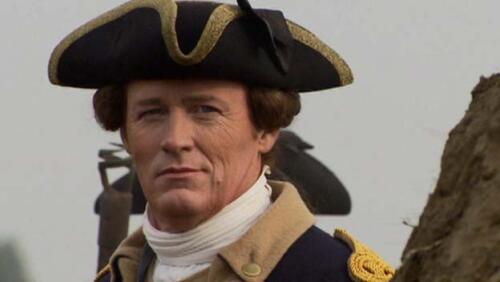
By 1781, the Revolutionary War had dragged on for over six grueling years. The initial spark in Massachusetts and the early victories had devolved into an exhausting war of attrition. To understand how the final act ended up in Virginia, one must examine how colonial towns shaped American history, serving as logistical hubs and ideological battlegrounds. The British army, frustrated by their inability to crush the rebellion in the north, shifted their focus to the Southern colonies, hoping to capitalize on loyalist sentiment. Under General Lord Charles Cornwallis, British forces marched through the Carolinas, winning tactical victories but suffering unsustainable casualties. Seeking a deepwater port to establish a base for reinforcement and resupply from the Royal Navy, Cornwallis withdrew his army to the quiet tobacco port of Yorktown, Virginia, in the summer of 1781. This strategic move, intended to secure his army, instead walked them into a geographic dead end. Meanwhile, George Washington, commanding the Continental Army outside New York City, was desperately seeking a decisive blow. When he received word that a powerful French fleet commanded by Admiral de Grasse was sailing for the Chesapeake Bay, Washington made a bold decision. He abandoned plans to attack New York and secretly marched his allied force hundreds of miles south to trap Cornwallis.
The Timeline of the Siege
To fully grasp the rapid convergence of forces, we can look at the crucial timeline of late 1781:
- August 14, 1781: Washington receives confirmation that Admiral de Grasse’s fleet is heading to the Chesapeake Bay with 29 warships and 3,000 soldiers. Washington and Rochambeau immediately begin planning their march south.
- September 5, 1781: The Battle of the Chesapeake occurs. The French navy defeats a British fleet under Admiral Thomas Graves, cutting off Cornwallis’s only maritime escape route and hope of relief.
- September 28, 1781: The allied Franco-American army of approximately 17,000 men arrives at Yorktown, officially beginning the investment and siege of the British positions.
- October 9, 1781: Allied artillery begins a relentless bombardment of the British inner defense lines, shattering fortifications and morale.
- October 14, 1781: In a daring night assault, American troops led by Alexander Hamilton and French troops led by Wilhelm of Zweibrücken storm Redoubts 9 and 10, bringing the allied siege lines within point-blank range of Cornwallis’s main camp.
- October 17, 1781: With his defenses crumbling and a desperate escape attempt across the York River thwarted by a sudden storm, Cornwallis requests a ceasefire to negotiate surrender terms.
- October 19, 1781: The British army officially surrenders, effectively ending major land battles in the American colonies.
Crucial Historical Figures and Their Roles
The success of the Siege of Yorktown was built on the synergy of brilliant, flawed, and daring individuals:
- George Washington: The commander-in-chief of the Continental Army, whose strategic patience and willingness to adapt allowed him to seize the fleeting opportunity presented by the French fleet.
- Comte de Rochambeau: The highly experienced commander of the French Expeditionary Force. Rochambeau’s military professionalism and willingness to serve under Washington’s command were essential in executing the complex allied movement.
- Marquis de Lafayette: The young, idealistic French aristocrat who had kept Cornwallis pinned in Virginia during the preceding spring and summer, preventing the British from escaping before the main allied army arrived.
- Admiral François Joseph Paul de Grasse: The commander of the French fleet whose crucial naval victory in the Battle of the Chesapeake sealed Cornwallis’s fate by denying him rescue.
- Lord Charles Cornwallis: The British commander whose aggressive campaigning ultimately led his army into an indefensible trap, culminating in a historic surrender that devastated British political will to continue the war.
Causes, Context, and the Global Chessboard
The Siege of Yorktown was not merely a localized clash; it was a theater in a massive global conflict. Following the American victory at Saratoga in 1777, France had entered the war as an open ally of the United States, followed by Spain and the Dutch Republic. This transformed a colonial rebellion into a world war, forcing Great Britain to defend its global empire from the Caribbean to India. Consequently, British resources were stretched thin. To understand the geography of this global struggle, looking at a 13 colonies map reveals how isolated Yorktown was from other British strongholds like New York or Charleston. The British failure to maintain naval supremacy in the Atlantic during late 1781 allowed the French navy to execute the blockade that made the land siege effective.

Major Turning Points Within the Siege
Two distinct turning points defined the siege. The first was the naval Battle of the Chesapeake on September 5, 1781. Though technically a tactical draw, it was a major strategic victory for the French, as it forced the British fleet to retreat to New York, leaving Cornwallis completely isolated. The second turning point occurred on the night of October 14, 1781, with the synchronized bayonet assault on Redoubts 9 and 10. These outer British fortresses blocked the allies from completing their siege trenches. Alexander Hamilton led the American contingent in a silent, unloaded-musket charge that overwhelmed Redoubt 10 in minutes, while French troops captured Redoubt 9. This success allowed the allies to move their heavy artillery incredibly close to the British camp, rendering Cornwallis’s position completely untenable.
Long-Term Impact on America and the World
While treaty negotiations dragged on for two years, culminating in the Treaty of Paris in 1783, Yorktown was the functional end of the war. It shattered the political resolve of the British government. Prime Minister Lord North famously cried out, “Oh God! It is all over!” upon hearing the news. The victory cemented the independence of the United States and validated the massive risk France took in supporting the revolution. It proved to the world that a determined colonial population, aided by strategic foreign alliances, could defeat the mightiest empire on earth. This success sparked a wave of revolutionary sentiment across the globe, most notably contributing to the financial strain in France that helped trigger the French Revolution in 1789.
Lesser-Known Facts About Yorktown
- The Surrender Proxy: Humiliated by his defeat, General Cornwallis claimed illness on the day of the formal surrender ceremony, October 19. He sent his second-in-command, Brigadier General Charles O’Hara, to deliver his sword. O’Hara first tried to surrender to Rochambeau, who politely refused and pointed toward Washington. Washington, refusing to accept the sword from a second-in-command, directed O’Hara to surrender to his own deputy, Major General Benjamin Lincoln.
- More French than Americans: At the siege, French soldiers and sailors actually outnumbered their American counterparts. There were approximately 8,000 Continental troops and 3,000 militia, compared to roughly 8,000 French ground troops and nearly 29,000 French sailors aboard the warships in the bay.
- The Enslaved Spy James Armistead: Essential intelligence regarding Cornwallis’s movements and defenses was gathered by James Armistead, an enslaved African American who posed as a runaway slave to infiltrate Cornwallis’s camp. His reports allowed Lafayette and Washington to plan their moves with absolute precision. Armistead was later granted his freedom for his heroic service and adopted the name James Armistead Lafayette.
Why Yorktown Still Matters Today
The Siege of Yorktown remains a foundational lesson in military strategy, coalition warfare, and international diplomacy. It reminds us that no nation, however powerful, can succeed in isolation. The Franco-American alliance at Yorktown laid the groundwork for the enduring diplomatic and cultural bonds that persist to this day. Furthermore, it highlights the power of diverse individuals coming together—from French nobility to enslaved spies—to achieve a monumental goal, a defining characteristic of the American story.
People Also Ask
Who won the Siege of Yorktown?
The allied forces of the American Continental Army, led by George Washington, and the French Army, led by the Comte de Rochambeau, won the Siege of Yorktown, defeating the British forces under General Charles Cornwallis.
Why did Cornwallis surrender at Yorktown?
Cornwallis surrendered because his army was completely surrounded on land by Franco-American forces and blocked at sea by the French navy. With his fortifications shattered by heavy artillery and a desperate escape attempt ruined by a storm, he had no way to receive supplies or reinforcements.
What role did the French play in the Siege of Yorktown?
The French played a critical role by providing essential military forces, heavy siege artillery, financial support, and, most importantly, the naval blockade commanded by Admiral de Grasse that cut off British escape and reinforcement.
How did the Siege of Yorktown end the Revolutionary War?
Although skirmishes continued, the surrender of Cornwallis’s entire army at Yorktown destroyed British political support for the war, prompting the British Parliament to vote to end offensive operations and begin peace negotiations, resulting in the 1783 Treaty of Paris.
Conclusion
The Siege of Yorktown remains one of the most brilliant and consequential military operations in world history. It was a triumph of planning, luck, international cooperation, and sheer determination. By trapping the British army on the shores of the York River, the allied forces closed the book on British colonial rule and opened a new chapter of self-governance and liberty. Yorktown did not just end a war; it birthed a nation that would go on to shape the course of modern history.


