The American Revolution stands as one of the most transformative epochs in global history, representing a monumental shift in how modern societies conceive of liberty, governance, and human rights. What began as a localized dispute over colonial taxation and political representation erupted into an eight-year global conflict, pitting thirteen fragmented colonies against the preeminent military powerhouse of the eighteenth century: Great Britain. This struggle was not merely fought on bloody battlefields like Saratoga and Yorktown, but also in the minds of diverse individuals—ranging from wealthy merchants and enslaved laborers to indigenous populations caught in the crossfire. Understanding this revolutionary era is vital to comprehending the foundational values, systemic contradictions, and enduring democratic aspirations of the United States.

Historical Background and Early Ideals
Before the outbreak of hostility in 1775, the relationship between Great Britain and the 13 colonies was defined by decades of salutary neglect. This hands-off approach allowed local colonial assemblies to develop robust mechanisms of self-regulation and representative democracy. Colonists grew accustomed to managing their own tax systems and local laws, drawing pride from their British identity while enjoying unparalleled civic freedoms. However, the costly British victory in the French and Indian War (1754–1763) radically disrupted this status quo. Faced with massive national debt, the British Parliament sought to centralize colonial administration and extract revenue directly from the colonies through a series of unprecedented direct taxes, starting with the Stamp Act of 1765. This abrupt shift from self-governance to direct imperial control sparked immediate ideological resistance, as colonists argued that Parliament had no right to tax them without granting them actual representation in London.
Causes and Context: The Escalation of Conflict
The sociopolitical climate of the 1760s and 1770s was a powder keg waiting for a spark. Armed with the democratic principles of Enlightenment thinkers like John Locke, colonial leaders argued that governments derive their just powers from the consent of the governed. Relying on a rich tradition of self-governance exemplified by the Virginia House of Burgesses, colonists resisted imperial overreach through systematic boycotts of British goods, public protests, and intellectual treatises. The tensions reached a violent boiling point on March 5, 1770, during the Boston Massacre, when British soldiers opened fire on an angry mob of colonists. The outrage intensified with the passage of the Tea Act, leading to the famous Boston Tea Party in December 1773, where members of the Sons of Liberty dumped hundreds of chests of tea into Boston Harbor. In retaliation, Great Britain passed the Coercive Acts (referred to by colonists as the Intolerable Acts), closing Boston Harbor, suspending local colonial government, and forcing citizens to quarter British troops. Rather than isolating Massachusetts as intended, these harsh measures united the colonies under a shared sense of grievances, paving the way for the First Continental Congress.
A Chronological Timeline of the War for Independence
To fully comprehend the trajectory of the war, we must look at the key chronological milestones that defined the conflict:
- April 19, 1775: The Battles of Lexington and Concord mark the first military engagements, famously characterized by Ralph Waldo Emerson as “the shot heard ’round the world.”
- June 17, 1775: The Battle of Bunker Hill takes place near Boston, proving that the inexperienced colonial militia could stand toe-to-toe with elite British regular forces.
- July 4, 1776: The Second Continental Congress formally adopts the Declaration of Independence, drafting a philosophical break from the British monarchy and asserting the universal rights to “Life, Liberty and the pursuit of Happiness.”
- December 25-26, 1776: General George Washington leads a daring Christmas night crossing of the icy Delaware River to secure a surprise victory against Hessian mercenaries at Trenton, reviving colonial morale at a critical hour.
- October 17, 1777: The Battle of Saratoga ends in a decisive American victory, convincing France to enter the war as an official ally of the United States.
- Winter 1777–1778: The Continental Army endures a grueling, disease-ridden winter at Valley Forge, Pennsylvania, emerging as a professional, highly disciplined fighting force under the training of Baron von Steuben.
- October 19, 1781: Backed by French naval forces, Washington forces the surrender of British General Lord Cornwallis at the Siege of Yorktown, effectively ending major combat operations in North America.
- September 3, 1783: The Treaty of Paris is officially signed, with Great Britain formally recognizing the sovereignty and independence of the United States.
Prominent Figures and Their Contributions
The American Revolution was shaped by a diverse array of individuals whose actions left a lasting imprint on history. George Washington served as the Commander-in-Chief of the Continental Army. His strategic patience, administrative fortitude, and willingness to surrender power after the war set a crucial precedent for democratic leadership. Thomas Jefferson penned the Declaration of Independence, providing the philosophical backbone of the revolution. Internationally, Benjamin Franklin used his immense diplomatic charm in Paris to secure the vital French alliance, which provided the naval power, funds, and military personnel necessary to win.
Crucially, the war was also shaped by marginalized figures who fought for their own concepts of liberty. Crispus Attucks, a man of African and Wampanoag descent, became the first casualty of the revolution when he was killed at the Boston Massacre, serving as an early symbol of patriotic sacrifice. Peter Salem, an enslaved man who gained temporary freedom to fight, became a celebrated hero at the Battle of Bunker Hill, where he fatally shot British Major John Pitcairn. These figures highlight the complex, multicultural reality of the struggle for American independence.

Major Turning Points and Geographical Dynamics
When analyzing the geography of the war stretching across the eastern seaboard as outlined in the map of the original 13 colonies, the theater of conflict was vast and challenging. The primary turning point occurred at Saratoga, New York, in late 1777. Prior to this, European powers viewed the American rebellion as a hopeless endeavor. The surrender of British General John Burgoyne’s entire army proved that the Americans could win strategic, large-scale campaigns. This victory brought indispensable French assistance, followed by Spain and the Dutch Republic, transforming a local rebellion into a grueling global war that stretched British military resources to their absolute limit.
The Long-Term Impact on America and the World
The aftermath of the American Revolution fundamentally reorganized global politics. Locally, it led to the creation of the United States Constitution in 1787, establishing a federal republic with a separation of powers and a system of checks and balances. However, the revolution’s legacy was deeply complex. While it heralded new democratic ideals, it initially failed to extend those liberties to enslaved African Americans, women, or indigenous populations. Indigenous nations, many of whom allied with the British to protect their ancestral lands from colonial expansion, faced devastating territorial losses and displacement as the new nation expanded westward. Internationally, the revolution acted as a powerful catalyst, inspiring the French Revolution, the Haitian Revolution, and numerous Latin American wars of independence, proving that colonial subjects could successfully overthrow imperial rule.
Fascinating Lesser-Known Facts of the Revolution
The history of this era is filled with surprising anecdotes that bring the past to life:
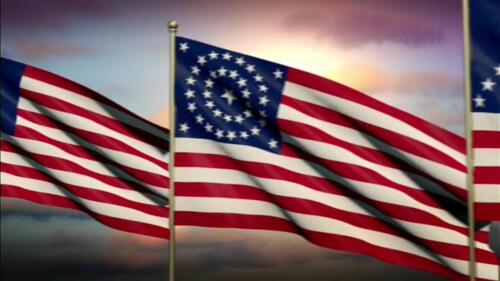
- The Origin of the Thirteen Stripes: The thirteen alternating red and white stripes on the American flag represent the original thirteen colonies that declared independence. This bold design served as a visual reminder of unity during a time when the colonies were highly disconnected and culturally distinct.
- Washington’s Spy Ring: The Culper Spy Ring, operating in British-occupied New York, used invisible ink, complex codes, and coded laundry hanging on clotheslines to supply George Washington with critical intelligence that saved the Continental Army from multiple ambushes.
- The Inoculation Order: Facing a devastating smallpox epidemic, George Washington performed one of the earliest mass military inoculations in history at Valley Forge, secretly infecting his troops with small doses of the virus to build immunity, which drastically reduced non-combat deaths.
Why the American Revolution Still Matters Today
The American Revolution is not merely a collection of dusty dates and names; it is an ongoing experiment. The ideals articulated in 1776—that all people are created equal and possess unalienable rights—set a high moral standard that the United States has continuously wrestled with and strived toward over the centuries. From the abolitionist movement and the women’s suffrage movement to the modern civil rights struggles, marginalized groups have consistently used the revolutionary rhetoric of the founding era to demand their rightful place in the American story.
People Also Ask
What were the primary causes of the American Revolution?
The primary causes included British taxation policies enacted without colonial representation (such as the Stamp Act and Townshend Acts), the quartering of British soldiers in colonial homes, the suppression of local self-governance, and the violent clashes in Boston, which united the colonies against imperial rule.
Who was the first person killed in the American Revolution?
Crispus Attucks, a sailor of African and indigenous descent, is widely recognized as the first casualty of the American Revolution, having been killed by British soldiers during the Boston Massacre on March 5, 1770.
How did the war formally end?
The Revolutionary War formally ended with the signing of the Treaty of Paris in 1783, where Great Britain officially recognized the independence of the United States and established its borders extending west to the Mississippi River.
Conclusion
Ultimately, the American Revolution remains a testament to the power of collective action, ideological conviction, and resilience. By challenging the global order, the early Americans laid the foundation for a nation dedicated to liberty and self-governance. Though the journey toward achieving true equality for all of its citizens remains an ongoing process, the revolutionary spark ignited in 1775 continues to illuminate the global path toward freedom and democracy.


